
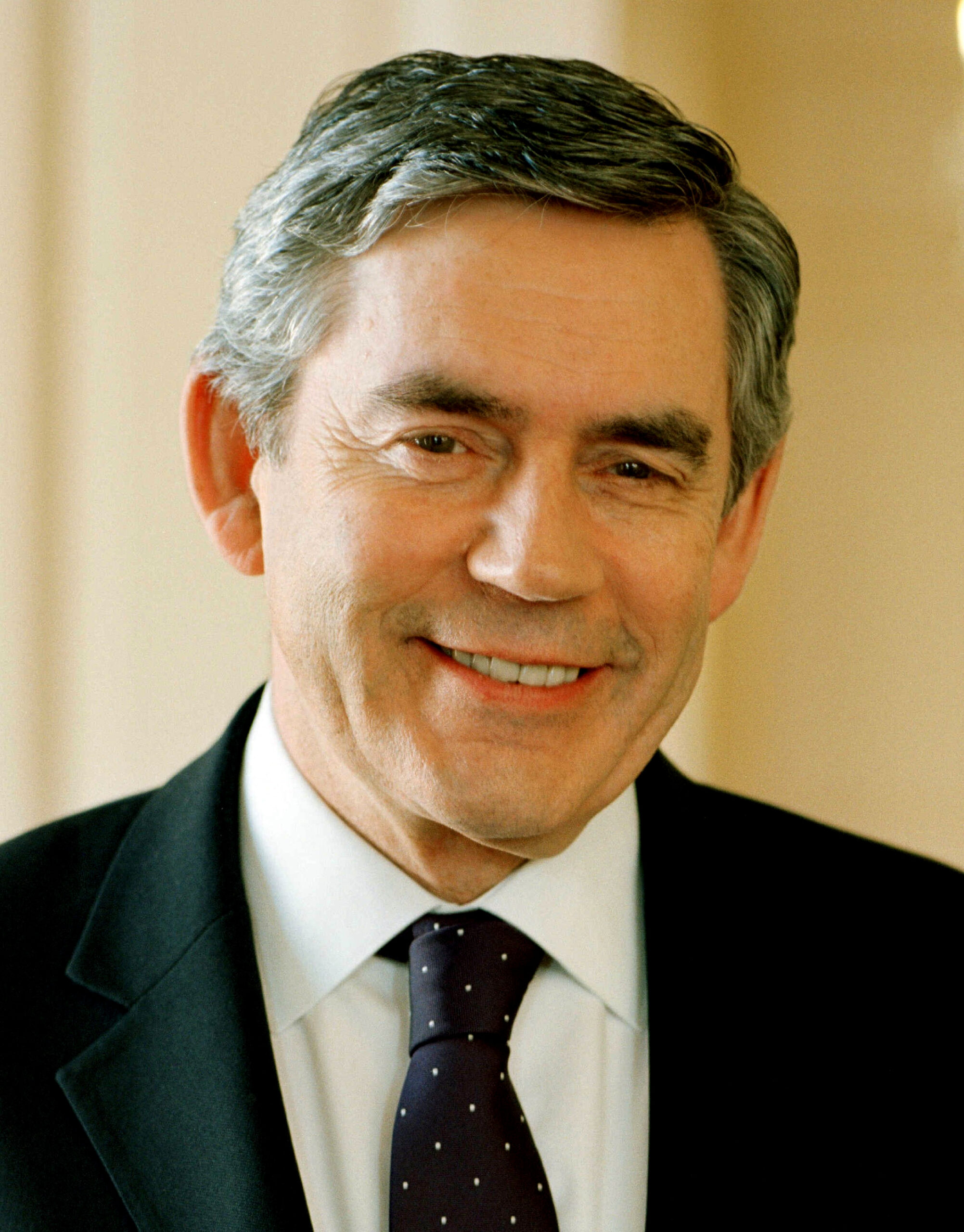
Gordon Brown, a significant figure in modern British politics, was born James Gordon Brown on February 20, 1951, in Glasgow, Scotland. His journey from the industrial heartlands of Scotland to becoming the Prime Minister of the United Kingdom is a compelling story of ambition, intellect, and a deep commitment to public service. This article provides a comprehensive exploration of Gordon Brown’s life, his rise to political prominence, and the impact he had on both the UK and the global stage.
Early Life and Education
Gordon Brown was born into a modest household in Glasgow, the second of three sons. His father, John Brown, was a Church of Scotland minister and a respected figure in the community, known for his compassion and dedication to helping those in need. His mother, Elizabeth Brown, played a significant role in nurturing young Gordon’s intellectual curiosity and sense of social responsibility.
Brown’s early years were spent in the industrial town of Kirkcaldy, Fife, a place known for its linoleum production and deep-rooted working-class culture. Growing up in a town facing economic challenges, Brown was acutely aware of the social inequalities around him. This environment, combined with the influence of his father’s work, instilled in him a strong sense of justice and a desire to contribute to society.
A precocious student, Brown stood out academically from a young age. At just 14 years old, he passed the “O” levels, a year ahead of his peers, demonstrating his remarkable intellect and work ethic. He then won a scholarship to the University of Edinburgh at the age of 15, making him one of the youngest students to attend the university in recent history.
Academic Achievement and Early Challenges
While at the University of Edinburgh, Brown pursued a degree in history, a subject that would later inform much of his political thinking. However, his university years were marred by a severe injury sustained while playing rugby. The injury resulted in a detached retina, causing Brown to lose sight in one eye and leading to multiple surgeries to save the vision in his other eye. Despite this significant setback, Brown’s determination did not waver. He excelled academically, earning a first-class degree and several honors for his outstanding performance.
During his time at university, Brown became deeply involved in student politics. He was an active participant in debates and discussions, often writing for the university’s student newspaper. His leadership qualities were soon recognized, and he was elected as the Rector of the University of Edinburgh, one of the youngest individuals to hold this position. In this role, Brown represented the interests of the student body, further honing his skills in public speaking and negotiation.
Entry into Politics and Early Career
Gordon Brown’s political career began in earnest in the late 1970s. After an unsuccessful bid for a parliamentary seat in 1979, Brown was elected as the Member of Parliament (MP) for Dunfermline East in 1983. His early years in Parliament were marked by a close partnership with Tony Blair, with whom he shared an office at the House of Commons. The two men, despite their different temperaments, formed a powerful political alliance that would come to dominate the Labour Party for years to come.
Brown quickly established himself as a key figure in the Labour Party, becoming the party’s Shadow Chancellor of the Exchequer in 1992. In this role, he was responsible for formulating the party’s economic policies and holding the government to account on financial matters. Brown’s rigorous approach to economics and his commitment to social justice resonated with many within the party and the broader electorate.
The New Labour Era and the Brown-Blair Partnership
The election of Tony Blair as the leader of the Labour Party in 1994 marked the beginning of the “New Labour” era, a period characterized by a shift towards centrist policies and a focus on modernizing the party’s image. Brown was a central figure in this transformation, working closely with Blair to develop the economic and social policies that would define New Labour.
One of the key achievements of this period was the decision to grant the Bank of England independence in setting interest rates, a move that Brown championed as Shadow Chancellor and later implemented as Chancellor of the Exchequer. This decision was seen as a bold step towards ensuring economic stability and was widely praised by economists and business leaders.
The partnership between Brown and Blair was instrumental in Labour’s landslide victory in the 1997 general election. As Chancellor of the Exchequer, Brown oversaw a period of sustained economic growth and stability, with significant investments in public services such as health and education. His stewardship of the economy during this time earned him widespread acclaim and solidified his reputation as one of the most capable and influential Chancellors in British history.
Personal Life and Tragedy
In his personal life, Gordon Brown faced both joy and profound sorrow. In 2000, he married Sarah Macaulay, a public relations executive who would become a steadfast partner in his political and personal life. The couple had three children: John, Fraser, and Jennifer Jane. Tragically, their first child, Jennifer Jane, was born prematurely in December 2001 and died just ten days later. The loss was a devastating blow to the Browns, and it profoundly affected both of them.
In the wake of this tragedy, Sarah Brown became involved in charitable work, particularly in initiatives related to maternal and child health. She founded the charity PiggyBankKids, which supports research into childhood diseases and helps disadvantaged children. Gordon Brown, despite his public responsibilities, remained deeply committed to his family, often speaking of the importance of his wife and children in his life.
Prime Ministership and Global Influence
In 2007, after a decade as Chancellor, Gordon Brown succeeded Tony Blair as the leader of the Labour Party and was appointed Prime Minister by Queen Elizabeth II. His ascent to the highest office in the land came at a challenging time, both domestically and internationally. Brown’s premiership was immediately tested by a series of crises, including the global financial crisis of 2008, which posed a severe threat to the world economy.
Brown’s response to the financial crisis was decisive and widely credited with helping to stabilize the global economy. He played a key role in coordinating the international response, advocating for substantial government intervention to rescue failing banks and stimulate economic growth. His leadership during this period earned him praise from international leaders and financial experts, with many acknowledging his expertise and steady hand in navigating one of the most severe economic downturns in modern history.
Domestically, Brown’s government introduced several significant reforms, including measures to address poverty, improve education, and combat climate change. However, his time as Prime Minister was also marked by political challenges, including declining support for the Labour Party and internal divisions within the government. Despite his achievements, Brown struggled to connect with the public in the same way that his predecessor had, and his tenure as Prime Minister was often overshadowed by the economic crisis and political infighting.
The 2010 General Election and Aftermath
The 2010 general election proved to be a turning point in Gordon Brown’s political career. Although the Labour Party remained a significant force, it lost its majority in the House of Commons, leading to a hung parliament. Brown’s attempts to form a coalition government were unsuccessful, and he ultimately decided to resign as Prime Minister, paving the way for Conservative leader David Cameron to take office.
Following his resignation, Brown stepped back from frontline politics but continued to serve as an MP until 2015. During this period, he focused on global issues, particularly those related to education and development. He became a prominent advocate for global education initiatives, working with organizations such as the United Nations to promote access to education for children in developing countries.
Legacy and Contributions
Gordon Brown’s legacy is complex and multifaceted. As Chancellor, he was responsible for some of the most significant economic reforms in modern British history, including the independence of the Bank of England and the introduction of tax credits aimed at reducing poverty. His leadership during the global financial crisis demonstrated his deep understanding of economics and his ability to act decisively in times of crisis.
However, Brown’s tenure as Prime Minister was marked by challenges, and his public image was often shaped by the economic difficulties of the time. Despite this, his contributions to both domestic and global policy are widely recognized. He is regarded as one of the most intellectually capable leaders of his generation, with a deep commitment to social justice and public service.
In addition to his political achievements, Brown has authored several books on economics and social issues, sharing his insights and experiences with a broader audience. His writings reflect his belief in the power of government to effect positive change and his enduring concern for the welfare of the most vulnerable members of society.
Conclusion
Gordon Brown’s life and career are a testament to his resilience, intellect, and unwavering dedication to public service. From his early days in Kirkcaldy to his leadership on the global stage, Brown has consistently demonstrated a deep commitment to improving the lives of others. While his time as Prime Minister may have been marked by challenges, his contributions to British and global politics are enduring.
Today, Gordon Brown continues to be an influential voice on issues of global importance, particularly in the areas of education and economic development. His legacy as a statesman, economist, and advocate for social justice will undoubtedly continue to shape public discourse and inspire future generations.


