
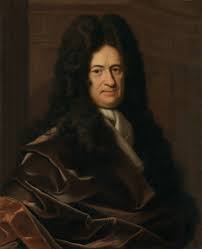
Gottfried Wilhelm Leibniz, born on June 21, 1646, in Leipzig, Germany, was a polymath whose contributions spanned various fields, including mathematics, philosophy, logic, and law. Known for his groundbreaking work in calculus, metaphysics, and binary arithmetic, Leibniz’s intellectual pursuits have left an indelible mark on modern thought. This article explores the life, achievements, and legacy of Leibniz, providing a comprehensive overview of his contributions to science, philosophy, and mathematics.
Early Life and Education
Leibniz was born into an educated family; his father was a professor of moral philosophy at the University of Leipzig. From an early age, Leibniz displayed an exceptional intellectual capacity. At the age of six, he began learning Latin by reading the works of the Roman historian Livy. By the age of 15, Leibniz had enrolled at the University of Leipzig, where he studied philosophy, mathematics, and law.
Leibniz’s early education was characterized by a deep curiosity and a drive to understand the world. He earned his bachelor’s degree in philosophy at 17 and later completed a doctorate in law at the age of 20. His early exposure to a wide range of disciplines laid the foundation for his later work, which would blend philosophy, mathematics, and science in innovative ways.
Contributions to Mathematics: The Invention of Calculus
One of Leibniz’s most significant contributions to mathematics was the development of calculus, independently of Isaac Newton. While Newton and Leibniz’s methods were different, both arrived at the fundamental principles of calculus around the same time. This led to a bitter dispute over the priority of invention, which continued long after both men had died. Despite the controversy, it is widely acknowledged that Leibniz’s notation and formalism were more refined and are still used in calculus today.
Leibniz introduced several notations that are fundamental to calculus, including the integral symbol (∫), which he derived from the Latin word summa, and the “d” notation for differentials, which stands for differentia. These notations were part of his broader effort to create a universal language for mathematics, which he called the mathesis universalis. His vision was to develop a system that could express all mathematical truths and logical relationships using symbols, paving the way for the formalization of mathematical logic.
The Binary System and its Impact
Leibniz was also the first to develop the binary number system, which is the foundation of virtually all modern computer architectures. In his 1703 paper Explication de l’Arithmétique Binaire (Explanation of Binary Arithmetic), Leibniz demonstrated how all numbers could be represented using only the digits 0 and 1. This concept, though not immediately applied, would later become crucial in the development of digital computing.
Leibniz’s interest in binary arithmetic was partly inspired by his philosophical beliefs. He saw the binary system as a reflection of the dual nature of existence—something and nothing, being and non-being. Leibniz believed that this simple system could represent the fundamental structure of the universe, aligning with his metaphysical ideas about the nature of reality.
Metaphysics and Philosophy: The Monadology
Leibniz’s contributions to philosophy are equally as profound as his work in mathematics. One of his most famous philosophical works is the Monadology (1714), in which he presents his theory of monads. Monads, according to Leibniz, are the fundamental, indivisible, and immaterial elements of the universe. Each monad is unique and reflects the entire universe from its own perspective. This concept was Leibniz’s solution to the problem of interaction between mind and matter, a major issue in the philosophy of his time.
Leibniz’s monadology also reflects his belief in a pre-established harmony. He argued that God, in his infinite wisdom, had created the best possible world, where every monad functions according to its own nature but is perfectly synchronized with all other monads. This idea led to his famous assertion that we live in “the best of all possible worlds,” a phrase that would later be satirized by Voltaire in Candide through the character of Dr. Pangloss.
In addition to the Monadology, Leibniz made significant contributions to epistemology and logic. His work on the principle of sufficient reason, which states that nothing happens without a reason, was foundational for later developments in philosophy. This principle became a central tenet in Leibniz’s metaphysical system, influencing both his contemporaries and later thinkers.
Theodicy and the Problem of Evil
Leibniz’s philosophical work also grappled with the problem of evil, particularly in his Essays on Theodicy (1710). Theodicy is the attempt to reconcile the existence of evil with the belief in a benevolent and omnipotent God. Leibniz argued that, despite the presence of evil, the world is the best possible creation because it allows for the existence of free will and the opportunity for moral development.
Leibniz’s theodicy was rooted in his belief that God, being all-knowing and all-powerful, had chosen to create a world where the greatest possible good could be achieved. While this world includes suffering and evil, these are necessary components of a universe that allows for the freedom and moral growth of its inhabitants. This optimistic view of the world, while influential, was also controversial and subjected to criticism by later philosophers.
Contributions to Logic and Philosophy of Language
Leibniz was ahead of his time in recognizing the importance of symbols and formal systems for advancing human knowledge. His work on logic laid the groundwork for later developments in symbolic logic and computer science. Leibniz envisioned a universal language, or characteristica universalis, that could express all human knowledge in a precise and logical manner.
This idea was closely related to his work on combinatorial logic, which sought to develop a system where complex ideas could be generated from simpler ones through systematic combination. Although Leibniz did not complete this ambitious project, his ideas influenced later thinkers such as George Boole and Charles Sanders Peirce, who would further develop symbolic logic.
Leibniz also anticipated many concepts in the philosophy of language, particularly regarding the relationship between language, thought, and reality. He believed that a perfectly constructed language could mirror the structure of thought and reveal the underlying truths of the universe. While this idea was not fully realized during his lifetime, it foreshadowed later developments in linguistics and semiotics.
Diplomatic and Practical Work
Beyond his theoretical work, Leibniz was actively involved in the political and diplomatic affairs of his time. He served as a counselor and librarian to several European courts, including those of Mainz and Hanover. His diplomatic work included efforts to reunify the Protestant and Catholic churches and to promote scientific and philosophical cooperation across Europe.
Leibniz was also an early advocate of economic reform. In his writings on political economy, he argued that the true wealth of a nation lies not in its gold reserves or trade surplus, but in its human capital—the education and productive capacities of its people. He believed that the state should invest in education and technology to enhance productivity and improve the quality of life for its citizens.
Leibniz’s political and economic ideas were forward-thinking and often ahead of his time. His belief in the importance of innovation, education, and human capital would resonate with later economists and political theorists, influencing the development of modern economic thought.
Legacy and Influence
Gottfried Wilhelm Leibniz’s intellectual legacy is vast and multifaceted. His work laid the foundation for many fields, including mathematics, philosophy, logic, and computer science. The calculus notation he developed remains the standard in mathematics today, and his ideas about binary arithmetic are at the core of digital computing.
Leibniz’s philosophical ideas, particularly his theory of monads and his principle of sufficient reason, continue to be studied and debated by scholars. His optimistic view of the world, encapsulated in his assertion that we live in the best of all possible worlds, has sparked both admiration and critique, influencing thinkers from Voltaire to Kant.
In the realm of logic and the philosophy of language, Leibniz’s vision of a universal language and his work on combinatorial logic foreshadowed later developments in formal logic and computer science. His ideas on the importance of symbols and formal systems for understanding the world have had a lasting impact on these fields.
Leibniz’s contributions to political economy and his advocacy for innovation and education as drivers of national wealth also anticipate many ideas that would later become central to modern economic thought. His belief in the importance of human capital and the role of the state in fostering innovation remains relevant in contemporary discussions of economic policy.
Conclusion
Gottfried Wilhelm Leibniz was a true polymath whose contributions continue to shape modern thought. From his pioneering work in calculus and binary arithmetic to his deep insights into metaphysics, logic, and political economy, Leibniz’s legacy is one of intellectual curiosity and innovation. His ideas have influenced countless fields and continue to inspire new generations of thinkers.
Leibniz’s life and work exemplify the power of interdisciplinary thinking and the importance of pursuing knowledge across multiple domains. As we continue to explore the complexities of the modern world, Leibniz’s vision of a unified system of knowledge remains a powerful reminder of the value of integrating diverse perspectives in the pursuit of understanding.


