
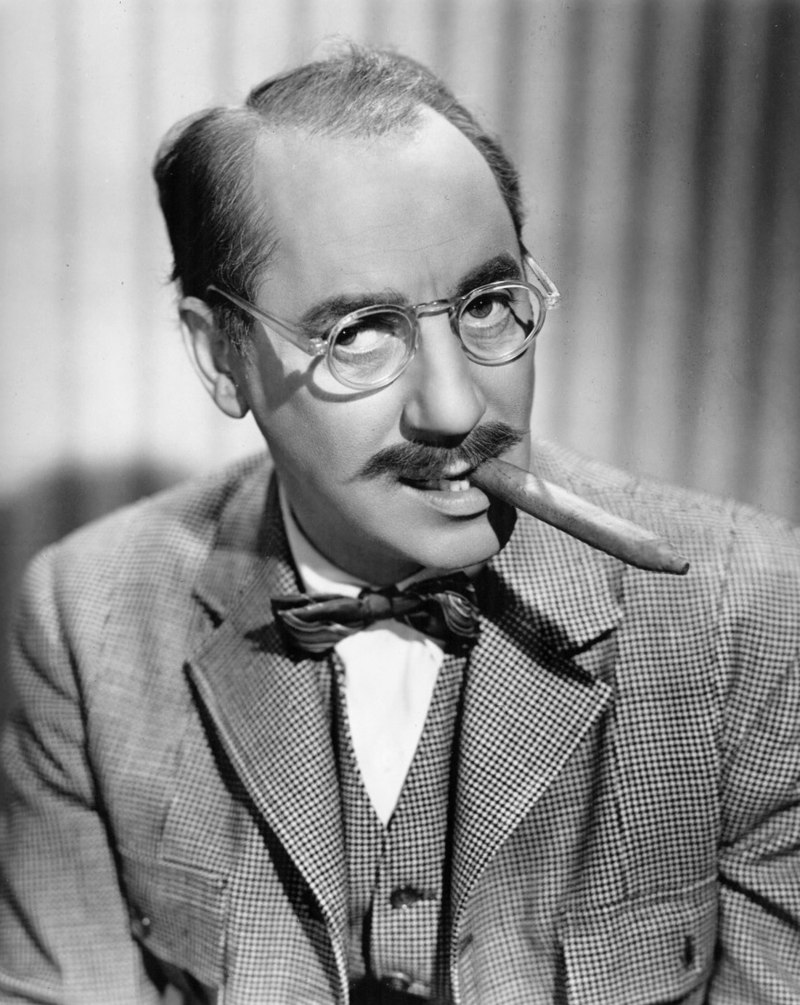
Groucho Marx, born Julius Henry Marx on October 2, 1890, in New York City, stands as one of the most iconic figures in the history of comedy. Known for his quick wit, biting satire, and distinctive appearance, Groucho was the third of the famous Marx Brothers, a comedy troupe that left an indelible mark on both stage and screen. His career spanned several decades, during which he became synonymous with a brand of humor that was both sophisticated and irreverent. This article delves into Groucho Marx’s life, exploring his age, fame, and the key highlights that defined his remarkable career.
Early Life and the Marx Brothers
Groucho Marx was born into a family of performers, with his parents, Sam and Minnie Marx, heavily influencing his career path. The Marx family lived in a modest neighborhood in New York, where the young Groucho, along with his brothers Leonard (Chico), Adolph (Harpo), Milton (Gummo), and Herbert (Zeppo), would form the legendary Marx Brothers comedy troupe.
Groucho’s early life was marked by financial struggles, which prompted the brothers to seek work in entertainment. Their mother, Minnie, recognized their comedic talents and tirelessly promoted their act, which initially took the form of a vaudeville routine. Vaudeville, a genre of variety entertainment that included music, dance, and comedy, was the perfect training ground for Groucho. It was here that he honed his trademark style—a rapid-fire delivery of puns, one-liners, and wordplay that would become his hallmark.
The Marx Brothers’ act evolved over the years, moving from musical performances to comedy routines that satirized social norms and the establishment. Groucho, with his painted-on mustache, exaggerated eyebrows, and ever-present cigar, quickly became the face of the group. His persona—a sarcastic, wisecracking cynic—resonated with audiences, making him a standout even among his talented siblings.
Rise to Fame: Broadway and Hollywood
The Marx Brothers’ big break came in 1924 with the Broadway show “I’ll Say She Is”, a critical and commercial success that showcased their unique blend of comedy and satire. This was followed by “The Cocoanuts” in 1925, another Broadway hit that solidified their status as top-tier entertainers. The success of these shows led to a long tour across the United States, during which the brothers refined their act and built a loyal following.
In 1929, the Marx Brothers made their transition to the big screen with the film adaptation of “The Cocoanuts.” This marked the beginning of their illustrious film career, which would include some of the most beloved comedies of all time. Groucho’s on-screen persona—marked by his rapid-fire dialogue, caustic wit, and anarchic disregard for authority—was perfectly suited to the medium of film, where his larger-than-life character could reach an even broader audience.
Some of the Marx Brothers’ most iconic films include “Animal Crackers” (1930), “Monkey Business” (1931), “Horse Feathers” (1932), and “Duck Soup” (1933). The latter, in particular, is often regarded as a masterpiece of political satire, with Groucho’s portrayal of the incompetent and egotistical Rufus T. Firefly providing a scathing commentary on the absurdities of government and war.
The Marx Brothers’ move from Paramount Pictures to Metro-Goldwyn-Mayer (MGM) in the mid-1930s led to the production of two of their most famous films: “A Night at the Opera” (1935) and “A Day at the Races” (1937). These films, directed by Sam Wood, showcased the Marx Brothers at the height of their powers, combining slapstick, wordplay, and musical numbers to create timeless comedy.
The Groucho Persona: A Legacy of Wit and Satire
Groucho Marx’s comedic style was a unique blend of sharp wit, sarcasm, and social commentary. His humor was often subversive, poking fun at authority figures, social conventions, and the absurdities of everyday life. His signature look—painted-on mustache, thick eyebrows, wire-rimmed glasses, and cigar—became an instantly recognizable symbol of his brand of comedy.
Groucho’s “sense of humor” was characterized by a kind of intellectual playfulness that appealed to audiences across generations. His ability to deliver complex wordplay and puns with effortless timing made him a master of verbal comedy. His jokes often carried a deeper critique of society, challenging the status quo while entertaining the masses.
One of Groucho’s most enduring contributions to popular culture is his influence on later comedians and entertainers. His irreverent style paved the way for future generations of comedians who would use humor as a tool for social commentary. Groucho’s influence can be seen in the work of modern-day comedians, satirists, and television hosts who continue to draw inspiration from his approach to comedy.
Beyond the Screen: Radio, Television, and Writing
In the 1940s, as the Marx Brothers’ film career began to decline, Groucho Marx found new avenues for his talents. He transitioned to radio, where he became the host of the popular quiz show “You Bet Your Life” in 1947. The show, which was later adapted for television, featured Groucho’s trademark wit and irreverence as he engaged with contestants, often leading to hilariously unexpected exchanges. “You Bet Your Life” was a resounding success, running until 1961 and earning Groucho a new generation of fans.
Groucho also explored his talents as a writer, penning several books that showcased his humor and intellect. His first book, “Beds” (1930), was a collection of humorous essays about people’s relationships with their beds. He also published “Groucho and Me” (1959), an autobiography that offered a glimpse into his life and career, and “The Groucho Letters” (1967), a collection of his correspondence with friends, fans, and fellow celebrities. These writings further cemented Groucho’s reputation as a sharp-witted observer of human nature and society.
Personal Life and Challenges
Despite his success, Groucho Marx’s personal life was fraught with challenges. He was married three times, each marriage ending in divorce. His relationships were often tumultuous, marked by legal battles and personal struggles. In his later years, Groucho faced the difficulties of aging, including declining health and the complexities of managing his estate.
Groucho’s later years were also marked by a renewed recognition of his contributions to comedy and entertainment. In 1974, at the age of 84, he was awarded an Honorary Academy Award in recognition of his lifetime achievements. This honor was a testament to his enduring impact on the world of comedy and his influence on generations of performers.
Legacy and Cultural Impact
Groucho Marx’s legacy extends far beyond his work with the Marx Brothers. His influence on comedy, film, and television is profound, with his unique style continuing to inspire comedians and entertainers to this day. Groucho’s ability to blend humor with social commentary made him a pioneer in the use of comedy as a means of challenging the status quo.
Groucho’s persona—brash, sarcastic, and unrelentingly funny—became a cultural icon, representing a form of comedy that was both intelligent and accessible. His work resonated with audiences not only because it was funny, but because it spoke to the universal human experience, highlighting the absurdities of life in a way that was both relatable and entertaining.
The character of Groucho Marx has also been immortalized in various forms of popular culture. In Italy, for example, the character of Groucho in the popular comic series Dylan Dog, created by Tiziano Sclavi, is directly inspired by Groucho Marx. This character serves as a tribute to the enduring influence of Groucho’s comedy, bringing his unique brand of humor to new audiences in a different medium.
Historical Context and Nuances
To fully appreciate Groucho Marx’s impact on comedy and entertainment, it is important to consider the historical context in which he worked. The early 20th century was a time of significant social and cultural change in America, with the rise of mass media, the growth of urbanization, and the shifting dynamics of class and race.
Groucho’s humor often reflected these changes, using satire and irony to comment on the absurdities of modern life. His work with the Marx Brothers can be seen as a response to the cultural tensions of the time, offering a form of comedic relief that also served as a critique of the status quo. The Marx Brothers’ films, with their anarchic humor and disregard for authority, resonated with audiences who were navigating the complexities of a rapidly changing society.
Moreover, Groucho’s work in radio and television came at a time when these mediums were becoming central to American culture. His success in these new forms of entertainment demonstrated his versatility as a performer and his ability to connect with audiences across different platforms.
Conclusion
Groucho Marx’s life and career are a testament to the power of comedy to entertain, challenge, and inspire. From his early days in vaudeville to his success on Broadway, in Hollywood, and on television, Groucho’s work has left an indelible mark on the world of entertainment. His quick wit, sharp satire, and unique persona made him a cultural icon, while his influence on comedy continues to be felt today.
For those interested in the history of comedy and entertainment, Groucho Marx’s life offers valuable insights into the evolution of humor and its role in society. His story is a reminder of the enduring impact that a single performer can have on the world, shaping the way we laugh, think, and see the world around us.


