
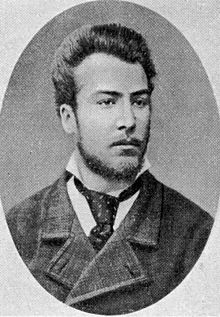
Guglielmo Oberdan is a name that resonates deeply within the context of Italian nationalism and the struggle for independence and unity. Born Wilhelm Oberdank on February 1, 1858, in Trieste, his life was tragically short but profoundly impactful. Oberdan is celebrated as a martyr who symbolized the fight against the Austro-Hungarian Empire, and his legacy continues to inspire generations of Italians committed to the ideals of freedom and unity.
Early Life and Identity Transformation
Guglielmo Oberdan was born into a complex socio-political environment. Trieste, his birthplace, was part of the Austro-Hungarian Empire, a multi-ethnic empire that included various nationalities and languages, creating a melting pot of cultural identities. Oberdan’s mother, Josepha Maria Oberdank, was left to raise him alone after his father refused to recognize him. This refusal led Oberdan to grow up with his mother’s Slovenian surname, but as he matured, he began to identify more strongly with Italian nationalism, a sentiment that was gaining momentum among many in the region.
As a young man, Oberdan made a deliberate choice to Italianize his name from Wilhelm Oberdank to Guglielmo Oberdan, reflecting his deepening commitment to the Italian nationalist cause. This act was not merely a change of name; it was a declaration of his allegiance to the ideals of Italian unification and independence from Austro-Hungarian rule.
Education and Early Activism
Oberdan’s intellectual and political journey began when he enrolled at the Polytechnic Institute in Vienna in 1877. However, his academic pursuits were soon interrupted by the mandatory conscription into the Austro-Hungarian army in 1878. This conscription was a turning point in his life, as it awakened a profound sense of patriotism within him. He refused to serve in the army of an empire he viewed as an oppressor of his people. Choosing to desert rather than serve, Oberdan fled to Rome, a city that had become a symbol of Italian unity and resistance against foreign domination.
In Rome, Oberdan resumed his studies and became increasingly involved in the political movements of the time, particularly those influenced by the ideas of Giuseppe Mazzini, one of the leading figures of the Italian Risorgimento. Mazzini’s philosophy of republicanism, nationalism, and the unification of Italy under a democratic framework resonated deeply with Oberdan, fueling his commitment to the cause of Italian irredentism—the movement aimed at reclaiming Italian-speaking regions under foreign control.
The Political Climate: Triplice Alleanza and Irredentism
The political landscape in Europe during Oberdan’s life was marked by alliances and tensions that had far-reaching consequences for the nationalistic movements of the time. One of the most significant developments was the formation of the Triple Alliance in 1882, a military coalition between Germany, Austria-Hungary, and Italy. While the alliance was intended to provide mutual defense, it placed Italy in a precarious position, allied with Austria-Hungary, an empire that still controlled territories that many Italians considered rightfully theirs.
This alliance was met with outrage by Italian nationalists, particularly those in regions like Trieste, where Austro-Hungarian rule was seen as oppressive. The death of Giuseppe Garibaldi in 1882, a hero of Italian unification, further intensified the sense of urgency and anger among the irredentists. For Oberdan, these events were catalysts that propelled him into more direct action against the Austro-Hungarian Empire.
The Plot Against Emperor Franz Joseph
Driven by a deep sense of patriotism and the desire to strike a blow against the empire, Oberdan, along with his fellow irredentist Donato Ragosa, plotted an assassination attempt on Emperor Franz Joseph. The plan was to target the emperor during the celebrations marking the fifth centenary of Austrian rule over Trieste, a symbolic moment intended to showcase the empire’s strength and legitimacy.
However, the plan was foiled before it could be executed. On September 16, 1882, Oberdan was apprehended in a small inn in Ronchi, near Trieste, along with his accomplice Giuseppe Sabbadini. The authorities found two bombs in their possession, which were intended for the assassination. Ragosa managed to escape, but Oberdan and Sabbadini were arrested and quickly put on trial by a military tribunal.
Trial and Execution
The trial of Guglielmo Oberdan was swift and decisive, reflecting the Austro-Hungarian Empire’s determination to crush any signs of rebellion. Despite the possibility of clemency from Emperor Franz Joseph, pressure from military officials and other members of the aristocracy ensured that Oberdan would face the harshest punishment. On December 20, 1882, at the age of 24, Guglielmo Oberdan was executed by hanging in Trieste.
Oberdan’s execution was not merely a legal act; it was a political statement. His death was meant to serve as a deterrent to other would-be revolutionaries, a demonstration of the empire’s resolve to maintain control over its diverse territories. However, instead of quelling the nationalist fervor, Oberdan’s execution had the opposite effect. It galvanized the Italian irredentist movement, turning Oberdan into a martyr for the cause of Italian unification and independence.
The Aftermath: Legacy and Impact
The impact of Guglielmo Oberdan’s martyrdom was profound and long-lasting. His execution became a rallying cry for Italian nationalists, particularly those in regions under Austro-Hungarian control. Oberdan was venerated as a symbol of resistance against foreign domination, and his name became synonymous with the struggle for Italian independence.
One of the most poignant aspects of Oberdan’s legacy is the story of how his body was treated after his execution. In a display of cruelty intended to further humiliate the irredentist cause, Oberdan’s body was decapitated, and his head was placed on display in a criminal museum in Vienna. This act, likely influenced by the pseudo-scientific theories of Cesare Lombroso, who believed in the study of criminal physiognomy, added a macabre element to Oberdan’s story. It wasn’t until 1923, during the height of Italian nationalism under Mussolini, that Oberdan’s remains were finally returned to Trieste.
Oberdan’s death and the events surrounding it contributed to the broader narrative of the Italian Risorgimento, the movement that eventually led to the unification of Italy. His sacrifice is often compared to that of other martyrs of the time, such as Cesare Battisti and Damiano Chiesa, who also gave their lives for the cause of Italian unity. Together, these figures form a pantheon of heroes who are remembered for their unwavering commitment to the idea of a unified Italy.
Memorialization and Cultural Significance
Guglielmo Oberdan’s legacy has been preserved not only in the history books but also through various memorials and cultural references. In Rome’s Villa Borghese, a monument stands in his honor, alongside those of other Italian patriots like Cesare Battisti, Francesco Domenico Guerrazzi, and Fabio Filzi. These monuments serve as reminders of the sacrifices made by those who fought for Italy’s independence and unity.
Oberdan’s story has also been the subject of numerous literary and historical works, including the seminal biography by Francesco Salata, “Guglielmo Oberdan secondo gli atti segreti del processo,” published in 1924. This work, based on secret documents from Oberdan’s trial, provides a detailed account of his life, his motivations, and the circumstances leading up to his execution. It remains a crucial source for understanding the historical context of Oberdan’s actions and the broader irredentist movement.
The image of Oberdan has been further immortalized in the popular imagination through various forms of media, including literature, music, and even film. His life story has been depicted as one of heroism, sacrifice, and moral conviction, making him a timeless figure in the narrative of Italian nationalism.
The Broader Context of Irredentism
To fully appreciate Guglielmo Oberdan’s significance, it is essential to understand the broader context of the irredentist movement within which he operated. Irredentism, in the Italian context, was the belief that all Italian-speaking territories, many of which were under the control of the Austro-Hungarian Empire, should be unified under the Italian state. This movement was fueled by the desire to complete the process of Italian unification, which had begun with the Risorgimento in the mid-19th century.
The territories of Trentino, South Tyrol, Istria, and Dalmatia were particular focal points of irredentist aspirations. These regions were home to significant Italian-speaking populations, but they remained outside the borders of the newly unified Kingdom of Italy. Irredentists like Oberdan saw the reclamation of these territories as a moral and national duty, one that justified even the most extreme measures, including acts of violence against the Austro-Hungarian authorities.
The irredentist movement gained further momentum in the years leading up to World War I, eventually contributing to Italy’s decision to enter the war on the side of the Allies. The Treaty of London (1915) promised Italy the territories it coveted in exchange for its support, and after the war, many of these regions were indeed annexed to Italy, fulfilling the dreams of irredentists like Oberdan.
Conclusion: The Legacy of Guglielmo Oberdan
Guglielmo Oberdan’s life and death are emblematic of the complex and often painful history of Italian unification. His transformation from Wilhelm Oberdank, a young student with a Slovenian surname, to Guglielmo Oberdan, a martyr for the Italian cause, reflects the deep-seated cultural and political conflicts that defined his era. His willingness to sacrifice his life for the ideal of a united Italy has earned him a place in the pantheon of Italian heroes.
Oberdan’s story is a powerful reminder of the lengths to which individuals will go in pursuit of national identity and freedom. His legacy continues to inspire those who believe in the principles of self-determination, national unity, and resistance against oppression. As Italy and Europe continue to grapple with questions of identity, sovereignty, and the legacy of their past, the story of Guglielmo Oberdan remains as relevant today as it was in the 19th century.


