
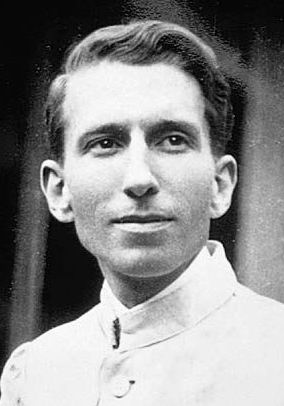
Guido Gustavo Gozzano, born on December 19, 1883, in Turin, Italy, was a seminal Italian poet and writer associated with the Crepuscolarismo movement. His life, though tragically short, left an indelible mark on Italian literature. Known for his refined poetic style, which often blended irony with a nostalgic longing for the past, Gozzano’s work remains influential to this day. This article delves into the life of Guido Gozzano, exploring his age, rise to fame, and the significant highlights that defined his literary career.
Early Life and Education
Guido Gozzano was born into a well-to-do, culturally sophisticated family in Turin. His father, Fausto Gozzano, was a prominent figure in their hometown of Agliè, near Turin, but he tragically passed away from pneumonia when Guido was still a young boy. This early loss profoundly impacted Guido, influencing both his personal life and his literary output.
Despite the personal tragedy, Gozzano’s upbringing was steeped in cultural and intellectual pursuits. After completing his secondary education, he enrolled in the Faculty of Law at the University of Turin. However, his passion for literature quickly overshadowed his legal studies. Drawn to the world of letters, Gozzano shifted his focus to literature, attending courses taught by renowned literary figures such as Arturo Graf, a poet and professor who would greatly influence his work.
The Literary Beginnings: Involvement in Crepuscolarismo
During his university years, Gozzano became involved with the Crepuscolari, a group of poets whose work reflected a sense of disillusionment with the world around them. The term “Crepuscularism” (Crepuscolarismo) refers to the “twilight” quality of their poetry, which often depicted the decay of ideals and the mundane aspects of everyday life. Gozzano’s early poetry echoed these themes, characterized by a subtle irony and a deep sense of nostalgia.
Gozzano began contributing to various literary journals and magazines in Turin, quickly establishing himself as a prominent voice within the Crepuscolari movement. His work during this period was marked by a distinctive style that combined lyrical beauty with a clear-eyed examination of the bourgeois society he often critiqued.
Personal Struggles: Illness and Romance
In 1907, at the age of 24, Gozzano was diagnosed with tuberculosis, a disease that would ultimately shape much of his life and work. The diagnosis forced him to spend long periods away from the bustling life of Turin, seeking treatment in mountain and seaside resorts where the climate was believed to be beneficial for his condition. This enforced isolation deepened his introspective nature and provided the solitude necessary for his literary endeavors.
During this time, Gozzano also experienced a significant romantic relationship with Amalia Guglielminetti, a fellow poet. Their relationship, though intense, was marked by emotional turbulence. Guglielminetti, known for her sophistication and strong personality, became both a muse and a source of inner conflict for Gozzano. The correspondence between them, later published as “Lettere d’amore” (Love Letters), reveals the complexity of their bond—one characterized by both deep affection and intellectual sparring.
The Rise to Fame: Major Works and Literary Contributions
Gozzano’s literary career, though brief, was marked by significant achievements that secured his place in the pantheon of Italian literature. His first collection of poems, La via del rifugio (The Way of Refuge), was published in 1907. The collection, infused with themes of escapism and melancholy, resonated with readers and critics alike. It reflected Gozzano’s desire to retreat from the harsh realities of life into a world of simplicity and nostalgia.
However, it was his second collection, I colloqui (The Conversations), published in 1911, that established him as one of the leading poets of his time. I colloqui is structured into three parts: Il giovenile errore (The Juvenile Error), Alle soglie (At the Threshold), and Il reduce (The Survivor). Each section delves into different aspects of life, from youthful indiscretions to the inevitability of aging and the search for meaning.
Gozzano’s poetry in I colloqui is characterized by a conversational tone, often employing an ironic distance that allows the poet to explore themes of love, death, and the passage of time with a delicate yet profound touch. The collection is widely regarded as his masterpiece, showcasing his ability to blend classical forms with modern sensibilities. It also reflects his disillusionment with the idealized visions of the past, as he turns instead to the banal and often painful realities of the present.
Literary Style and Influences
Gozzano’s early work was heavily influenced by Gabriele D’Annunzio, the Italian poet known for his decadent and dandyish persona. However, as Gozzano matured, he began to distance himself from D’Annunzio’s flamboyance, moving towards a more subdued and introspective style. This shift is evident in his later work, where the grandiose themes of D’Annunzio give way to the more intimate and personal reflections that characterize Gozzano’s poetry.
Another significant influence on Gozzano was Giovanni Pascoli, whose work resonated with Gozzano’s own feelings of alienation and his search for a deeper connection with the natural world. Pascoli’s focus on the simple, everyday aspects of life and his use of a more direct, almost conversational language greatly impacted Gozzano’s approach to poetry.
In addition to his poetry, Gozzano also experimented with prose and other literary forms. He wrote the unfinished narrative poem Le farfalle (The Butterflies), which contains echoes of Giacomo Leopardi’s philosophical musings, particularly in its contemplation of nature and the human condition. Gozzano also dabbled in writing for the emerging medium of cinema, penning a screenplay titled San Francesco. Although this work never made it to the screen, it highlighted Gozzano’s interest in the potential of film as a new form of artistic expression.
Travels and “Verso la cuna del mondo”
Despite his declining health, Gozzano’s curiosity and love for new experiences led him to embark on a journey to the East in 1912. Accompanied by his friend Giacomo Garrone, Gozzano traveled to India and the island of Ceylon (modern-day Sri Lanka). These travels were a means of seeking both physical healing and spiritual enlightenment. The experience left a profound impact on him, providing material for one of his most celebrated works, Verso la cuna del mondo (Toward the Cradle of the World).
Verso la cuna del mondo is a travelogue that captures Gozzano’s observations and reflections during his journey. The work, serialized in the Turin newspaper La Stampa, was later published as a book. It is a vivid account of his encounters with the landscapes, cultures, and people of the East, written with the same lyrical precision and introspective tone that marked his poetry. The work stands as a testament to Gozzano’s ability to find beauty and meaning even in the face of his own mortality.
The Final Years and Legacy
Guido Gozzano’s life was tragically cut short when he succumbed to tuberculosis at the age of 32 on August 9, 1916, in his beloved Turin. Despite his brief life, Gozzano’s influence on Italian literature is profound. His work represents a bridge between the grandiosity of 19th-century Romanticism and the more introspective, nuanced poetry that would characterize the early 20th century.
Gozzano’s ability to blend irony with a deep sense of nostalgia set him apart from his contemporaries. His refusal to idealize the past, choosing instead to focus on the often mundane and disappointing aspects of life, resonates with modern readers. His exploration of themes such as the passage of time, the inevitability of death, and the search for meaning in a seemingly indifferent world continues to inspire poets and writers today.
In addition to his poetic legacy, Gozzano’s prose works, including his short stories and travel writings, have also been recognized for their literary merit. His posthumously published collection of children’s tales, La principessa si sposa (The Princess Gets Married), compiled by his mother, offers a glimpse into the softer, more whimsical side of Gozzano’s imagination.
Conclusion: The Enduring Legacy of Guido Gozzano
Guido Gozzano’s contribution to Italian literature extends far beyond the confines of his short life. His work, characterized by its subtle irony, nostalgic longing, and exploration of the human condition, has left an indelible mark on the literary landscape. As a leading figure of the Crepuscolari movement, Gozzano helped to redefine Italian poetry, moving it away from the grandiose themes of the past and towards a more introspective, personal form of expression.
Today, Gozzano is remembered not only for his poetic achievements but also for his ability to capture the complexities of life with honesty and grace. His work continues to be studied and celebrated, offering readers a window into the soul of a poet who, despite his struggles, never lost his ability to find beauty in the world around him.


