
Introduction
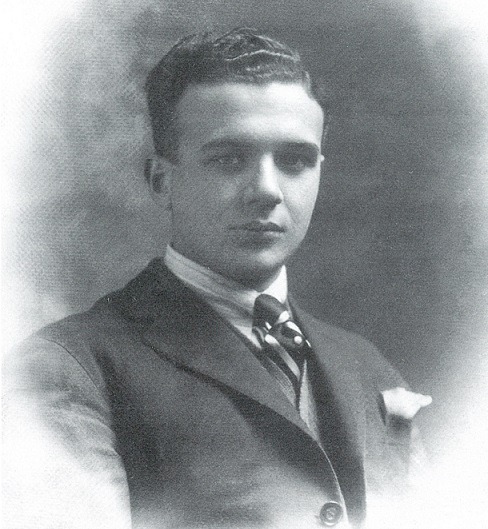
Gustavo Adolfo Rol, born on June 20, 1903, in Turin, Italy, is one of the most enigmatic and intriguing figures in 20th-century Italian culture. Throughout his life, Rol was a man surrounded by mystique and controversy, admired by many for his purported paranormal abilities and criticized by others as a mere illusionist. His life was marked by a fascinating blend of art, spirituality, and the occult, making him a figure of enduring fascination. This article delves into the life, fame, and highlights of Gustavo Rol’s life, exploring the historical context, the nuances of his persona, and the debates that continue to surround him.
Early Life and Background
Gustavo Rol was born into a wealthy and cultured family in Turin, a city known for its rich cultural heritage and intellectual atmosphere. His father, Vittorio Rol, was a prominent lawyer who later became the director of the Turin branch of the Banca Commerciale Italiana, a position he held for nearly two decades. Rol’s mother, Martha Peruglia, was the daughter of Antonio Peruglia, the president of the Saluzzo court. This privileged upbringing provided Rol with the freedom to pursue his interests, which from an early age included the arts, music, and history.
From a young age, Rol demonstrated an exceptional intellect and a profound interest in the arts. He began writing poetry and developed a passion for painting, interests that would remain central to his life. His childhood was marked by a deep fascination with Napoleon Bonaparte, a figure who would become an enduring symbol in his life. Family anecdotes suggest that Rol’s obsession with Napoleon began as early as two years old, when he was reportedly found weeping before an image of the French general, moved by the tragic fate of his hero. By the time he was in elementary school, Rol had become a dedicated student of Napoleon’s life and battles, impressing his teachers and peers with his detailed knowledge.
Education and Early Career
Rol’s formal education began at a local school in Turin, but his real education, according to his own accounts, came from his voracious reading and self-directed studies. After completing his secondary education, he enrolled in the Faculty of Law at the Royal University of Turin in 1923. However, his academic journey was not straightforward. His studies were interrupted by a career in banking, a path he took to satisfy his father’s wishes. Rol’s work in banking took him across Europe, to cities like Marseille, London, Edinburgh, and Casablanca. It was during these travels that Rol experienced the events that would change the course of his life.
In Marseille, between 1925 and 1926, Rol met a Polish man who introduced him to a series of card tricks that sparked his interest in the occult. This encounter, coupled with a transformative experience at Lourdes, where Rol witnessed what he believed to be a miraculous healing, led him to delve deeper into spiritual studies. He began to explore the connections between colors, sounds, and other metaphysical elements, ultimately developing his own theories on the nature of reality and human perception. These experiences marked the beginning of Rol’s journey into the world of the paranormal.
The Awakening of Paranormal Abilities
Rol’s life took a dramatic turn as he began to claim extraordinary abilities, which he attributed to his deep spiritual insights and metaphysical studies. By the late 1920s, Rol had become known for his supposed powers of telepathy, precognition, and bilocation. He also claimed to be able to manipulate objects with his mind, perform time travel, and even heal the sick. These abilities, he maintained, were not the result of any supernatural intervention but rather the product of a deep understanding of the hidden laws of the universe.
Despite the skepticism of some, Rol attracted a large following, including many prominent figures in Italian society. Throughout the 1930s and 1940s, he became a confidant to numerous influential individuals, including members of the Agnelli family and even Benito Mussolini. Rol’s growing fame as a spiritual and paranormal figure did not, however, deter him from pursuing more conventional interests. In 1934, following the death of his father, Rol left his banking career and turned to journalism and antiquarian pursuits. His fascination with Napoleon led him to become one of the most respected collectors of Napoleonic artifacts, further cementing his reputation as a man of eclectic talents.
World War II and Post-War Years
During World War II, Rol’s life took yet another turn. He enlisted as an alpine soldier and participated in the Italian resistance movement, helping to rescue partisans from danger. His wartime activities earned him respect and admiration, but they also deepened his commitment to his spiritual path. After the war, Rol returned to civilian life and opened an antique shop, which he ran until the 1960s. However, his primary focus during these years was on his spiritual and artistic pursuits.
Rol’s home on Via Silvio Pellico in Turin became a gathering place for some of the most famous personalities of the time. Filmmakers, actors, musicians, and even heads of state sought out Rol for his insights and guidance. Among his notable admirers were Federico Fellini, Vittorio De Sica, Marcello Mastroianni, Nino Rota, and Alberto Sordi. Even Queen Elizabeth II reportedly invited him to London during the 1950s, and American figures such as Walt Disney and John F. Kennedy expressed interest in meeting him. Rol’s reputation extended far beyond Italy, and he became a symbol of mystery and intrigue on the international stage.
Skepticism and Controversy
Despite his widespread fame, Rol’s claims were not without controversy. Throughout his life, he faced criticism from skeptics who questioned the authenticity of his abilities. Among the most vocal of these critics were Italian journalists Piero Angela and Tullio Regge. Both men attended Rol’s demonstrations and concluded that his feats were not the result of paranormal powers but rather of skilled illusionism. Their investigations led to a broader public debate about Rol’s true nature—was he a gifted spiritualist or merely a clever magician?
Rol himself remained somewhat enigmatic on the matter. He never explicitly claimed to possess supernatural powers, preferring instead to describe himself as a researcher and experimenter. He often stated that his goal was to encourage people to look beyond appearances and develop their intelligent spirit. This ambiguous stance allowed Rol to maintain an air of mystery, which only added to his allure.
The Role of the Media
From the 1950s to the 1980s, the media played a significant role in shaping Rol’s public image. Newspapers and magazines regularly featured stories about his alleged powers, describing him as a man capable of telepathy, time travel, and other extraordinary feats. These reports contributed to the mythos surrounding Rol, transforming him into a figure of legend. However, they also attracted the attention of skeptics who sought to debunk his claims.
The media’s portrayal of Rol as a man with supernatural abilities was a double-edged sword. On the one hand, it brought him widespread fame and a devoted following. On the other hand, it made him a target for criticism and skepticism. The public fascination with Rol’s abilities reflected broader societal interests in the paranormal and the occult, which were particularly pronounced during the post-war period.
Rol’s Legacy and Final Years
Gustavo Rol continued to captivate the public’s imagination well into his later years. Even as he aged, his reputation as a man of extraordinary abilities did not wane. In the 1980s, stories about his powers still circulated widely, and his home in Turin remained a pilgrimage site for those seeking spiritual guidance or simply a glimpse of the man behind the legend.
Rol passed away on September 22, 1994, at the age of 91, in Turin’s San Giovanni Battista Hospital, commonly known as “Le Molinette.” His death marked the end of an era, but his legacy lived on. In the years since his passing, Rol’s life and work have continued to inspire debate and fascination. Some view him as one of the most gifted spiritual figures of the 20th century, while others see him as a skilled illusionist who capitalized on the public’s willingness to believe in the extraordinary.
Conclusion
Gustavo Rol’s life was a testament to the power of mystery and the allure of the unknown. Whether he was truly a man of supernatural abilities or simply a master of illusion, Rol captured the imagination of countless individuals during his lifetime and continues to do so today. His story is one of contrasts—a man deeply rooted in the cultural and intellectual life of his time, yet forever associated with the world of the occult and the paranormal.
As we reflect on Rol’s life, it is clear that his influence extended far beyond his immediate circle of followers. He left an indelible mark on Italian culture and remains a figure of enduring fascination. The debates surrounding his true nature—whether as a spiritual guide or an illusionist—are likely to continue, ensuring that Gustavo Rol’s name will be remembered for generations to come.


