
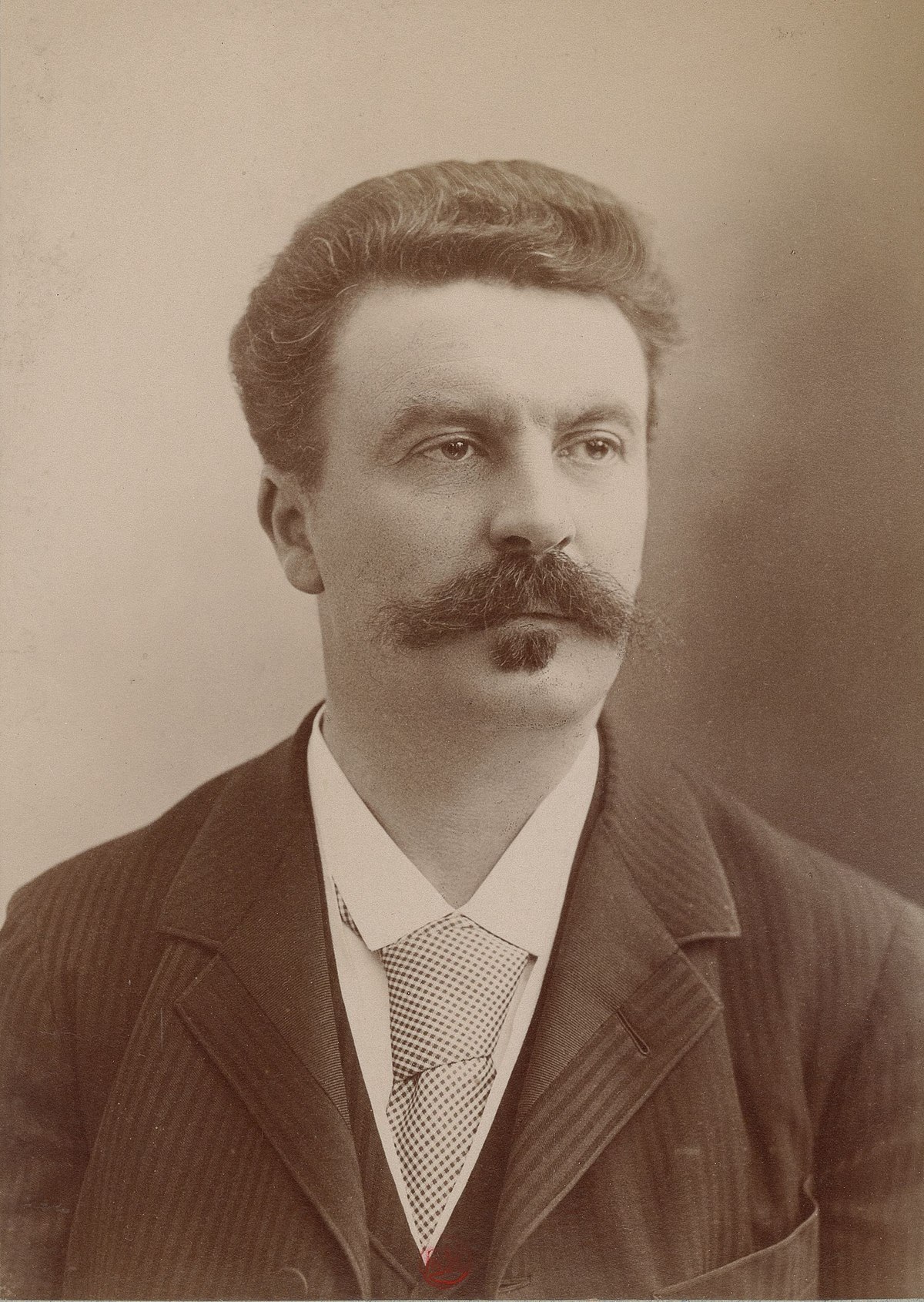
Guy de Maupassant, born on August 5, 1850, near Dieppe, France, is celebrated as one of the most influential literary figures of the 19th century. Known for his mastery in short stories and his significant contributions to modern narrative fiction, Maupassant’s work has left an enduring legacy. This article explores the life of Guy de Maupassant, delving into his journey from a provincial upbringing to becoming a renowned author, and examining the historical and cultural context that shaped his extraordinary career.
Early Life and Background
Guy de Maupassant was born at the Château de Miromesnil, a grand estate near Dieppe, into a family of minor nobility. His father, Gustave de Maupassant, and mother, Laure Le Poittevin, were both descendants of Lorraine but had relocated to Normandy. This setting, rich in cultural heritage and natural beauty, would later deeply influence Maupassant’s writing.
Maupassant’s mother, Laure, was an intellectually vibrant woman, passionate about classical literature, particularly the works of Shakespeare. Her love for literature and her strong-willed nature had a profound impact on young Guy, fostering his early interest in writing. Maupassant’s father, however, was less engaged in the literary arts, and the couple’s eventual separation when Guy was 11 significantly affected him.
Guy spent his formative years with his mother in the seaside town of Étretat, a location known for its picturesque landscapes. This idyllic environment, combined with his mother’s encouragement, nurtured his love for nature and outdoor activities. Étretat would later become a frequent setting in his stories, where the vivid descriptions of landscapes mirror the rugged coastal beauty of Normandy.
Education and Early Literary Influences
Maupassant’s education began at a seminary in Yvetot, a stint that ended when he orchestrated his own expulsion, a testament to his early rebellious spirit and growing disinterest in organized religion. This experience fostered a lifelong aversion to institutionalized religion, a theme subtly woven into his later works.
He continued his education at the Lycée Pierre-Corneille in Rouen, where he excelled in literature and developed a passion for poetry. During these years, Maupassant also participated in theatrical performances, honing his skills in dialogue and characterization—elements that would later become hallmarks of his short stories.
Upon completing his education, Maupassant volunteered to serve in the Franco-Prussian War of 1870-1871. The war had a profound impact on him, exposing him to the harsh realities of human nature and the brutalities of conflict. These experiences would later surface in his writing, particularly in his depiction of the futility and senselessness of war.
The Move to Paris and Literary Apprenticeship
After the war, Maupassant moved to Paris, where he took up a position as a civil servant, first at the Ministry of the Navy and later at the Ministry of Public Instruction. Although his day job was far from glamorous, it provided him with the financial stability to pursue his literary ambitions during his free time.
Maupassant’s move to Paris marked the beginning of a significant phase in his life. His mother, a friend of the prominent novelist Gustave Flaubert, introduced him to Flaubert, who became a mentor to the young writer. Flaubert, recognizing Maupassant’s talent, took him under his wing, introducing him to the literary circles of Paris and guiding his early development as a writer.
Through Flaubert, Maupassant was introduced to other literary giants of the time, including Émile Zola and Ivan Turgenev. These interactions exposed him to the realist and naturalist movements, which profoundly influenced his writing style. Maupassant’s early work, often published under pseudonyms, began to gain recognition, and his confidence as a writer grew.
The Breakthrough: “Boule de Suif” and Rise to Fame
Maupassant’s breakthrough came in 1880 with the publication of his short story “Boule de Suif” (Butterball), which was included in the anthology Les Soirées de Médan, alongside works by Zola and other naturalist writers. The story, which depicts the moral hypocrisies of French society during the Franco-Prussian War, was an immediate success and established Maupassant as a leading figure in French literature.
“Boule de Suif” was praised for its concise narrative, vivid characterizations, and sharp social commentary. Flaubert himself lauded it as a masterpiece destined to endure. This success was a turning point in Maupassant’s career, and he began writing prolifically, producing short stories, novels, travelogues, and plays.
Over the next decade, Maupassant published approximately 300 short stories, six novels, three travel books, and a volume of verse. His works were marked by a realism that was often bleak and unsparing, focusing on the darker aspects of human nature, including greed, cruelty, and the futility of existence.
Thematic Concerns and Literary Style
Maupassant’s writing is characterized by its economy of style, clarity of expression, and an acute observation of human behavior. His stories often explore the themes of social class, the absurdity of life, and the inexorable decline of human beings. Maupassant had a natural aversion to the bourgeoisie, which he saw as hypocritical and morally bankrupt. This disdain is evident in many of his works, where he mercilessly satirizes the bourgeois values of his time.
His storytelling was also influenced by his philosophical leanings, particularly the works of Arthur Schopenhauer. The German philosopher’s pessimistic worldview resonated with Maupassant, who often depicted life as a struggle filled with suffering, desire, and disappointment. In stories like “The Horla,” Maupassant delved into psychological horror, reflecting his fascination with the human psyche and the concept of madness.
Despite his pessimism, Maupassant’s stories are not without humor. He often used irony and wit to expose the absurdities of society, making his critiques all the more poignant. His ability to blend humor with serious social commentary made his work both entertaining and thought-provoking, appealing to a wide audience.
Major Works and Literary Contributions
Maupassant’s major works include his six novels: Une Vie (A Life), Bel-Ami, Mont-Oriol, Pierre et Jean, Fort comme la mort (Strong as Death), and Notre Cœur (Our Heart). Each of these novels offers a deep exploration of human emotions and societal norms, often portraying characters who are trapped by their circumstances and driven by their desires.
Une Vie, published in 1883, was Maupassant’s first novel. It tells the story of a young woman’s disillusionment with life and love, a theme that recurs in many of his works. The novel’s success was followed by Bel-Ami (1885), which became one of Maupassant’s most popular and enduring works. Bel-Ami chronicles the rise of a handsome but unscrupulous young man in Parisian society, highlighting the corrupting influence of power and ambition.
Another notable work, Pierre et Jean (1888), is often regarded as Maupassant’s finest novel. It is a psychological study of two brothers whose relationship is strained by jealousy and rivalry. The novel’s focus on psychological realism and its exploration of the inner lives of its characters were groundbreaking at the time and influenced later writers such as Marcel Proust and Henry James.
Maupassant’s short stories, however, remain his most significant contribution to literature. Stories like “The Necklace,” “A Piece of String,” and “The Horla” are considered masterpieces of the genre, each offering a succinct, yet profound, exploration of human nature. His ability to convey complex emotions and themes in a few pages is what makes his short stories timeless.
Decline in Health and Final Years
Despite his literary success, Maupassant’s personal life was marred by ill health and mental decline. He suffered from syphilis, a disease he likely contracted in his youth, which progressively deteriorated his physical and mental state. By the late 1880s, Maupassant was experiencing frequent hallucinations and severe bouts of depression.
Maupassant’s deteriorating condition was exacerbated by his fear of death and his obsession with madness, themes that are vividly depicted in his later works. In 1892, after a failed suicide attempt, Maupassant was committed to the private asylum of Dr. Esprit Blanche in Passy, Paris. He spent the last 18 months of his life in the asylum, succumbing to his illness on July 6, 1893, at the age of 42.
Maupassant was buried in the Cimetière de Montparnasse in Paris, leaving behind a legacy that would influence generations of writers. His works, marked by their realism, psychological depth, and unflinching portrayal of human nature, continue to be studied and admired to this day.
Legacy and Influence
Guy de Maupassant’s influence on literature is profound. He is often credited with perfecting the short story form, setting a standard for brevity and precision that has influenced countless writers, including Anton Chekhov, O. Henry, and Ernest Hemingway. His exploration of psychological realism paved the way for modernist writers, and his themes of existential despair and social critique resonate in the works of later authors like Franz Kafka and Albert Camus.
Maupassant’s legacy extends beyond literature. His keen observations of society, his critique of bourgeois values, and his exploration of the human condition have made his works a valuable resource for understanding the social and cultural dynamics of 19th-century France. His stories, with their universal themes, continue to speak to readers around the world, offering insights into the complexities of human nature.
Conclusion
Guy de Maupassant’s life and work represent the triumph of literary artistry over personal adversity. From his early struggles in Normandy to his rise as one of France’s greatest writers, Maupassant’s journey is one of relentless creativity and profound insight into the human experience. His contributions to literature have left an indelible mark, and his works continue to be celebrated for their clarity, precision, and depth.
As we reflect on Guy de Maupassant’s extraordinary career, it is clear that his stories, with their timeless appeal and universal themes, will continue to inspire and influence readers and writers for generations to come. His ability to capture the essence of life in all its complexity and contradiction is what makes Guy de Maupassant not just a great writer, but a literary genius whose work will endure the test of time.


