
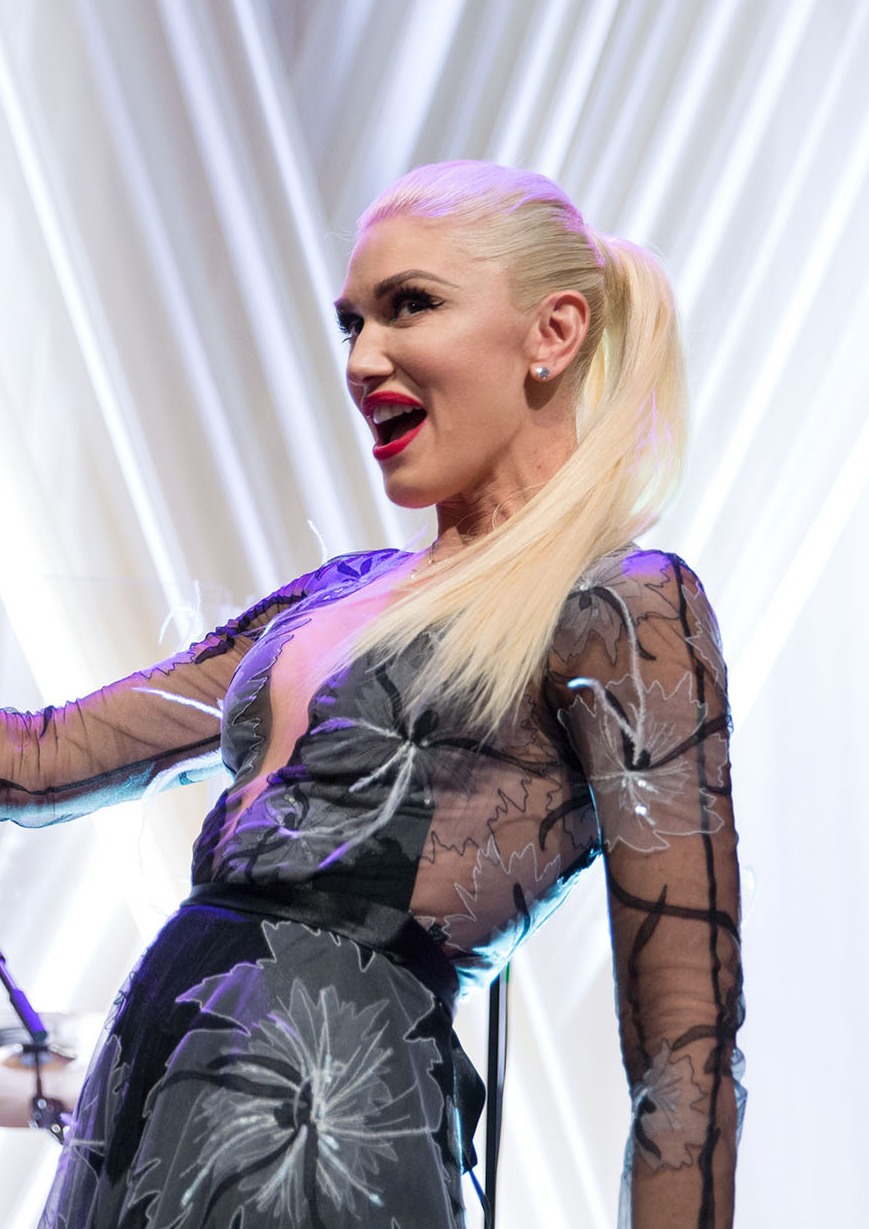
Gwen Stefani, born on October 3, 1969, in Fullerton, California, is a global icon known for her eclectic music career, distinctive fashion sense, and her role as the lead vocalist of the band No Doubt. Over the decades, Stefani has evolved from a ska-punk singer in the Southern California music scene to a solo pop superstar and fashion mogul. Her journey, marked by personal reinvention and professional innovation, has solidified her place as a prominent figure in both the music and fashion industries.
Early Life and Musical Beginnings
Gwen Renée Stefani was born into a close-knit family in Orange County, California. Her father, Dennis Stefani, worked as a marketing executive, while her mother, Patti, was a homemaker. Growing up in a family with Italian-American roots, Gwen was exposed to a variety of musical influences, including folk music and musicals, which her parents loved. This early exposure to different genres of music would later play a significant role in shaping her unique sound.
In 1987, Gwen’s older brother, Eric Stefani, co-founded the band No Doubt with his friend John Spence. Initially, Gwen joined the band as a backup vocalist, but she soon took over as the lead singer after the tragic death of Spence. The band, which started with a focus on ska and punk music, quickly gained a following in the local Southern California music scene.
The Rise of No Doubt and Breakthrough Success
No Doubt’s self-titled debut album was released in 1992 under Interscope Records. However, the album failed to achieve commercial success, which led to a challenging period for the band. Despite this setback, No Doubt persevered, continuing to perform and refine their sound. Their determination paid off with the release of their third album, Tragic Kingdom, in 1995.
Tragic Kingdom marked a turning point in No Doubt’s career. The album, with its blend of ska, punk, and pop, resonated with a wide audience, catapulting the band to international fame. Hits like “Just a Girl,” “Spiderwebs,” and especially “Don’t Speak” dominated the charts, with “Don’t Speak” becoming one of the most successful singles of the 1990s. The song, which dealt with Gwen’s breakup with bandmate Tony Kanal, showcased her ability to channel personal experiences into relatable music.
Gwen Stefani’s charisma and distinctive style became a central part of No Doubt’s appeal. Her platinum blonde hair, red lipstick, and eclectic fashion choices made her a fashion icon, influencing trends and establishing her as a trendsetter in the industry.
Solo Career and Fashion Ventures
As No Doubt’s momentum began to slow in the early 2000s, Gwen Stefani started to explore solo opportunities. In 2004, she released her debut solo album, Love. Angel. Music. Baby., which showcased a more pop-oriented sound influenced by 1980s music and modern R&B. The album was a commercial success, producing several hit singles, including “What You Waiting For?,” “Rich Girl,” and “Hollaback Girl.” The latter became the first digital download to sell one million copies, further solidifying Stefani’s status as a pop icon.
Stefani’s solo work was marked by a significant shift in her musical style, embracing a more polished pop aesthetic. Her music videos and live performances during this period were characterized by their high fashion and innovative visuals, aligning with her growing influence in the fashion world.
In addition to her music, Stefani launched her own fashion line, L.A.M.B., in 2003. The line, which stands for Love. Angel. Music. Baby., reflected Stefani’s unique style, blending punk, glam, and street fashion influences. L.A.M.B. quickly became a favorite among celebrities and fashion enthusiasts, establishing Stefani as a successful entrepreneur in the fashion industry.
Personal Life and Continued Success
Gwen Stefani’s personal life has often been in the public eye, particularly her relationships and family life. In 2002, she married Gavin Rossdale, the lead singer of the rock band Bush. The couple had three sons together: Kingston James McGregor, born in 2006; Zuma Nesta Rock, born in 2008; and Apollo Bowie Flynn, born in 2014. Despite their high-profile marriage, Stefani and Rossdale faced challenges, and they eventually divorced in 2015 after 13 years of marriage.
Following her divorce, Stefani began a relationship with country music star Blake Shelton, whom she met while both were coaches on the television show The Voice. Their relationship quickly became a favorite topic in celebrity news, and the couple’s chemistry both on and off the screen endeared them to fans. In 2021, Stefani and Shelton married in an intimate ceremony at Shelton’s Oklahoma ranch, blending their lives and careers even further.
Throughout the 2010s, Stefani continued to balance her music career with her role as a mother and entrepreneur. She reunited with No Doubt for the album Push and Shove in 2012 and embarked on several solo projects, including the release of her third solo album, This Is What the Truth Feels Like, in 2016. The album, which was heavily influenced by her personal experiences, including her divorce, received critical acclaim and debuted at number one on the Billboard 200 chart.
In addition to her music, Stefani has maintained her presence in the fashion world. Her L.A.M.B. line expanded to include accessories, fragrance, and eyewear, further cementing her status as a fashion mogul. She also launched the Harajuku Lovers line, inspired by Japanese street fashion, which became popular for its playful and quirky designs.
The Voice and Legacy
Gwen Stefani’s role as a coach on the popular television show The Voice has added another dimension to her career. First joining the show in 2014, Stefani quickly became a fan favorite, known for her nurturing approach to mentoring young artists and her dynamic chemistry with fellow coaches, particularly Blake Shelton. Her involvement with The Voice has not only introduced her to a new generation of fans but also showcased her as a supportive and knowledgeable mentor in the music industry.
Stefani’s influence extends beyond her music and fashion. She has become an emblem of reinvention, successfully navigating the transitions from band frontwoman to solo artist, from rocker to pop star, and from fashion influencer to television personality. Her ability to adapt to the changing landscape of the entertainment industry while maintaining her authenticity has made her a role model for many aspiring artists and entrepreneurs.
Nuances and Historical Context
Gwen Stefani’s career cannot be fully appreciated without understanding the cultural and historical context in which she emerged. The 1990s were a time of significant change in the music industry, with the rise of alternative rock, grunge, and the fusion of genres like ska and punk into the mainstream. No Doubt’s success during this period reflected the broader trends of the time, where bands with eclectic sounds and strong visual identities found a global audience.
Stefani’s solo career in the 2000s coincided with the rise of digital music and the increasing importance of image and branding in the music industry. Her ability to blend music with fashion and her savvy use of media allowed her to stay relevant in an increasingly competitive industry. Her collaborations with artists across genres, from hip-hop to electronic music, highlighted her versatility and her willingness to experiment with new sounds.
Moreover, Stefani’s influence in the fashion industry during the 2000s and beyond reflects broader trends in celebrity culture, where musicians often branch out into other creative fields. Her success with L.A.M.B. and her other fashion ventures exemplifies how musicians can leverage their personal style into successful business enterprises, a trend that has only grown in the years since.
Conclusion: Gwen Stefani’s Enduring Impact
Gwen Stefani’s impact on both the music and fashion industries is undeniable. From her early days with No Doubt to her successful solo career and her ventures into fashion and television, Stefani has consistently reinvented herself, staying ahead of trends and remaining relevant across multiple decades. Her journey is a testament to her versatility, creativity, and resilience.
As a musician, Stefani has influenced countless artists with her distinctive voice and genre-blending music. As a fashion icon, she has inspired trends and set new standards for personal style. And as a public figure, she has shown how to navigate the complexities of fame, family, and personal growth in the public eye.
Gwen Stefani’s legacy is one of innovation and reinvention. Her ability to adapt to the ever-changing landscape of the entertainment industry while staying true to herself has made her an enduring figure in pop culture. Whether through her music, her fashion, or her television presence, Stefani continues to inspire and influence new generations, cementing her place as a true icon of the modern era.


