
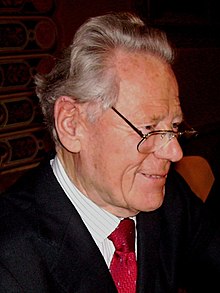
Hans Küng was a Swiss Catholic priest, theologian, and prolific author who became one of the most influential and controversial figures in modern Christian theology. Born on March 19, 1928, in Sursee, Switzerland, Küng’s life was marked by a deep commitment to theological inquiry, interfaith dialogue, and criticism of the Catholic Church’s structures. This article delves into Küng’s life, exploring his age, rise to fame, and key highlights, while offering detailed insights into the nuances of his thought and historical context.
Early Life and Education
Hans Küng was born in Sursee, a small town near Lake Sempach in Switzerland. His upbringing in a devout Catholic family laid the foundation for his lifelong engagement with Christian theology. After completing his secondary education in Lucerne, Küng pursued studies in philosophy and theology at the Pontifical Gregorian University in Rome, where he was ordained as a priest in 1954. His academic journey did not end there; Küng continued his theological studies in Paris, where he earned a doctorate in theology from the Institut Catholique.
Küng’s doctoral thesis focused on the doctrine of justification in the theology of Karl Barth, a prominent Protestant theologian. This choice reflected Küng’s early interest in ecumenism, a theme that would dominate much of his later work. His engagement with Barth’s theology highlighted his willingness to cross traditional Catholic-Protestant boundaries, seeking common ground in the Christian faith.
Academic Career and Theological Contributions
Hans Küng’s academic career began in earnest when, at the age of 32, he was appointed as a professor of Catholic theology at the University of Tübingen in Germany in 1960. His tenure at Tübingen was distinguished by both his scholarly output and his role in fostering dialogue between different Christian denominations.
One of the most significant periods in Küng’s life was his involvement in the Second Vatican Council (1962-1965). Appointed as a theological consultant by Pope John XXIII, Küng played a pivotal role in shaping the Council’s discussions and outcomes. The Council, which sought to modernize the Catholic Church and address its relationship with the contemporary world, resonated deeply with Küng’s own theological vision. It was during this time that he also forged a relationship with Joseph Ratzinger, the future Pope Benedict XVI, who was then a fellow theologian. The two collaborated briefly at Tübingen before their paths diverged dramatically in the following years.
Küng’s work at Tübingen also led to the establishment of the Institute for Ecumenical Research, which he founded to promote dialogue among the various Christian traditions. His commitment to ecumenism was further reflected in his extensive writings, which aimed to bridge the gaps between Catholicism and other Christian denominations, particularly Protestantism.
Theological Controversy: Infallibility and Ecclesiastical Censure
Hans Küng’s theological explorations, while groundbreaking, were not without controversy. In 1970, he published a book titled “Infallible? An Inquiry,” in which he questioned the doctrine of papal infallibility, a central tenet of Catholic dogma established by the First Vatican Council in 1870. Küng argued that the doctrine was not only historically unfounded but also detrimental to the Church’s engagement with the modern world.
The book provoked a strong reaction from the Vatican. In 1975, the Congregation for the Doctrine of the Faith, the Catholic Church’s body responsible for defending its doctrine, summoned Küng to explain his views. The tension between Küng and the Vatican reached a climax in 1979 when he was stripped of his “missio canonica,” the Church’s authorization to teach Catholic theology. This move effectively removed him from his position within the Catholic theological faculty at Tübingen.
However, this censure did not silence Küng. He remained a priest and continued his academic work, albeit in a separate capacity from the Catholic faculty. He retained his professorship at Tübingen, where he continued to lead the Institute for Ecumenical Research. The censure only seemed to deepen Küng’s resolve to challenge what he saw as the authoritarian structures of the Catholic Church, advocating instead for a more open, dialogical approach to theology.
Advocacy for Church Reform and Interfaith Dialogue
Throughout his career, Hans Küng was a vocal advocate for reform within the Catholic Church. He called for greater transparency, accountability, and inclusivity, arguing that the Church needed to evolve to meet the needs of contemporary believers. Küng was particularly critical of what he perceived as the Church’s eurocentrism and its resistance to the ordination of women, the participation of laypeople in church governance, and the need for interfaith dialogue.
In 1993, Küng founded the Global Ethic Foundation (Stiftung Weltethos), an organization dedicated to promoting a shared ethical framework across different religions and cultures. Küng believed that the world’s major religions shared common ethical principles that could serve as a foundation for global peace and cooperation. His work in this area culminated in the publication of “Global Responsibility: In Search of a New World Ethic,” in which he outlined his vision for a universal code of ethics based on mutual respect and understanding.
Küng’s commitment to interfaith dialogue was further reflected in his trilogy of works on Judaism, Christianity, and Islam. These books—”Judaism,” “Christianity,” and “Islam”—provided comprehensive analyses of the three Abrahamic faiths, exploring their historical development, theological principles, and contemporary relevance. Through these works, Küng sought to promote understanding and cooperation among these religious traditions, arguing that such dialogue was essential for addressing the global challenges of the 21st century.
Later Life and Legacy
Hans Küng’s later years were marked by continued scholarly activity and public engagement. He retired from teaching in 1996, becoming a professor emeritus at Tübingen. Despite his retirement, Küng remained active in theological and ethical discussions, publishing several significant works, including his memoirs and reflections on his lifelong struggle for freedom within the Church.
Küng’s influence extended beyond the academic and ecclesiastical spheres. He became a respected public intellectual, often commenting on social, political, and ethical issues. His critiques of the Catholic Church’s leadership, particularly his differences with Pope Benedict XVI (Joseph Ratzinger), attracted widespread attention. Despite their early collaboration, the two theologians diverged sharply in their views, with Küng consistently advocating for a more progressive and inclusive Church.
Hans Küng passed away on April 6, 2021, in Tübingen, Germany, at the age of 93. His death marked the end of a remarkable career that spanned more than six decades, during which he became one of the most influential and controversial theologians of the 20th and early 21st centuries.
The Nuances and Historical Context of Küng’s Thought
To fully appreciate Hans Küng’s contributions, it is essential to consider the historical and theological context in which he operated. The mid-20th century was a time of significant change and upheaval within the Catholic Church. The Second Vatican Council, convened by Pope John XXIII, sought to modernize the Church and address its relationship with the contemporary world. Küng was a key figure in this movement, advocating for reforms that would make the Church more relevant and accessible to modern believers.
However, the post-Vatican II era also saw a backlash against some of these reforms, particularly during the pontificates of John Paul II and Benedict XVI. Küng found himself increasingly at odds with the Church’s leadership, particularly over issues such as papal infallibility, the role of women in the Church, and the need for interfaith dialogue. His critiques of the Church’s hierarchy were not just theological but also deeply ethical, rooted in his belief that the Church needed to be more transparent, democratic, and engaged with the world.
Küng’s work also reflected broader trends in 20th-century theology, particularly the emphasis on ecumenism and interfaith dialogue. His commitment to finding common ground among different Christian denominations and world religions was part of a larger effort to promote peace and understanding in a globalized world. Küng’s vision of a “global ethic” was groundbreaking, anticipating many of the discussions about religion and ethics that would become increasingly important in the 21st century.
Conclusion: Hans Küng’s Enduring Legacy
Hans Küng’s life and work represent a unique and profound contribution to modern theology and religious thought. His willingness to challenge the established doctrines of the Catholic Church, coupled with his commitment to ecumenism and interfaith dialogue, set him apart as one of the most important theological voices of his time.
Küng’s legacy is multifaceted. He was a theologian who sought to reconcile faith with reason, tradition with modernity, and religious conviction with ethical responsibility. His advocacy for church reform, his critique of papal infallibility, and his work on a global ethic continue to resonate with those who seek a more open, inclusive, and socially engaged Church.
As the world continues to grapple with issues of religious conflict, ethical dilemmas, and the need for greater understanding among different cultures and faiths, Hans Küng’s ideas remain as relevant as ever. His life serves as a testament to the power of critical inquiry, the importance of dialogue, and the enduring need for reform within religious institutions. In remembering Hans Küng, we are reminded of the potential for theology to not only reflect on the divine but also to contribute to the betterment of humanity.


