
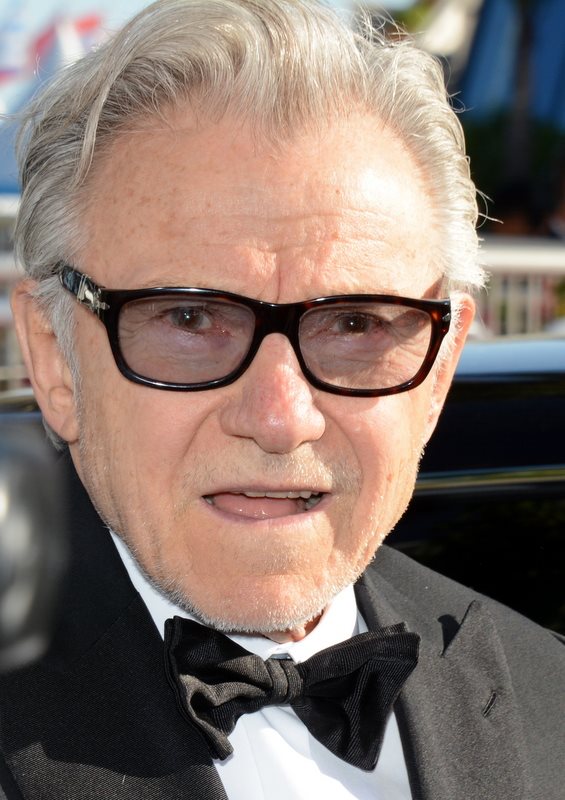
Harvey Keitel, born on May 13, 1939, in New York City, is a renowned American actor and film producer who has left an indelible mark on Hollywood through his powerful performances and collaborations with some of the most influential directors of the late 20th and early 21st centuries. With a career spanning over five decades, Keitel is celebrated for his roles as tough, gritty characters in films that have become cultural landmarks. This article delves into his life, exploring the journey that led him to fame, the highlights of his career, and the legacy he continues to build.
Early Life and Struggles
Harvey Keitel was born to immigrant parents in Brooklyn, New York. His father was from Poland, and his mother was from Romania, both of Jewish descent. The family owned a small restaurant, which provided a modest living. Growing up in a working-class environment in Brooklyn, Keitel’s early life was far from glamorous. He attended the Alexander Hamilton Vocational School, where he struggled academically and faced disciplinary issues, ultimately leading to his expulsion.
In an attempt to find direction, a young Keitel enlisted in the U.S. Marine Corps at the age of 16, a decision that would profoundly shape his character. Serving with the Marines, Keitel was deployed to Lebanon during a tense period of U.S. involvement in the region. His time in the military provided him with discipline and a sense of purpose that would later influence his acting career.
After returning from service, Keitel sought to find his place in civilian life. He took on various jobs, including working as a shoe salesman and a court stenographer. These jobs helped him save money and pay for acting classes at the prestigious Actors Studio in New York, where he studied under renowned teachers like Lee Strasberg and Stella Adler. It was at the Actors Studio that Keitel began to hone his craft and overcome his severe stutter, a challenge that had plagued him since childhood.
Breakthrough and Collaboration with Scorsese
Harvey Keitel’s big break came in the late 1960s when he was cast in Martin Scorsese’s debut feature film, “Who’s That Knocking at My Door?” (1967). This film marked the beginning of a long and fruitful collaboration between Keitel and Scorsese, one that would see the actor become a central figure in the director’s early work. Keitel’s portrayal of J.R., a conflicted young man navigating the complexities of love and morality, set the tone for the type of intense, introspective characters he would become known for.
The success of this collaboration led to Keitel’s role in Scorsese’s “Mean Streets” (1973), a seminal film in both their careers. In “Mean Streets,” Keitel starred alongside Robert De Niro, another up-and-coming actor who would go on to become one of Hollywood’s biggest stars. The film, which explores the gritty underbelly of New York’s Little Italy, showcased Keitel’s ability to convey deep emotional turmoil and raw intensity, qualities that would define many of his future roles.
Establishing Himself in Hollywood
Throughout the 1970s, Keitel continued to build his reputation as a versatile and fearless actor. He starred in a string of critically acclaimed films, including “Alice Doesn’t Live Here Anymore” (1974) and “Taxi Driver” (1976), both directed by Scorsese. In “Taxi Driver,” Keitel took on the role of Sport, a sleazy pimp who becomes the target of Travis Bickle’s (Robert De Niro) violent crusade. The film was a critical and commercial success, further solidifying Keitel’s status as one of the most compelling actors of his generation.
During this period, Keitel also began working with other prominent directors, expanding his range and taking on more diverse roles. In 1977, he starred in Ridley Scott’s directorial debut, “The Duellists,” a film based on a novella by Joseph Conrad. Keitel’s performance as a Napoleonic officer obsessed with honor and revenge demonstrated his ability to command the screen and brought him international recognition.
However, not all of Keitel’s projects were met with success. In 1979, he was cast as Captain Willard in Francis Ford Coppola’s epic war film “Apocalypse Now.” Despite the prestigious role, Keitel’s time on the project was short-lived. After only two weeks of filming, Keitel was replaced by Martin Sheen due to creative differences with Coppola. The setback led to a period of relative obscurity for Keitel, particularly in the American film industry.
Resurgence in the 1980s and 1990s
The 1980s were a challenging decade for Keitel. He found himself working more frequently in European cinema, collaborating with directors like Bertrand Tavernier in “Death Watch” (1980) and Ettore Scola in “La Nuit de Varennes” (1982). These roles allowed Keitel to maintain his craft, but it wasn’t until the early 1990s that he experienced a significant resurgence in Hollywood.
Keitel’s comeback began with his performance in Abel Ferrara’s “Bad Lieutenant” (1992), a film that became notorious for its unflinching portrayal of moral decay and corruption. Keitel’s role as the unnamed lieutenant was both harrowing and provocative, earning him critical acclaim and re-establishing him as a major force in cinema. His fearless approach to the character, which included scenes of graphic violence and drug use, demonstrated Keitel’s commitment to exploring the darker aspects of the human condition.
The early 1990s also saw Keitel’s pivotal involvement in the career of Quentin Tarantino. When Tarantino was an unknown filmmaker trying to get his first feature, “Reservoir Dogs” (1992), off the ground, it was Keitel who stepped in as both an actor and co-producer. Keitel’s participation lent credibility to the project, helping to secure financing and attract other talented actors. His performance as Mr. White, the seasoned and loyal criminal, became one of the defining roles of his career and introduced him to a new generation of filmgoers.
Following the success of “Reservoir Dogs,” Keitel continued to work with Tarantino, appearing in the critically acclaimed “Pulp Fiction” (1994) as Winston Wolf, the suave problem-solver. His collaboration with Tarantino marked a new chapter in his career, one that was characterized by bold choices and a willingness to take risks.
Personal Life and Off-Screen Endeavors
While Harvey Keitel’s professional life has been marked by high-profile roles and critical acclaim, his personal life has been more complex. Keitel was married to actress Lorraine Bracco from 1982 to 1993, and the couple had one daughter, Stella Keitel. Their marriage ended in a bitter divorce, followed by a lengthy and contentious custody battle for their daughter. This period was a difficult time for Keitel, both personally and professionally, as he grappled with the challenges of fatherhood and maintaining his career.
Keitel’s romantic life has included relationships with several well-known actresses, including Andie MacDowell and Embeth Davidtz. He became a father again with the birth of his son, Hudson, from his relationship with Lisa Karmazin. In 2001, Keitel married actress Daphna Kastner in a private ceremony in Jerusalem. The couple welcomed their son, Roman, in 2004.
Beyond his acting career, Keitel has also been involved in various philanthropic efforts and has used his platform to support causes related to the arts and social justice. He has served on the board of directors for the Actors Studio and has been an advocate for preserving the integrity of the craft of acting.
Legacy and Continued Influence
Harvey Keitel’s career is a testament to his resilience and dedication to his craft. Over the decades, he has consistently taken on challenging and unconventional roles, often portraying characters who are deeply flawed yet profoundly human. His willingness to push boundaries and explore the darker aspects of life has made him one of the most respected actors of his generation.
Keitel’s influence extends beyond his performances. As a mentor and collaborator, he has played a crucial role in the careers of several prominent directors and actors. His involvement in independent film projects, particularly those with Quentin Tarantino, helped shape the landscape of American cinema in the 1990s and beyond.
In recent years, Keitel has continued to work steadily, appearing in films such as “The Grand Budapest Hotel” (2014) and “The Irishman” (2019). His enduring presence in the industry is a testament to his talent and adaptability, as he continues to take on new challenges and expand his body of work.
Conclusion
Harvey Keitel’s journey from the streets of Brooklyn to the heights of Hollywood is a story of perseverance, talent, and an unwavering commitment to his craft. With a career that has spanned more than five decades, Keitel has become synonymous with intensity, authenticity, and a willingness to tackle complex, often controversial roles. His collaborations with some of the greatest directors in cinema history have produced performances that are both memorable and impactful, securing his place as one of the most important actors of his generation.
As he continues to work and influence the world of film, Harvey Keitel’s legacy is one of artistic integrity and a relentless pursuit of truth in storytelling. His contributions to cinema will be remembered and celebrated for generations to come, making him a true icon of the silver screen.


