
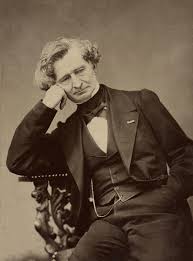
Hector Louis Berlioz, born on December 11, 1803, in La Côte-Saint-André near Grenoble, France, was a composer whose innovative and passionate approach to music left a lasting impact on the Romantic era. His life, marked by intense creativity and personal struggles, is a fascinating tale of resilience and artistic fervor.
Early Life and Musical Beginnings
Berlioz was the son of Louis Berlioz, a physician who was among the first in Europe to experiment with acupuncture. Despite his father’s scientific background, Hector was drawn to music from a young age. At twelve, he began studying music and composing modest arrangements. His early musical education was self-driven, learning harmony from textbooks without formal instruction.
Berlioz’s initial foray into music included playing the guitar and flute, as his father discouraged him from pursuing the piano. His first compositions were mainly romances and chamber works, reflecting his growing passion for music.
Education and Early Compositions
Hector Berlioz’s teenage years were marked by significant personal and intellectual development. At twelve, he fell in love with an eighteen-year-old neighbor, Estelle Fornier. Concurrently, he began translating Virgil’s works from Latin to French, guided by his father.
In pursuit of a career in medicine, Berlioz was sent to Paris by his father. However, the young Hector quickly realized his true calling was music, not medicine. Defying his father’s wishes, he abandoned his medical studies to enroll in the Paris Conservatory. This decision led to financial hardships, as his father cut off his financial support. To make ends meet, Berlioz worked as a chorister at the Gymnase Dramatique theater.
During this period, Berlioz composed the “Messe solennelle” and began working on “Les francs-juges,” although it was never performed. He also studied composition under Jean-François Le Sueur and Anton Reicha. His persistence paid off in 1830 when his cantata won the prestigious Prix de Rome, a state-sponsored award for young artists.
Inspirations and Breakthroughs
In 1827, Berlioz encountered two significant influences: Shakespeare and Beethoven. While working at the Théâtre de l’Odéon, he met Irish actress Harriet Smithson, who inspired his later works despite initially rejecting his romantic advances. That same year, Berlioz attended performances of Beethoven’s third and fifth symphonies, which profoundly impacted him.
These experiences culminated in Berlioz’s first major success, the “Symphonie fantastique,” composed in 1830. This symphony, with its innovative orchestration and vivid storytelling, established Berlioz as a prominent figure in the Romantic music movement.
Notable Relationships and Personal Life
In 1830, Berlioz fell in love with pianist Marie Moke, but their relationship ended when she married another man. Despite this, he channeled his emotions into his music, producing significant works inspired by his tumultuous personal life.
Berlioz’s persistent courtship of Harriet Smithson eventually succeeded, and they married on October 3, 1833. Their marriage, however, was fraught with challenges, including language barriers and personal differences. They had one son, Louis, born in 1834.
During this period, Berlioz formed a lasting friendship with composer Franz Liszt, who supported and promoted his work. The two composers shared a deep mutual respect, although their careers followed different paths.
Later Career and Challenges
After winning the Prix de Rome, Berlioz spent time in Italy, where he composed several notable works, including overtures for “King Lear” and “Rob Roy.” However, he found Rome uninspiring, describing it as “the most stupid and prosaic city I know, with no room for anyone with a head or a heart.”
Upon returning to France, Berlioz continued to compose, though his output slowed. His major works from this period include “Harold in Italy” and the opera “Benvenuto Cellini.” He also traveled extensively, conducting his works across Europe and earning international acclaim.
Despite his professional successes, Berlioz faced personal hardships. His marriage to Harriet deteriorated, and they separated in 1844. Harriet’s death in 1854 was a significant blow to Berlioz, who remarried shortly thereafter to singer Marie Recio.
Legacy and Death
Hector Berlioz’s later years were marked by both triumph and tragedy. He composed some of his most ambitious works, including “The Damnation of Faust” and the opera “Les Troyens.” These compositions showcased his innovative approach to orchestration and narrative in music.
In 1855, Berlioz met Richard Wagner, although their relationship quickly soured. Despite this, Berlioz’s influence on future composers, including Wagner, was undeniable.
Berlioz continued to travel and compose until his health declined. He made several trips to Russia, where his music was particularly well-received. Hector Berlioz died on March 8, 1869, in Paris at the age of 65. His legacy endures through his groundbreaking compositions, which continue to be celebrated for their emotional depth and technical brilliance.
Conclusion
Hector Berlioz’s life was a testament to the power of passion and perseverance. From his early struggles against familial and financial obstacles to his ultimate success as a pioneering composer, Berlioz’s journey was marked by innovation and emotional intensity. His contributions to music, particularly in the realm of orchestration and programmatic storytelling, have left an indelible mark on the history of Western music.
Berlioz’s ability to infuse his personal experiences into his compositions resulted in works that resonate with listeners on a profound level. His “Symphonie fantastique” remains a cornerstone of the Romantic repertoire, embodying the spirit of an era defined by expressive freedom and artistic exploration. Through his music, Berlioz invites us to experience the world as he did—full of passion, drama, and unyielding creativity.
As we reflect on Berlioz’s legacy, it is clear that his impact extends far beyond his lifetime. His innovative spirit and dedication to his art continue to inspire musicians and composers, ensuring that his voice will be heard for generations to come.


