
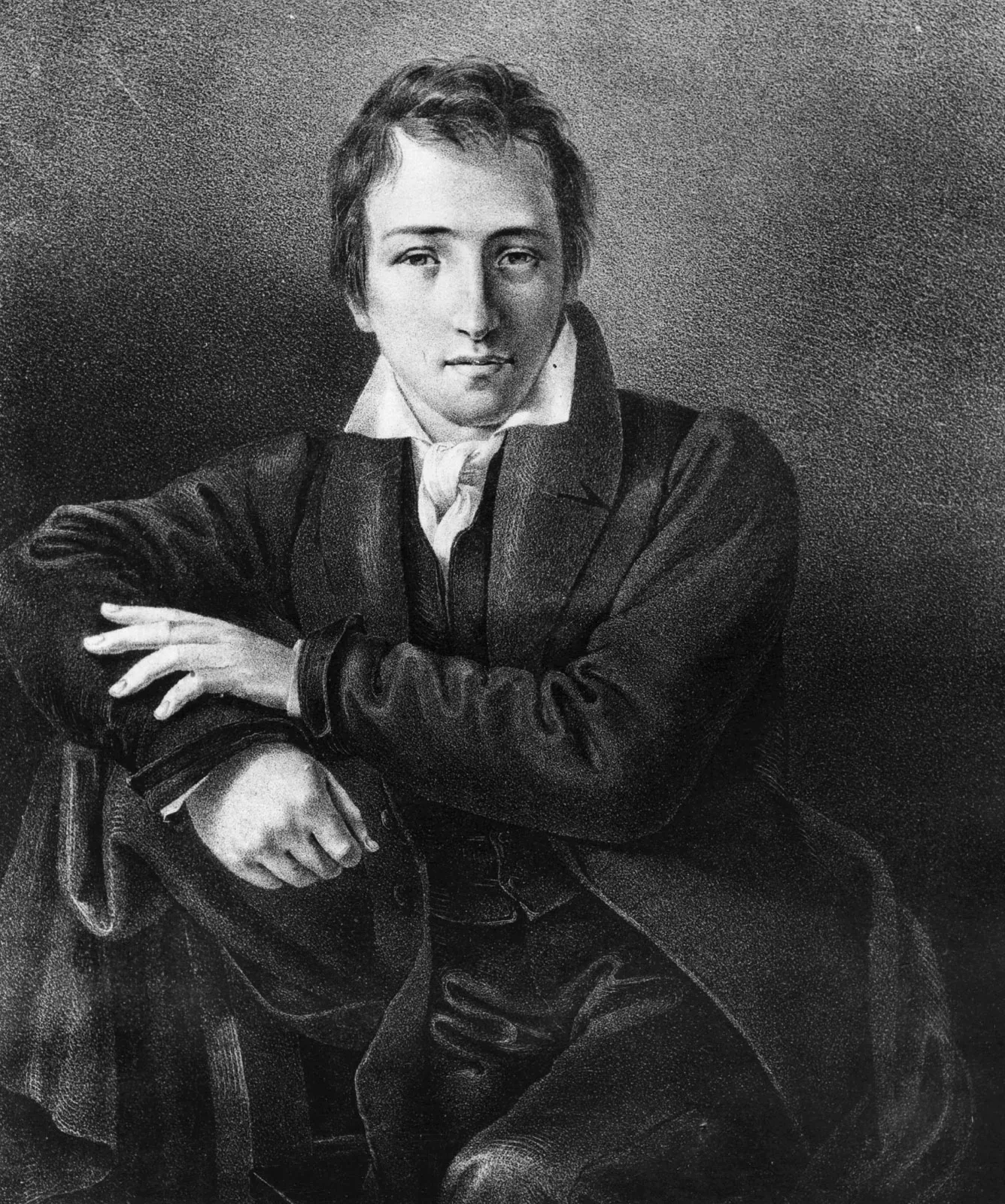
Heinrich Heine, born on December 13, 1797, in Düsseldorf, Germany, remains one of the most influential figures in German literature. His life was marked by intellectual pursuits, personal struggles, and a constant drive to express his views on society, politics, and love. Heine’s legacy is a testament to his profound impact on the literary world, especially as a bridge between Romanticism and Realism. This article delves into the life, fame, and significant highlights of Heinrich Heine’s journey, providing detailed insights and exploring the nuances of his historical context.
Early Life and Education
Heinrich Heine was born into a respected Jewish family of merchants and bankers. His father, a cloth merchant, maintained close ties with English manufacturers, while his mother came from a distinguished Dutch family. Heine’s early education was influenced by his mother, Betty, who enrolled him in a Catholic high school in Düsseldorf in 1807, run by Jesuit priests. Despite the discipline and the multilingual curriculum, which included German and French, Heine found school life challenging. The political turmoil of the time, particularly the French occupation of Düsseldorf, sparked in him an early fascination with French culture and a deep-seated aversion to Prussian rule.
The Path to Poetry
In 1816, Heinrich Heine experienced his first romantic infatuation with the daughter of the president of the Düsseldorf court of appeal, whom he met at a literary academy’s year-end event. This early encounter with love would profoundly influence his poetic themes, as Heine often drew upon his personal experiences in his work.
After completing high school, Heine faced uncertainty regarding his future. His father sent him to Frankfurt to gain experience in banking under the tutelage of a banker named Rindskopf. In 1817, Heine moved to Hamburg to work with his uncle Salomon, a successful businessman. One of the primary reasons for this relocation was Heine’s desire to be closer to his cousin Amalie, whom he adored and who would later become his muse. However, Amalie did not reciprocate his feelings, nor did his other cousin, Therese. Despite these personal disappointments, Heine published his first poems in the magazine “Hamburgs Watcher” in 1817.
Academic Pursuits and Literary Beginnings
Heinrich Heine’s career in banking was short-lived, as his true passion lay in literature. His uncle Salomon, recognizing this, supported him by opening a fabric shop and a banking agency for him. However, Heine’s focus remained on his literary aspirations, and the business venture soon failed. In 1819, Heine enrolled in the University of Bonn to study law. During his time there, he forged lasting friendships and attended literature lectures by the renowned scholar A. W. Schlegel. Under Schlegel’s guidance, Heine wrote his first critical essay, “Die Romantik.”
In 1820, Heine transferred to the University of Göttingen, only to leave a year later to enroll at the University of Berlin. It was in Berlin that Heine immersed himself in the philosophical lectures of Friedrich Hegel and became the “favorite poet” of the German intellectual elite. The year 1821 was marked by both personal sorrow, with the death of his beloved Napoleon Bonaparte, and literary achievement, as he began to explore the works of Shakespeare, which inspired him to write two tragedies and a collection of 66 brief Lieder.
Conversion and Literary Success
In 1824, Heinrich Heine returned to Göttingen, where he completed his law exams and began working on his thesis. He successfully graduated in 1825, a year that also saw a significant change in his personal life—his conversion from Judaism to Protestantism. This conversion was motivated by the desire to advance his career, as anti-Semitic sentiments limited opportunities for Jews in many fields. Despite this, Heine never abandoned his Jewish heritage, and his writings often reflect the complexities of his identity.
During this period, Heine’s literary output was prolific. He spent a vacation in Norderney, which inspired the cycle of poems “Nordsee” (North Sea), published in 1826. The following year, he achieved his greatest literary success with the publication of “Buch der Lieder” (Book of Songs), a collection that would become one of the most widely read and translated works in German literature. In 1828, Heine embarked on a journey to Italy, further broadening his cultural and intellectual horizons.
Exile in France and Later Life
Heinrich Heine’s sharp wit and satirical writings often put him at odds with the Prussian authorities, particularly his adherence to Saint-Simonianism, a socio-political ideology advocating for social reform. As a result, in 1831, Heine chose voluntary exile in France, where he settled in Paris. There, he was welcomed with admiration and quickly became a prominent figure in the city’s literary salons. Heine formed close relationships with other exiled Germans, such as Humboldt and Lasalle, as well as French intellectuals like Balzac, Hugo, and George Sand.
In 1834, Heine visited Normandy and later met Mathilde Mirat, whom he married in 1841. Despite his growing fame, Heine’s inspiration began to wane in the following years. However, he continued to travel extensively and visited his ailing uncle Salomon in Germany.
The Revolution and Declining Health
The 1848 Revolution in Paris profoundly affected Heine, who found himself directly involved in the street battles that erupted across the city. Unfortunately, shortly after these events, Heine began to suffer from severe spinal pains, signaling the onset of a progressive muscular atrophy that would eventually paralyze him. Despite his debilitating condition, Heine continued to write, publishing “Romancero” in 1851, a collection of poems that vividly described his suffering.
In 1854, Heine compiled a volume of his political, artistic, and life essays written in Paris, later titled “Lutetia.” By this time, Heine was bedridden, his health rapidly deteriorating. However, he found solace in the company of a young German woman, Elise Krienitz, affectionately known as “Mouche,” who inspired his final poems.
Death and Legacy
Heinrich Heine passed away on February 17, 1856, leaving behind a rich literary legacy. His work, characterized by its ironic use of Romantic motifs and a critical stance toward sentimentality, established him as one of the greatest poets of his time. While some critics, such as Karl Kraus and Benedetto Croce, offered a more reserved assessment of his contributions, others, including Nietzsche and Brecht, recognized Heine’s role as a precursor to modern thought and his progressive ideas.
The “Buch der Lieder” remains a testament to Heine’s extraordinary lyrical talent, marked by a unique blend of lightness and formal elegance. His work continues to be celebrated for its depth, wit, and the ability to capture the complexities of human emotion and social realities. Heine’s legacy as a poet and thinker endures, influencing generations of writers and readers alike.


