
Introduction
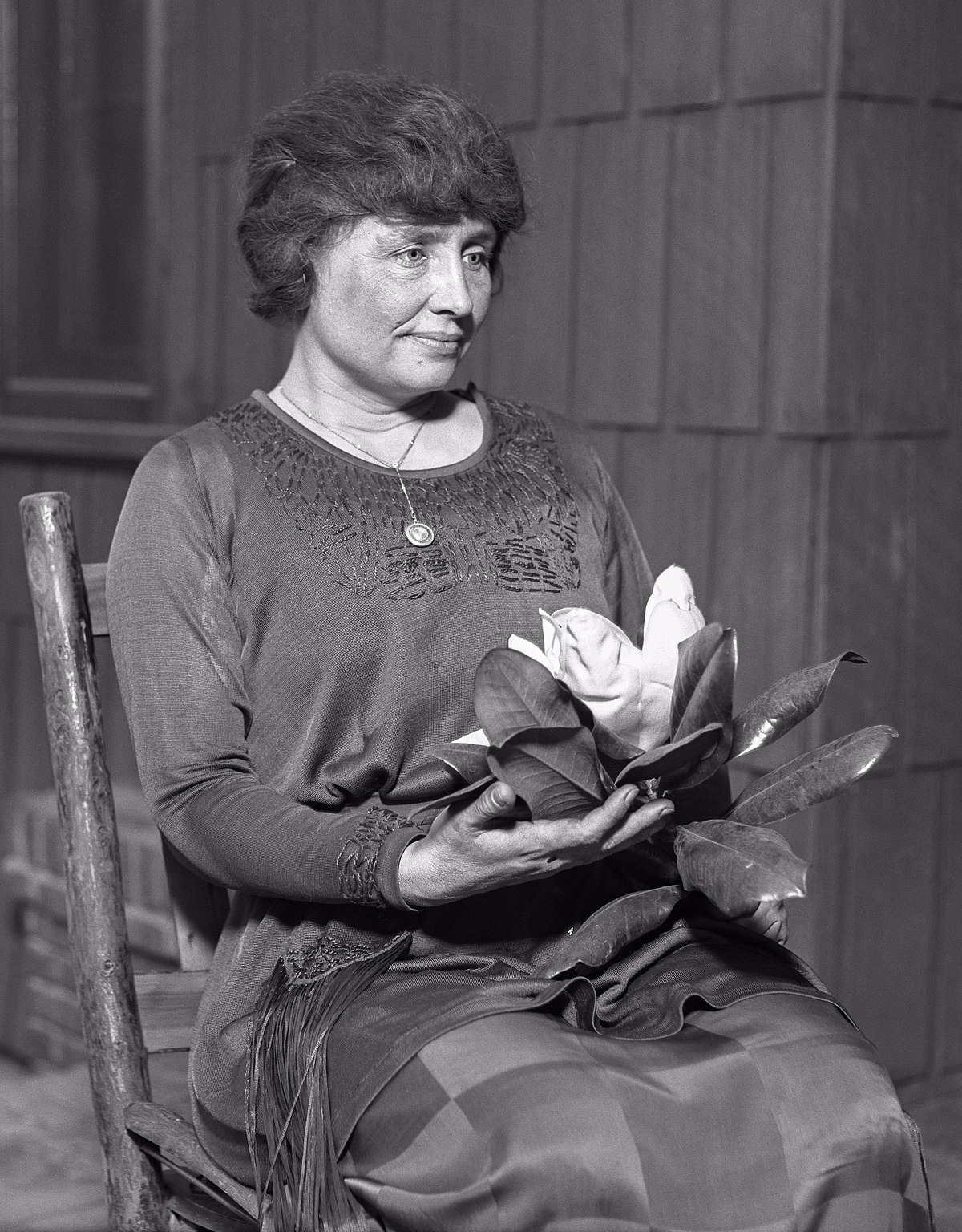
Helen Keller, born on June 27, 1880, in Tuscumbia, Alabama, is a name that has transcended generations as a symbol of resilience, intelligence, and determination. Despite losing her sight and hearing at a very young age, Keller overcame immense challenges to become a world-renowned author, political activist, and lecturer. Her life story continues to inspire millions around the globe, showcasing the power of perseverance and the human spirit. This article explores the remarkable journey of Helen Keller, detailing her early life, achievements, and enduring legacy.
Early Life and Initial Struggles
Helen Adams Keller was born into a relatively well-off family in the small town of Tuscumbia, Alabama. Her father, Arthur Keller, was a former Confederate Army captain and a journalist for the “North Alabamian,” while her mother, Kate Adams Keller, hailed from a well-connected family in the South. Helen’s early years were those of a typical child until a life-changing illness struck her at 19 months old. Described by doctors at the time as “an acute congestion of the stomach and the brain,” this illness, likely scarlet fever or meningitis, resulted in Keller losing both her sight and hearing.
Suddenly plunged into a world of darkness and silence, Keller faced profound challenges in communication. Her family, though supportive, was at a loss about how to help her develop beyond her basic needs. During this time, Keller began using rudimentary signs to communicate with her family, particularly with Martha Washington, the daughter of the family cook, who could understand her makeshift gestures.
The Quest for a Solution
By the time Helen Keller was six years old, her parents were desperate to find a way to help her communicate more effectively. Inspired by Charles Dickens’ account of the successful education of a deaf-blind child in his book “American Notes,” Keller’s mother sought advice from several experts. Eventually, they were referred to Alexander Graham Bell, the famous inventor who was working with deaf children at the time. Bell, recognizing the unique challenges that Keller faced, recommended the Perkins Institute for the Blind in Boston.
In 1887, Anne Sullivan, a 20-year-old recent graduate of the Perkins Institute who was herself visually impaired, came into Keller’s life as her instructor. This meeting marked the beginning of a profound transformation for Keller. Sullivan, who would become Keller’s lifelong companion and teacher, arrived at the Keller family home in March 1887. She immediately began teaching Keller to communicate by spelling words into her hand using the manual alphabet.
The Breakthrough with Anne Sullivan
The relationship between Helen Keller and Anne Sullivan is often celebrated as one of the most remarkable teacher-student partnerships in history. Anne Sullivan’s arrival marked a turning point in Keller’s life. Initially resistant to Sullivan’s efforts, Keller struggled to grasp the concept that every object had a specific name. However, a breakthrough came when Sullivan spelled the word “water” into Keller’s hand while running water over her other hand at a well pump. This moment of realization—that everything has a name—was a pivotal point in Keller’s development. She later described it as the day her “soul was awakened.”
Under Sullivan’s patient guidance, Keller quickly learned the manual alphabet and expanded her vocabulary. This newfound ability to communicate opened up a world of possibilities for Keller. She no longer felt isolated in her silent, dark world. Instead, she began to engage more fully with her surroundings, eager to learn and explore.
Academic Pursuits and Achievements
Encouraged by her rapid progress, Keller’s education continued to flourish. In 1888, she began formal schooling at the Perkins Institute for the Blind, where she continued to refine her communication skills and learn to read and write using Braille. Six years later, Keller and Sullivan moved to New York City to attend the Wright-Humason School for the Deaf, and subsequently, the Horace Mann School for the Deaf. Keller’s thirst for knowledge was insatiable, and her academic pursuits continued unabated.
In 1900, Keller entered Radcliffe College, becoming the first deaf-blind person to enroll in an institution of higher learning. Her time at Radcliffe was not without its challenges. Keller relied heavily on Anne Sullivan, who sat by her side in every class to spell lecture notes into her hand. Despite the difficulties, Keller excelled, graduating cum laude in 1904 with a Bachelor of Arts degree—an extraordinary achievement for anyone, let alone someone with her disabilities.
During her college years, Keller began writing her autobiography, “The Story of My Life,” which was published in 1903. The book, detailing her early experiences and her partnership with Sullivan, was an immediate success and has since become a classic. This work marked the beginning of a prolific writing career, through which Keller authored 11 books and numerous articles, sharing her experiences and advocating for people with disabilities.
Helen Keller’s Advocacy and Activism
After graduating, Helen Keller dedicated her life to advocacy and activism. Her experiences and accomplishments provided her with a platform to speak on issues such as disability rights, women’s suffrage, pacifism, and socialism. In 1915, she co-founded the Helen Keller International (HKI) organization, dedicated to research in vision, health, and nutrition. The organization sought to combat the root causes of blindness and malnutrition and is still active today, making a global impact.
Keller’s political views were progressive for her time. She was a staunch supporter of the Socialist Party of America and the Industrial Workers of the World (IWW). She wrote numerous articles championing workers’ rights and critiquing capitalism, arguing that it contributed to widespread poverty and inequality. Her outspokenness on these issues, particularly her socialist views, occasionally drew criticism and surprised some of her admirers who had seen her primarily as an inspirational figure.
Despite such criticism, Keller remained undeterred. She was a tireless advocate for people with disabilities and worked closely with the American Foundation for the Blind (AFB). Through her lectures, writings, and personal advocacy, Keller raised awareness and helped to change public perceptions of people with disabilities, demonstrating that they could lead rich, full lives.
Later Years and Continued Influence
Anne Sullivan’s health began to decline in the late 1920s, prompting the addition of Polly Thomson to Keller’s support team. Thomson became Keller’s secretary and later, her companion, helping to manage Keller’s busy schedule as she continued to travel and lecture around the world. Sullivan passed away in 1936, leaving a significant void in Keller’s life. However, Keller continued her work, often traveling with Thomson, and later with a nurse named Winifred Corbally after Thomson suffered a stroke in 1957.
Keller’s influence was not confined to the United States. She traveled extensively, visiting 39 countries and meeting with world leaders, including Winston Churchill, Jawaharlal Nehru, and Golda Meir. She was particularly beloved in Japan, where she became a symbol of resilience and inspiration. Her request for an Akita dog during her visit to Japan in 1937 led to the introduction of the breed to the United States.
Even in her later years, Keller remained an active figure. In 1960, she published “Light in My Darkness,” where she expressed her admiration for the Swedish philosopher Emanuel Swedenborg. Four years later, in 1964, she was awarded the Presidential Medal of Freedom by President Lyndon B. Johnson, one of the highest civilian honors in the United States.
Death and Legacy
Helen Keller passed away on June 1, 1968, at the age of 87, at her home in Easton, Connecticut. Her death marked the end of a life that had overcome almost unimaginable odds to achieve greatness. Her story, however, did not end with her passing. Keller’s life and achievements continue to inspire countless individuals worldwide.
Keller’s legacy is enduring, and her life story has been depicted in numerous books, plays, and films. Perhaps the most famous of these is the 1962 film “The Miracle Worker,” which portrays Keller’s early years and her relationship with Anne Sullivan. The film, which won multiple Academy Awards, remains a powerful testament to Keller’s life and the impact of her mentor, Sullivan.
A Symbol of Perseverance and Human Potential
Helen Keller’s story is one of extraordinary courage and perseverance. She broke through the barriers of her disabilities to not only educate herself but also to become a leading figure in advocating for people with disabilities. Her efforts were instrumental in reshaping public perceptions and policies regarding disability rights.
Keller’s ability to rise above her physical limitations and her commitment to social justice serve as a reminder of what can be achieved with determination and support. Her work laid the foundation for future generations to continue fighting for inclusivity and equal rights for people with disabilities.
Conclusion
Helen Keller’s life is a testament to the strength of the human spirit and the transformative power of education and advocacy. From her early struggles with blindness and deafness to her remarkable achievements in academia and activism, Keller’s story is one of triumph over adversity. Her legacy continues to influence and inspire, proving that with determination, support, and the right opportunities, individuals can overcome even the most daunting challenges.
Keller’s story is not just about overcoming disability; it is about the broader human capacity for growth, learning, and contribution to society. Her life encourages us all to look beyond our limitations and to see the possibilities that lie ahead.


