
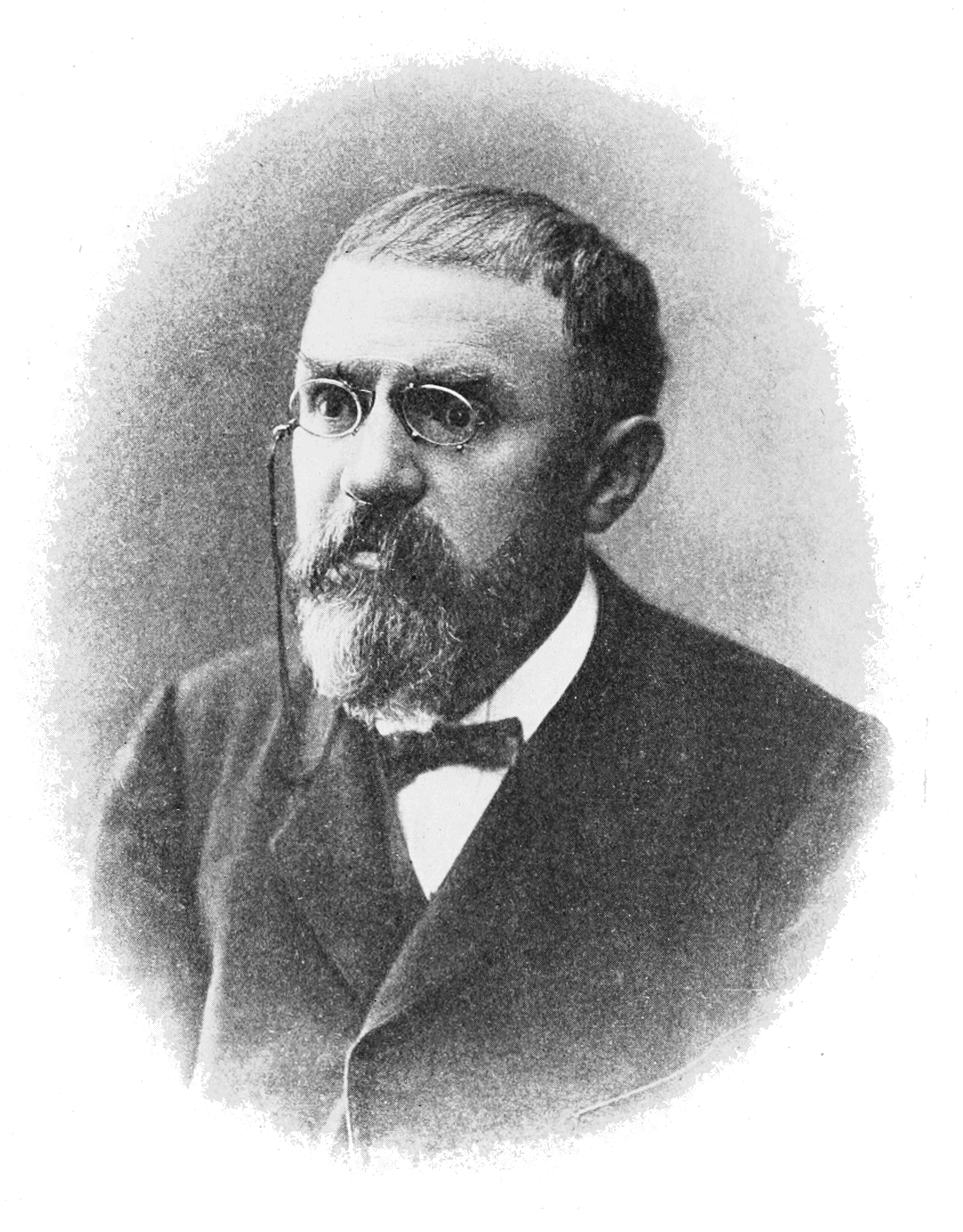
Henri Poincaré is a name that resonates profoundly in the realms of mathematics, physics, and philosophy. Often regarded as one of the last universalists in the scientific community, Poincaré’s work has left an indelible mark on a broad range of scientific disciplines. From laying the groundwork for chaos theory to influencing the development of the theory of relativity, Poincaré’s contributions continue to shape modern science. This article delves into the life of Henri Poincaré, exploring his age, the fame he achieved through his intellectual endeavors, and the key highlights that define his extraordinary career.
Early Life and Education: The Making of a Genius
Jules Henri Poincaré was born on April 29, 1854, in Nancy, France, into an intellectually stimulating environment. His father, Léon Poincaré, was a professor of medicine, and his family was well-regarded in academic circles. This environment nurtured young Henri’s inquisitive mind from an early age, laying the foundation for his future accomplishments.
Poincaré’s education began at home, where he displayed prodigious abilities in mathematics. His early schooling took place at the Lycée in Nancy, where his talents quickly became evident. Despite suffering from poor eyesight and coordination, which affected his handwriting and physical activities, Poincaré excelled in his studies, particularly in mathematics and science. By the age of 16, he had already won first prize in the national mathematics competition, the Concours Général, demonstrating his exceptional abilities.
Higher Education: Laying the Groundwork for Future Discoveries
In 1873, Poincaré enrolled at the École Polytechnique, one of France’s most prestigious institutions, where he studied mathematics under the tutelage of Charles Hermite, a renowned mathematician of the time. Hermite’s influence on Poincaré was profound, helping to refine his mathematical thinking and encouraging his interest in the abstract and theoretical aspects of the discipline.
After graduating from the École Polytechnique, Poincaré continued his education at the École des Mines, where he earned a degree in engineering. Although his formal training was in engineering, Poincaré’s passion for mathematics and theoretical physics never waned. He began working on his doctoral thesis under the supervision of Charles Hermite, and in 1879, he completed his dissertation on differential equations, a topic that would later play a significant role in his scientific contributions.
The Birth of a Scientific Giant: Poincaré’s Early Contributions
Henri Poincaré’s early work in mathematics quickly established him as a leading figure in the field. His doctoral thesis, “Sur les propriétés des fonctions définies par les équations différentielles,” introduced important concepts in the study of differential equations, particularly regarding the nature of their solutions. This work laid the foundation for Poincaré’s future research and signaled the emergence of a brilliant mind.
The Poincaré Conjecture: A Milestone in Topology
One of Poincaré’s most famous contributions to mathematics is the Poincaré Conjecture, a problem he formulated in 1904 in the field of topology. The conjecture posits that any three-dimensional manifold that is simply connected (meaning it has no “holes”) is topologically equivalent to a three-dimensional sphere. This seemingly simple problem puzzled mathematicians for nearly a century until it was finally solved by Grigori Perelman in 2003, who was awarded the Fields Medal (which he declined) for his work.
The Poincaré Conjecture is a cornerstone of modern topology, a branch of mathematics concerned with the properties of space that are preserved under continuous deformations. Poincaré’s work in this area has had a lasting impact, influencing subsequent research in both pure and applied mathematics.
Celestial Mechanics and the Three-Body Problem
Another significant contribution by Poincaré was his work on celestial mechanics, particularly his research on the three-body problem. The three-body problem involves predicting the motion of three celestial bodies interacting with each other through gravitational forces, a problem that had perplexed scientists since the time of Newton.
In 1889, Poincaré won a prize from King Oscar II of Sweden for his work on the stability of the solar system, specifically his analysis of the three-body problem. His groundbreaking discovery was that the motion of the three bodies could be chaotic, meaning that small differences in initial conditions could lead to vastly different outcomes over time. This insight laid the groundwork for what would later become known as chaos theory, a field that explores how complex and unpredictable behaviors can arise from simple deterministic systems.
The Theory of Relativity: Poincaré’s Pioneering Ideas
While Albert Einstein is often credited with the development of the theory of relativity, Henri Poincaré’s work played a crucial role in shaping the ideas that led to this revolutionary theory. In the early 20th century, Poincaré began exploring the implications of the Lorentz transformations, which describe how the measurements of time and space change for observers in different inertial frames of reference.
Poincaré and Lorentz: The Precursors to Relativity
Poincaré was among the first to recognize the importance of Lorentz transformations in explaining the behavior of light and electromagnetism. He proposed that the speed of light is constant in all frames of reference and introduced the concept of the “principle of relativity,” which asserts that the laws of physics are the same for all observers, regardless of their motion. These ideas were crucial in the development of Einstein’s special theory of relativity in 1905.
Although Poincaré did not fully develop the theory of relativity as Einstein did, his contributions were instrumental in laying the groundwork for this monumental scientific achievement. Poincaré’s work on the dynamics of the electron, the relativity of time, and the concept of simultaneity were all key elements that influenced Einstein’s thinking.
Fame and Recognition: The Life of a Public Intellectual
Henri Poincaré was not only a prolific scientist but also a public intellectual whose ideas transcended the boundaries of mathematics and physics. His ability to communicate complex scientific concepts to a broader audience made him a celebrated figure in France and beyond.
Public Lectures and Philosophical Contributions
Poincaré was an eloquent speaker and writer, known for his ability to explain complex mathematical and scientific ideas in a way that was accessible to the general public. He delivered numerous public lectures and wrote extensively on the philosophy of science, exploring the nature of mathematical reasoning, the role of intuition in discovery, and the relationship between science and reality.
In his philosophical writings, Poincaré argued that mathematics is not merely a collection of arbitrary symbols and rules but a language that allows us to describe and understand the underlying structure of the physical world. His views on the nature of scientific knowledge and the role of creativity in scientific discovery have had a lasting influence on the philosophy of science.
The Dreyfus Affair: Poincaré’s Stance on Justice and Truth
In addition to his scientific and philosophical contributions, Poincaré was also involved in one of the most significant political controversies of his time—the Dreyfus Affair. This scandal, which divided France in the late 19th and early 20th centuries, centered on the wrongful conviction of Alfred Dreyfus, a Jewish French army officer, for treason.
Poincaré was a member of the Ligue des droits de l’homme (League of Human Rights), an organization that supported Dreyfus and advocated for his exoneration. Poincaré’s involvement in the Dreyfus Affair demonstrated his commitment to justice and truth, values that were deeply intertwined with his scientific philosophy.
Personal Life: The Man Behind the Mathematics
Despite his many achievements, Henri Poincaré was known for his humility and modesty. He was a deeply private individual who preferred the quiet of his study to the limelight of public life. Poincaré never married and had no children, which allowed him to devote himself fully to his work.
A Life of Routine and Discipline
Poincaré’s daily life was characterized by routine and discipline. He maintained a rigorous schedule, dedicating specific hours of the day to research, teaching, writing, and correspondence. His ability to balance these activities with his public engagements and philosophical writings is a testament to his extraordinary intellect and work ethic.
Poincaré was also known for his prodigious memory and his ability to work on multiple complex problems simultaneously. He often relied on his intuition and deep understanding of mathematics to make connections between seemingly unrelated areas of study, leading to new insights and discoveries.
Health and Later Years
Despite his remarkable intellectual abilities, Poincaré’s health was often fragile. He suffered from poor eyesight throughout his life and experienced several health issues in his later years. However, these challenges did not diminish his passion for science or his productivity.
In 1912, Henri Poincaré underwent surgery for a prostate condition. Unfortunately, complications arose, and Poincaré passed away on July 17, 1912, at the age of 58. His death was a significant loss to the scientific community, but his legacy continues to live on through his contributions to mathematics, physics, and philosophy.
The Legacy of Henri Poincaré: A Lasting Influence on Science
Henri Poincaré’s influence on modern science is immeasurable. His work laid the foundation for many of the 20th century’s most important scientific developments, and his ideas continue to inspire researchers in various fields.
Poincaré’s Impact on Modern Mathematics
In mathematics, Poincaré is considered one of the founding figures of the fields of topology, dynamical systems, and the theory of functions. His work on the Poincaré Conjecture and the three-body problem opened new avenues of research that have led to significant advances in our understanding of the mathematical structure of the universe.
Poincaré’s contributions to the theory of automorphic functions and his work on the stability of differential equations are also considered groundbreaking. These areas of mathematics have since become fundamental tools in both pure and applied mathematics, influencing everything from theoretical physics to engineering.
Poincaré’s Role in the Development of Relativity and Chaos Theory
Poincaré’s early work on the principles of relativity and his recognition of the importance of Lorentz transformations were critical in the development of modern physics. His ideas on the relativity of time and space laid the groundwork for Einstein’s theory of relativity, one of the cornerstones of modern physics.
Furthermore, Poincaré’s insights into the chaotic behavior of dynamical systems, particularly in his work on celestial mechanics, have had a profound impact on the development of chaos theory. This field, which studies how small changes in initial conditions can lead to vastly different outcomes, has applications in a wide range of scientific disciplines, from meteorology to economics.
A Philosopher of Science: Poincaré’s Influence on Scientific Thought
Beyond his contributions to mathematics and physics, Poincaré’s philosophical writings have left a lasting legacy in the philosophy of science. His views on the nature of scientific knowledge, the role of intuition and creativity in discovery, and the relationship between science and reality have influenced generations of scientists and philosophers.
Poincaré’s belief in the power of mathematical reasoning to reveal the underlying structure of the physical world has been a guiding principle for many scientists. His ideas on the conventional nature of scientific theories and the importance of simplicity and elegance in scientific explanations continue to shape scientific thought today.
Historical Context: Poincaré’s Place in the Scientific Revolution of the Late 19th and Early 20th Centuries
To fully appreciate Henri Poincaré’s contributions, it is important to understand the historical context in which he worked. The late 19th and early 20th centuries were a period of profound change in science, as new discoveries and theories challenged traditional views of the physical world.
The Rise of Modern Physics
During Poincaré’s lifetime, physics underwent a transformation with the discovery of X-rays, radioactivity, and the electron, leading to the development of quantum theory and relativity. Poincaré was at the forefront of these developments, contributing to the debates and discussions that would ultimately reshape our understanding of the universe.
The Mathematical Revolution
In mathematics, Poincaré was part of a broader movement that sought to explore the abstract and structural aspects of the discipline. This period saw the development of new branches of mathematics, such as topology and abstract algebra, which have since become central to the field. Poincaré’s work on the nature of mathematical reasoning and the foundations of mathematics played a key role in this mathematical revolution.
Conclusion: Henri Poincaré’s Enduring Legacy
Henri Poincaré’s life and work represent a pinnacle of intellectual achievement. His contributions to mathematics, physics, and philosophy have had a lasting impact on the development of modern science. As a mathematician, Poincaré was a pioneer who explored new and uncharted territories, laying the groundwork for future discoveries. As a physicist, he played a crucial role in the development of relativity and chaos theory. And as a philosopher of science, he offered deep insights into the nature of scientific knowledge and the creative process.
At the age of 58, Henri Poincaré passed away, but his legacy endures. His work continues to inspire scientists and mathematicians, and his ideas remain as relevant today as they were over a century ago. Poincaré’s life is a testament to the power of the human mind to explore, discover, and understand the mysteries of the universe.
Henri Poincaré’s story is not just the story of a great scientist; it is the story of a man who dedicated his life to the pursuit of knowledge and truth. In doing so, he has left a legacy that will continue to shape the future of science for generations to come.


