
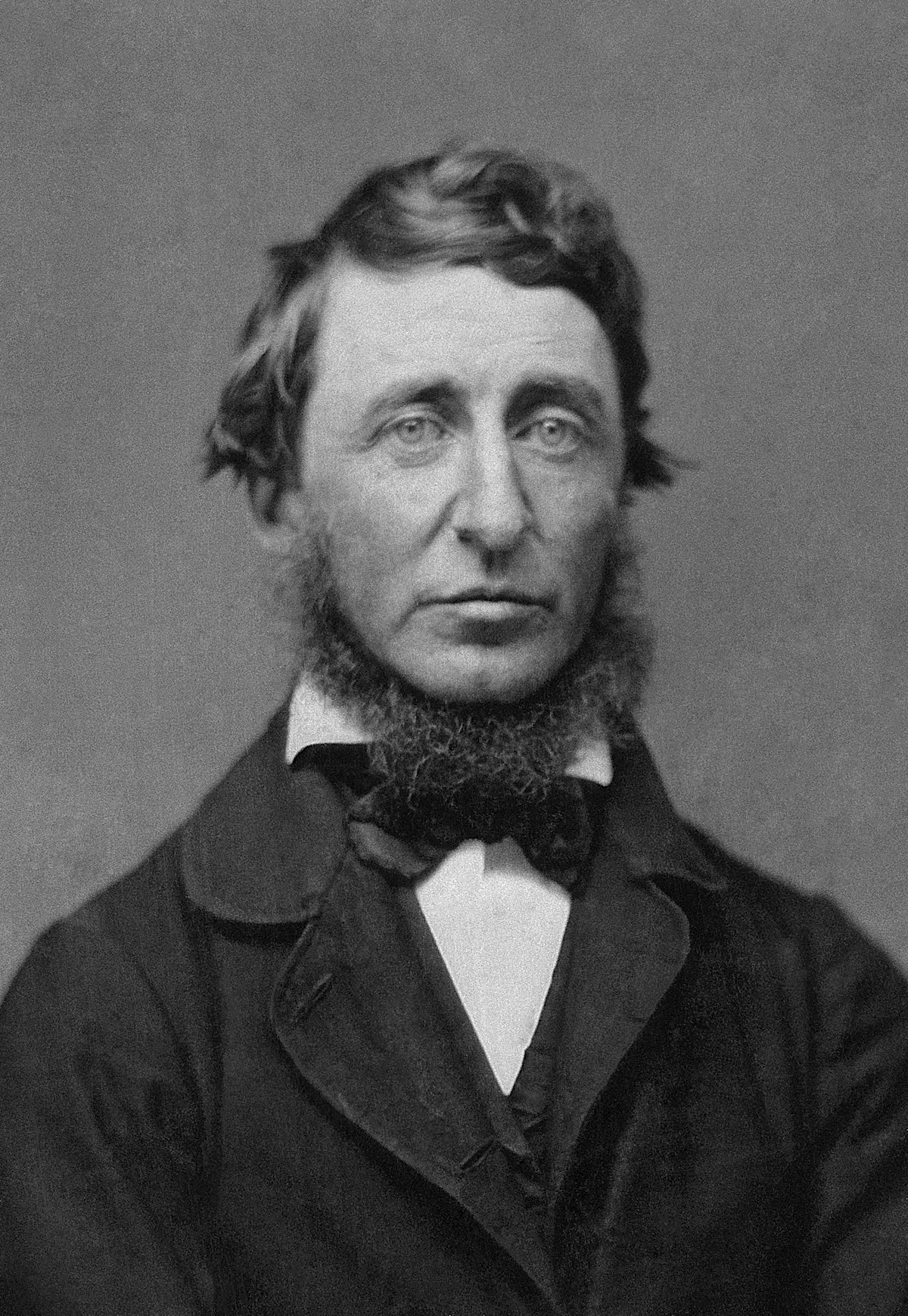
Early Life and Education
Henry David Thoreau was born on July 12, 1817, in Concord, Massachusetts, a small town that would later play a significant role in shaping his life and works. Thoreau was born into a modest family, yet his intellectual potential was recognized early on, leading him to attend Harvard University. He graduated in 1837, a time when the United States was experiencing significant social and political changes. Thoreau’s education at Harvard provided him with a broad base of knowledge, particularly in the classics, philosophy, and literature, all of which would deeply influence his later writings.
Early Career and Personal Development
After graduating from Harvard, Thoreau dabbled in various professions, including teaching at a private school founded by his brother John. However, his distaste for corporal punishment and the rigid educational system led him to leave the profession. He then worked sporadically in his father’s pencil factory, but his true calling lay elsewhere. Thoreau was more interested in exploring the world of ideas, nature, and personal freedom.
During this period, Thoreau formed a close friendship with Ralph Waldo Emerson, a prominent transcendentalist thinker. Emerson’s influence on Thoreau was profound; it was through Emerson that Thoreau was introduced to the transcendentalist movement, which emphasized individualism, self-reliance, and a deep connection to nature. Thoreau adopted these principles, which became central themes in his own philosophical outlook.
The Walden Experiment
Perhaps the most famous episode in Thoreau’s life was his experiment in simple living at Walden Pond. In 1845, Thoreau built a small cabin on land owned by Emerson near the shores of Walden Pond, just outside Concord. This retreat was not merely an escape from society but a deliberate experiment in minimalist living, self-sufficiency, and spiritual reflection. Thoreau lived there for two years, two months, and two days, observing nature, writing, and contemplating the essentials of life.
This period culminated in his most famous work, “Walden, or Life in the Woods,” published in 1854. The book is a profound reflection on simple living, nature, and the pursuit of personal integrity. It is part memoir, part social critique, and part spiritual guide, offering readers a vision of life that is free from the distractions and corruptions of society. Thoreau’s writing in “Walden” is characterized by its clarity, wit, and deep philosophical insights, making it a cornerstone of American literature.
Civil Disobedience and Social Activism
Thoreau’s time at Walden Pond was also marked by his increasing engagement with social and political issues. One of the defining moments of his life came in 1846 when he refused to pay a poll tax as an act of protest against slavery and the Mexican-American War. This act of defiance led to his brief imprisonment, an experience that profoundly shaped his views on government and individual responsibility.
In 1849, Thoreau published the essay “Civil Disobedience” (originally titled “Resistance to Civil Government”), in which he argued that individuals should not permit governments to overrule their consciences and that they have a duty to avoid enabling injustices by refusing to participate in or support them. Thoreau’s advocacy for nonviolent resistance to unjust laws has had a lasting impact, influencing future leaders such as Mahatma Gandhi, Martin Luther King Jr., and Leo Tolstoy. The essay remains a seminal work in the philosophy of civil disobedience and is widely studied for its powerful articulation of moral and ethical resistance to tyranny.
Later Years and Legacy
After leaving Walden Pond, Thoreau continued to write and lecture, although he never achieved great financial success during his lifetime. He remained a dedicated naturalist, often spending time exploring the fields and forests around Concord, meticulously recording his observations in a journal that he kept throughout his life. This journal, eventually spanning 14 volumes, offers a detailed account of Thoreau’s thoughts, daily activities, and profound connection to the natural world.
Thoreau’s later years were marked by a deepening of his environmental and social concerns. He became an outspoken abolitionist, working with the Underground Railroad to help enslaved people escape to freedom. His writings from this period reflect a growing concern with the moral and ecological health of society, and he began to articulate ideas that would later be recognized as foundational to environmentalism and sustainability.
Despite his relatively short life—Thoreau died of tuberculosis on May 6, 1862, at the age of 44—his influence has only grown over time. His works, particularly “Walden” and “Civil Disobedience,” have inspired countless readers and thinkers, and his ideas about nature, simplicity, and resistance to oppression continue to resonate in the modern world.
Historical Context and Intellectual Influence
Thoreau lived during a period of significant social and political upheaval in the United States. The country was grappling with issues of slavery, westward expansion, and the ethical implications of these developments. The transcendentalist movement, with which Thoreau was closely associated, emerged as a response to the materialism and social conformity of the time, advocating instead for a return to nature, individualism, and spiritual introspection.
Thoreau’s intellectual influences were diverse. He was deeply read in the classical literature of Greece and Rome, as well as in the works of European philosophers like Immanuel Kant and Jean-Jacques Rousseau. However, his most significant influences came from within the transcendentalist circle, particularly Ralph Waldo Emerson. Emerson’s essays on self-reliance, nature, and the oversoul provided the philosophical foundation upon which Thoreau built his own ideas.
In addition to Western philosophy, Thoreau was profoundly influenced by Eastern thought. He was one of the first American writers to engage seriously with Hindu and Buddhist texts, which he studied with great interest. These influences are evident in his writing, particularly in his emphasis on meditation, simplicity, and the pursuit of spiritual enlightenment.
Thoreau’s Environmental Legacy
Thoreau’s relationship with the natural world was more than just an academic interest; it was a central part of his life and philosophy. He saw nature as a source of spiritual nourishment and a model for living in harmony with the world. His detailed observations of the natural environment around Concord have been recognized as some of the earliest contributions to the field of ecology.
“Walden” is often hailed as a precursor to modern environmentalism, advocating for a simple, sustainable way of life that minimizes harm to the planet. Thoreau’s belief in the intrinsic value of nature—independent of its utility to humans—was a radical idea in his time and laid the groundwork for the later development of conservation and environmental ethics.
Thoreau’s legacy as an environmentalist is also reflected in the establishment of the Thoreau Society, the oldest and largest organization dedicated to promoting his life and works. The society’s activities, along with the continued relevance of Thoreau’s writings, ensure that his ideas about nature and the environment continue to inspire new generations of readers and activists.
The Continuing Relevance of Thoreau’s Ideas
In the centuries since his death, Thoreau’s ideas have continued to influence a wide range of social, political, and environmental movements. His concept of civil disobedience has been adopted by numerous social justice movements around the world, from the Indian independence movement led by Gandhi to the American civil rights movement led by Martin Luther King Jr. Thoreau’s emphasis on individual conscience and moral integrity remains a powerful call to action in the face of injustice.
Thoreau’s environmental philosophy has also gained renewed importance in the context of the 21st century’s ecological crises. As concerns about climate change, biodiversity loss, and environmental degradation have grown, Thoreau’s advocacy for a simpler, more sustainable way of life has found a new audience. His writings encourage a reevaluation of our relationship with the natural world and offer a vision of how we might live more harmoniously with the planet.
Conclusion
Henry David Thoreau was a man ahead of his time, whose writings and ideas continue to resonate with contemporary audiences. His commitment to simplicity, his deep connection to nature, and his unwavering belief in the power of individual conscience have made him one of the most influential figures in American history.
Thoreau’s life and works remind us of the importance of living authentically, engaging deeply with the world around us, and standing up for what is right, even in the face of overwhelming opposition. His legacy is a testament to the enduring power of ideas and the profound impact that one individual can have on the world.
Thoreau’s story is not just one of a solitary thinker communing with nature, but of a man who actively engaged with the most pressing issues of his time—issues that continue to be relevant today. Whether as a writer, philosopher, naturalist, or social activist, Thoreau’s influence is felt in many areas of modern life, making him a figure whose relevance has only grown with time.


