
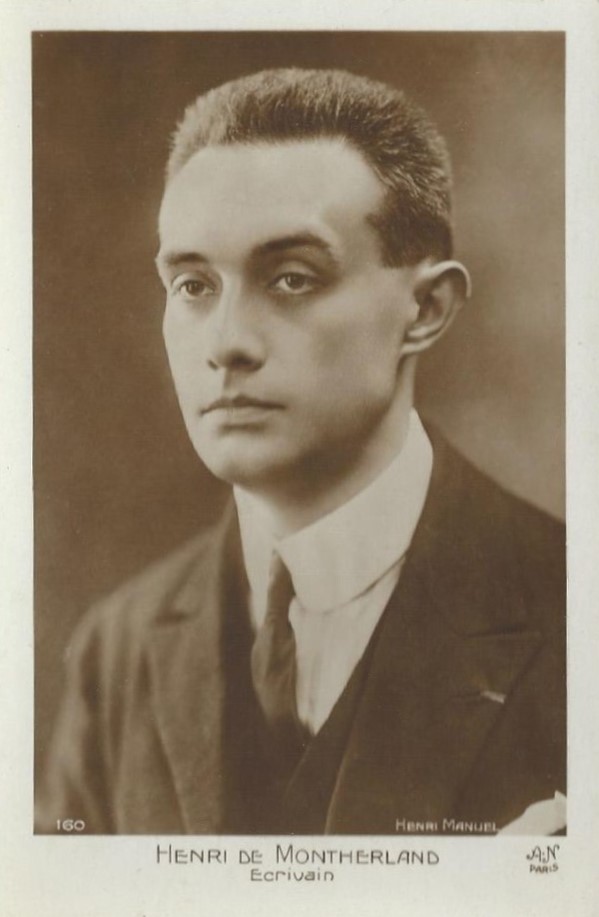
Henry de Montherlant, born Henry Marie Joseph Frédéric Expedite Millon de Montherlant on April 21, 1896, in Paris, is remembered as one of the last torchbearers of the Decadentism movement in literature. His life and works present a fascinating intersection of aristocratic heritage, fervent individualism, and a deep engagement with cultural and political issues of his time. This article delves into the nuances of his life, exploring his age, fame, and the significant highlights that defined his existence.
Early Life and Aristocratic Heritage
Henry de Montherlant was born into a family of noble Breton and Catalan origins. His childhood was spent in an environment steeped in tradition, surrounded by the remnants of a bygone era—precious art collections, racehorses, and a lifestyle that exuded the elegance of old-world aristocracy. Despite this privileged upbringing, Montherlant sought to distance himself from the comforts of his “gilded” childhood. His desire to break free from this past led him to volunteer for the front lines during World War I, a decision that would significantly influence his worldview and literary output.
A Passion for Tauromachia
Montherlant’s fascination with tauromachia, or bullfighting, began at a young age. In 1909, at just 13 years old, he attended his first bullfight, an experience that left a lasting impression on him. By the age of 15, he was already boasting about having killed a bull. His passion for the art of bullfighting was not merely a youthful infatuation but a lifelong obsession that permeated his literary works.
In 1925, during a bullfight, Montherlant was severely injured by a bull that pierced his lung. This near-fatal encounter with death only seemed to deepen his fascination with the spectacle of life and death, a theme that would recur in his writings.
Literary Influences and Early Works
Montherlant’s literary career began in earnest in his early twenties. His early works were deeply influenced by the philosophical and literary giants of his time, including Friedrich Nietzsche and Gabriele D’Annunzio. These influences are evident in his writings, where he explores themes of individualism, anti-sentimentalism, and a disdain for bourgeois society.
One of his early self-published works was a tribute to the soldiers who fought in World War I, reflecting his enduring fascination with war and heroism. This period also saw the formation of a secret society known as “l’Ordre,” inspired by the chivalric and samurai codes. The society, however, was short-lived, lasting only ten months.
Rise to Fame: “Les Jeunes Filles” and Controversy
Montherlant’s rise to literary fame came with the publication of his tetralogy “Les Jeunes Filles” between 1936 and 1939. The series, which included works like “Les Célibataires” and “La Reine Morte,” earned him widespread acclaim but also sparked controversy. The tetralogy was seen as a critique of societal norms, particularly the rigid expectations placed on women. Montherlant’s portrayal of female characters was often interpreted as misogynistic, a charge that followed him throughout his career. Simone de Beauvoir, the famous feminist philosopher, described his work as “crass.”
Despite—or perhaps because of—the controversy, Montherlant’s works resonated with a segment of the reading public that appreciated his unflinching critique of society and his exploration of the darker aspects of human nature.
Political Views and World War II
Montherlant’s political views were as complex and controversial as his literary works. During the 1930s, he took positions that were often at odds with mainstream French thought. He was a vocal critic of pacifism and democracy, and he expressed admiration for the military might of Nazi Germany, although he also criticized Italian colonialism in Ethiopia.
During World War II, Montherlant’s writings became increasingly focused on the theme of heroism. His 1941 work, “Le Solstice de Juin,” reflected his belief that war was an inescapable part of human existence. The book expressed admiration for the German army, leading to its temporary ban in Nazi-occupied France and a longer ban in Belgium and the Netherlands.
After the war, Montherlant faced accusations of collaboration with the Nazi regime. He was placed on a list of individuals prohibited from publishing for a year. Montherlant defended himself by arguing that the freedom of the press allowed for the expression of diverse opinions, even those that were contrary to the prevailing ideology.
The 1960s: Critique of Modern Society
The 1960s marked a period of introspection and critique for Montherlant. In 1963, he published “Le Chaos et la Nuit,” a work that criticized both consumerism and American society. This period also saw the production of his play “La Guerre Civile,” which dramatized the final battle between Caesar and Pompey.
Montherlant’s later works continued to explore themes of historical grandeur, as seen in his collection of essays “Le Treizième César,” which delved into the history of ancient Rome. His fascination with heroism, war, and the decline of civilizations remained central to his writing.
Final Years and Tragic End
Montherlant’s final years were marked by physical decline and increasing despair. His last novel, “Un Assassin est mon maître,” was published in 1971. By this time, he was almost completely blind, a condition that added to his sense of hopelessness.
On September 21, 1972, at the age of 76, Henry de Montherlant took his own life. His suicide was meticulously planned—he ingested a cyanide pill and then shot himself in the mouth. His final writings, including his “Carnets,” revealed a man deeply disillusioned with life, yet still profoundly connected to the classical ideals of Stoicism and the philosophical teachings of Plutarch, Petronius, and Seneca.
In his suicide note, Montherlant expressed a desire for a simple, unceremonious death. He requested that his body not be displayed and that no religious or civil ceremonies be conducted. His ashes were to be disposed of without any fuss, in keeping with his disdain for the trappings of societal conventions.
Legacy and Impact
Henry de Montherlant remains a complex and controversial figure in French literature. His works, characterized by their exploration of individualism, heroism, and societal critique, continue to provoke debate. While some view him as a misogynist and a collaborator, others see him as a courageous critic of societal hypocrisy and a defender of artistic freedom.
Montherlant’s legacy is also marked by his influence on later generations of writers and thinkers. His exploration of the darker aspects of human nature, his critique of societal norms, and his fascination with the concept of heroism have left an indelible mark on French literature.
In conclusion, Henry de Montherlant’s life and works offer a rich tapestry of themes and ideas that continue to resonate in contemporary discussions of literature, politics, and philosophy. His complex personality and controversial views make him a figure worthy of study and reflection, a writer who was unafraid to challenge the status quo and explore the depths of the human experience.


