
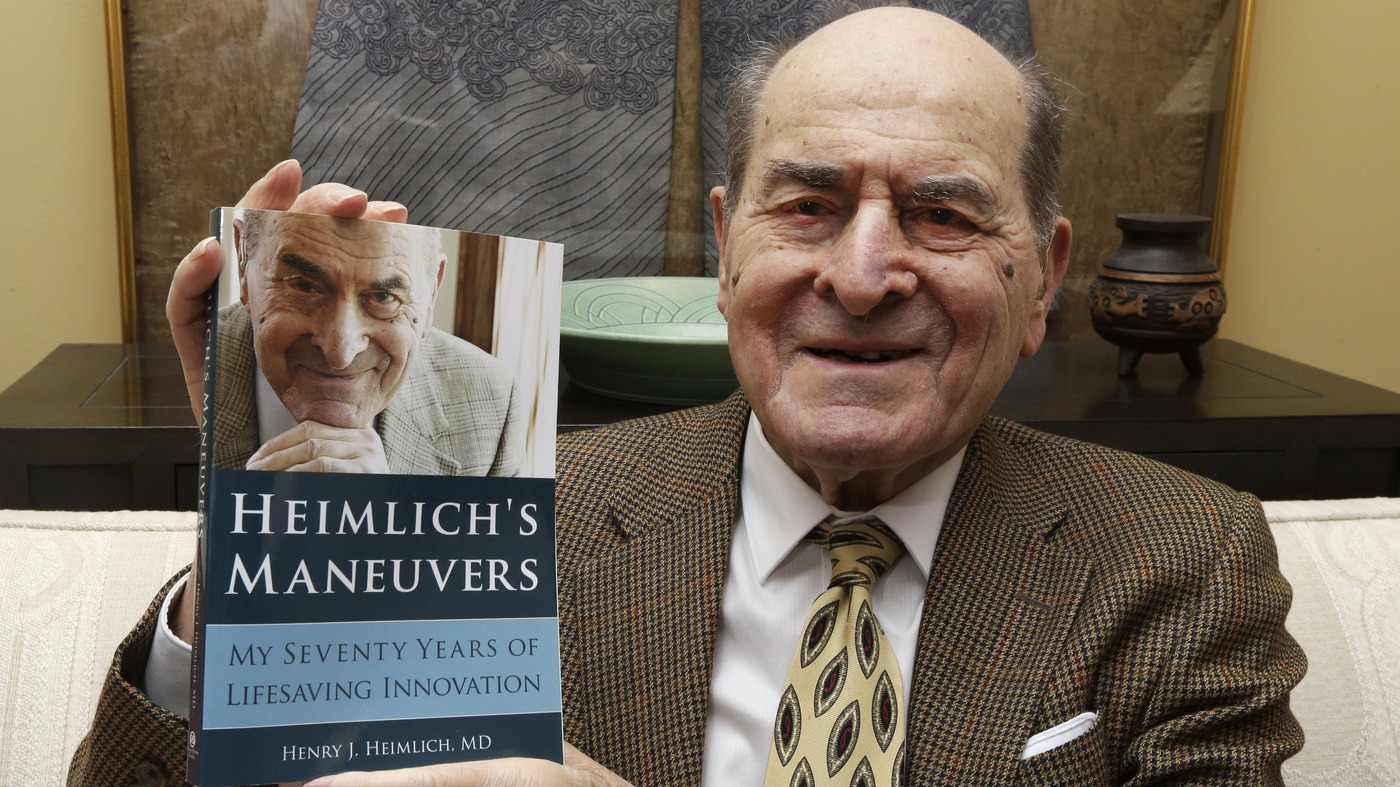
Henry Jay Heimlich, born on February 3, 1920, in Wilmington, Delaware, is a name that has become synonymous with one of the most critical life-saving techniques known to modern medicine—the Heimlich maneuver. This article delves into the life of Henry Heimlich, exploring his journey to fame, the development and impact of the Heimlich maneuver, and his other notable contributions to medicine. We’ll also explore the historical context that shaped his innovations and the lasting legacy he left behind.
Early Life and Education
Henry Heimlich’s early life was marked by a strong academic inclination, particularly in the sciences. Born to Jewish parents in the early 20th century, Heimlich grew up during a time when the world was witnessing rapid advancements in medical science. He graduated from New Rochelle High School in 1937 and went on to attend Cornell University, where he earned his undergraduate degree in 1941. Heimlich’s passion for medicine led him to the Cornell University Medical College, from which he graduated with a Doctor of Medicine degree in 1943.
During his time in medical school, Heimlich’s interest in innovative medical techniques began to take shape. He served as a medical officer in the U.S. Navy during World War II, where he gained invaluable experience in emergency medicine and surgery. This experience would later influence his approach to developing life-saving techniques.
The Heimlich Maneuver: A Revolutionary Discovery
The 1970s were a decade of significant medical advancements, and Henry Heimlich’s contribution during this period was nothing short of revolutionary. The Heimlich maneuver, a simple yet highly effective procedure to prevent choking, was introduced to the world in 1974. The technique involves standing behind a choking person, wrapping one’s arms around their waist, and applying upward pressure just below the ribcage to expel the obstructing object from the windpipe.
Heimlich’s research on choking and asphyxiation led him to realize that existing methods were often ineffective or overly complex. Before the Heimlich maneuver, the standard response to choking involved slapping the back, which could inadvertently push the object further into the windpipe. Heimlich’s innovation provided a much-needed alternative that was easy to perform and significantly more effective.
The maneuver gained widespread recognition and was quickly adopted as a standard emergency procedure in hospitals, schools, and homes across the globe. To date, it is estimated that the Heimlich maneuver has saved over 100,000 lives in the United States alone, with countless more saved worldwide. The simplicity and effectiveness of the maneuver made it accessible to the general public, further solidifying its place in the annals of medical history.
Other Medical Contributions
While the Heimlich maneuver is undoubtedly Henry Heimlich’s most famous contribution, it was by no means his only one. Throughout his career, Heimlich was involved in various medical research projects and innovations. One of his notable contributions was the Heimlich Chest Drain Valve, also known as the Heimlich Valve. Developed during the Vietnam War, this device is used to treat chest trauma by allowing air and fluid to escape from the chest cavity while preventing it from re-entering. The Heimlich Valve has been credited with saving the lives of many soldiers during the war and continues to be used in medical practices today.
Heimlich also conducted research on the potential use of the Heimlich maneuver in treating conditions like asthma and cystic fibrosis, though these applications remain controversial within the medical community. In the 1980s, Heimlich proposed using the maneuver to aid in the treatment of AIDS by inducing a cough to clear the lungs of fluid buildup, though this idea did not gain widespread acceptance.
The Controversies
Despite his many contributions to medicine, Henry Heimlich was not without controversy. Some of his later work, particularly his advocacy for using the Heimlich maneuver in cases beyond choking, drew criticism from medical professionals who questioned the scientific basis of his claims. Additionally, Heimlich’s insistence on the effectiveness of his maneuver in treating drowning victims was met with skepticism, as most medical guidelines recommend a different approach.
In 2003, the American Red Cross revised its guidelines, suggesting that back blows should be the first line of defense against choking, with the Heimlich maneuver used as a secondary measure. Heimlich publicly disagreed with this recommendation, arguing that back blows could worsen the situation by lodging the object more firmly in the airway.
A Legacy of Life-Saving
Henry Heimlich’s legacy is one of innovation, determination, and a relentless pursuit of saving lives. Despite the controversies, his contributions to emergency medicine have had an undeniable impact on countless individuals around the world. Heimlich continued to be an active figure in the medical community well into his later years. Remarkably, in 2016, at the age of 96, Heimlich himself used his maneuver to save a woman choking in his retirement home in Cincinnati, Ohio. This incident marked the first time Heimlich had ever used the technique in a real-life emergency, a testament to his lifelong commitment to the method he developed.
Heimlich passed away later that year, on December 17, 2016, at the age of 96. His passing marked the end of an era, but the techniques he developed continue to save lives every day.
The Historical Context
Understanding the historical context of Henry Heimlich’s life and work is essential to fully appreciate his contributions. Born at a time when medical science was still in its formative stages, Heimlich was part of a generation of doctors who witnessed and contributed to the rapid advancements in the field. The early 20th century saw the development of antibiotics, the first successful organ transplants, and significant improvements in surgical techniques. In this environment of innovation, Heimlich’s work on emergency medicine and life-saving techniques was both a product of its time and a catalyst for further advancements.
Heimlich’s work was also influenced by the broader social and cultural changes of the 20th century. The rise of the civil rights movement, the increasing emphasis on individual responsibility, and the growing public awareness of health and safety all played a role in the widespread adoption of the Heimlich maneuver. The technique became emblematic of a society that valued quick, effective action in the face of emergencies, empowering individuals to take control of life-threatening situations.
Conclusion: Henry Heimlich’s Enduring Influence
Henry Heimlich’s life is a testament to the power of innovation in medicine. His development of the Heimlich maneuver has saved countless lives and continues to be a critical tool in emergency situations worldwide. Beyond the maneuver, his other contributions to medicine, such as the Heimlich Valve, further cement his legacy as a pioneering figure in 20th-century medicine.
However, Heimlich’s story is also a reminder of the complexities and challenges that come with medical innovation. His later years were marked by controversies and disagreements within the medical community, reflecting the ongoing debates about the best approaches to emergency care. Yet, despite these challenges, Heimlich remained steadfast in his belief in the techniques he developed, and his influence endures.
As we look back on Henry Heimlich’s life and work, it’s clear that his impact extends far beyond the invention that bears his name. His commitment to saving lives, his willingness to challenge established medical practices, and his relentless pursuit of innovation have left an indelible mark on the field of emergency medicine. Henry Heimlich may have passed away, but the lives he saved and the methods he pioneered continue to live on.


