
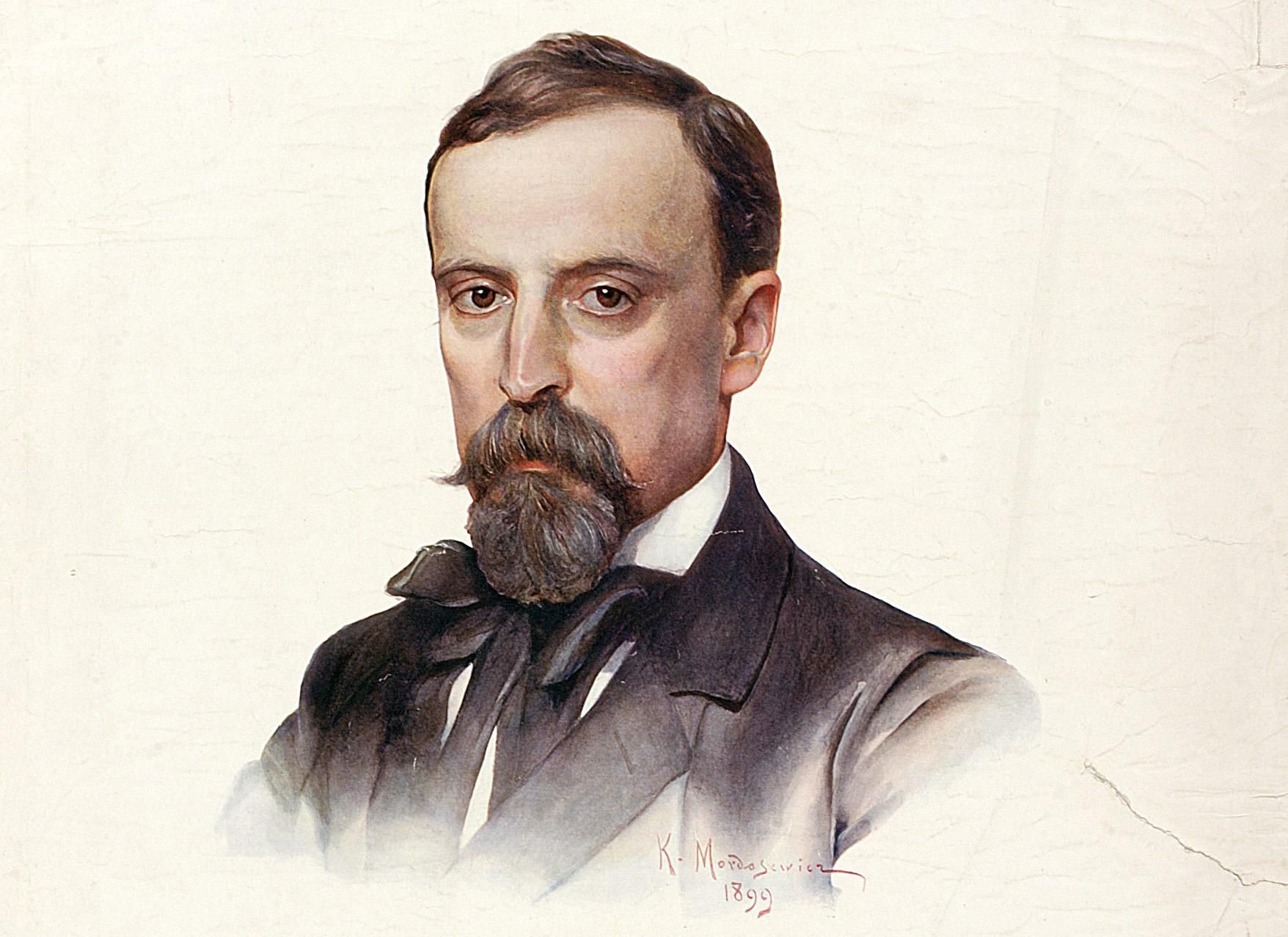
Henryk Sienkiewicz is one of Poland’s most celebrated literary figures, whose works have left an indelible mark on the world of literature. Born Henryk Adam Aleksander Pius Sienkiewicz on May 5, 1846, in Wola Okrzejska, Poland, Sienkiewicz’s life and works were profoundly influenced by the historical and cultural context of his time. His contributions to literature earned him international acclaim, culminating in a Nobel Prize in Literature in 1905. This article delves into his life, his rise to fame, and the highlights of his illustrious career.
Early Life and Education
Henryk Sienkiewicz was born into a family of Polish nobility, which had experienced significant financial decline. Despite the family’s economic challenges, Sienkiewicz received a classical education in Warsaw. Initially enrolling in the Faculty of Medicine, he later shifted his focus to Philology, driven by his passion for literature and history. However, he eventually abandoned his studies in 1869 to pursue a career in journalism—a decision that would set the stage for his future literary achievements.
Early Career and Journalism
Sienkiewicz began his professional writing career in the early 1870s, contributing to various Polish newspapers. His work as a journalist provided him with the opportunity to travel extensively, experiences that would later inform much of his literary output. In 1876, Sienkiewicz embarked on a two-year journey to the United States, where he continued to write for the “Gazeta Polska” (Polish Gazette), sending back letters that were later compiled into a volume titled “Letters from a Journey.” This period of his life was crucial in shaping his worldview, exposing him to different cultures and historical perspectives.
The 1880s: Rise to Prominence
The 1880s marked a turning point in Sienkiewicz’s career. It was during this decade that he began serializing his first major novel, “With Fire and Sword” (“Ogniem i Mieczem”), in the Polish daily newspaper “Slowo” (The Word). This novel, set in the 17th century during the Khmelnytsky Uprising, was the first installment of what would become his famous Trilogy, which also included “The Deluge” (“Potop”) and “Sir Michael” (“Pan Wołodyjowski”). These works, characterized by their vivid portrayal of Polish history and intense patriotism, solidified Sienkiewicz’s reputation as a leading literary figure in Poland.
The Trilogy was more than just a literary achievement; it was a cultural phenomenon. At a time when Poland was partitioned and under foreign rule, Sienkiewicz’s works provided a sense of national pride and identity. His depiction of Poland’s past glories resonated deeply with his contemporaries, who longed for the restoration of their nation’s sovereignty.
Personal Life and Challenges
Sienkiewicz’s personal life was marked by both triumphs and tragedies. His first wife, Maria Szetkiewicz, whom he married in 1881, fell ill shortly after their marriage. Despite Sienkiewicz’s efforts to find a cure, including taking her to various health resorts, Maria died in 1885. This loss profoundly affected Sienkiewicz, and he never fully recovered from the grief of her passing. He would marry twice more, but both marriages were short-lived and fraught with difficulties.
International Fame: “Quo Vadis”
In the mid-1890s, Sienkiewicz achieved international fame with the publication of his historical novel “Quo Vadis.” Set in ancient Rome during the reign of Emperor Nero, the novel explores the conflict between the Roman Empire and the emerging Christian faith. “Quo Vadis” was an immediate success, quickly translated into multiple languages, and became a bestseller worldwide. The novel’s portrayal of the moral decay of the Roman Empire and the steadfastness of the early Christians resonated with readers across different cultures.
The success of “Quo Vadis” not only brought Sienkiewicz international acclaim but also secured his place among the greats of world literature. In 1905, Sienkiewicz was awarded the Nobel Prize in Literature “for his outstanding merits as an epic writer.” The Nobel Committee recognized his ability to craft compelling narratives that combined historical accuracy with imaginative storytelling.
Later Works and Nobel Prize
Following the success of “Quo Vadis,” Sienkiewicz continued to write, producing several more historical novels. One of his notable later works was “The Knights of the Cross” (“Krzyżacy”), published between 1897 and 1900. This novel, set during the Polish-Lithuanian-Teutonic Wars, further showcased Sienkiewicz’s mastery of historical fiction and his deep commitment to exploring Poland’s past.
In 1904, Sienkiewicz married his third wife, Maria Babska, but this marriage, like his previous ones, was troubled. Despite the personal challenges he faced, Sienkiewicz’s literary output remained prolific. His works continued to reflect his profound love for Poland and his desire to inspire his countrymen during a time of national turmoil.
World War I and Final Years
The outbreak of World War I in 1914 had a significant impact on Sienkiewicz’s life. He relocated to Switzerland, where he co-founded the Polish Victims’ Relief Committee with the pianist and politician Ignacy Jan Paderewski. The committee provided aid to Polish civilians affected by the war. Sienkiewicz’s efforts in this regard demonstrated his enduring commitment to his homeland, even as he was physically distant from it.
Sienkiewicz never returned to Poland after moving to Switzerland. He passed away in Vevey, Switzerland, on November 16, 1916, at the age of 70. His death marked the end of an era in Polish literature, but his legacy lived on through his works. In 1924, his remains were repatriated to Poland and interred in the Cathedral of St. John in Warsaw—a fitting final resting place for a man who had dedicated his life to the cultural and historical enrichment of his nation.
Legacy and Impact
Henryk Sienkiewicz’s contributions to literature cannot be overstated. His works are not only literary masterpieces but also cultural artifacts that reflect the historical and political realities of his time. Sienkiewicz’s ability to weave together history, patriotism, and human emotion has ensured that his novels remain relevant and widely read to this day.
In Poland, Sienkiewicz is regarded as a national hero. His works are part of the school curriculum, and his influence extends beyond literature into the realms of history and national identity. Sienkiewicz’s novels have been adapted into films, television series, and even operas, further cementing his place in the cultural pantheon.
Internationally, Sienkiewicz is best known for “Quo Vadis,” which has been adapted into several films, most notably the 1951 Hollywood production. The novel’s themes of faith, courage, and resistance against tyranny have universal appeal, resonating with readers and viewers from different cultures and backgrounds.
Historical Context and Nuances
To fully appreciate Henryk Sienkiewicz’s work, it is essential to understand the historical context in which he wrote. The 19th century was a tumultuous period for Poland, marked by partitions and foreign domination. Sienkiewicz’s works reflect the struggle for Polish independence and the desire to preserve national identity in the face of oppression.
Sienkiewicz’s novels often explore themes of patriotism, sacrifice, and heroism—values that were particularly resonant in a country that had lost its sovereignty. His portrayal of historical events, while sometimes romanticized, was rooted in a deep understanding of Polish history and a desire to inspire future generations.
Moreover, Sienkiewicz’s work can be seen as part of the broader European tradition of historical fiction that emerged in the 19th century. Like his contemporaries, such as Victor Hugo and Leo Tolstoy, Sienkiewicz used historical narratives to comment on contemporary issues, making his work both timeless and relevant.
Conclusion
Henryk Sienkiewicz’s life and career are a testament to the power of literature to shape national identity and inspire generations. From his early days as a journalist to his rise as an internationally acclaimed novelist, Sienkiewicz remained committed to telling stories that resonated with his fellow Poles and readers worldwide. His legacy continues to endure, reminding us of the enduring power of history, culture, and the written word.
As we look back on his life and work, it is clear that Henryk Sienkiewicz was more than just a novelist—he was a cultural icon, a patriot, and a voice for a nation. His works continue to be celebrated, studied, and appreciated for their literary brilliance and their profound impact on Polish and world literature.


