
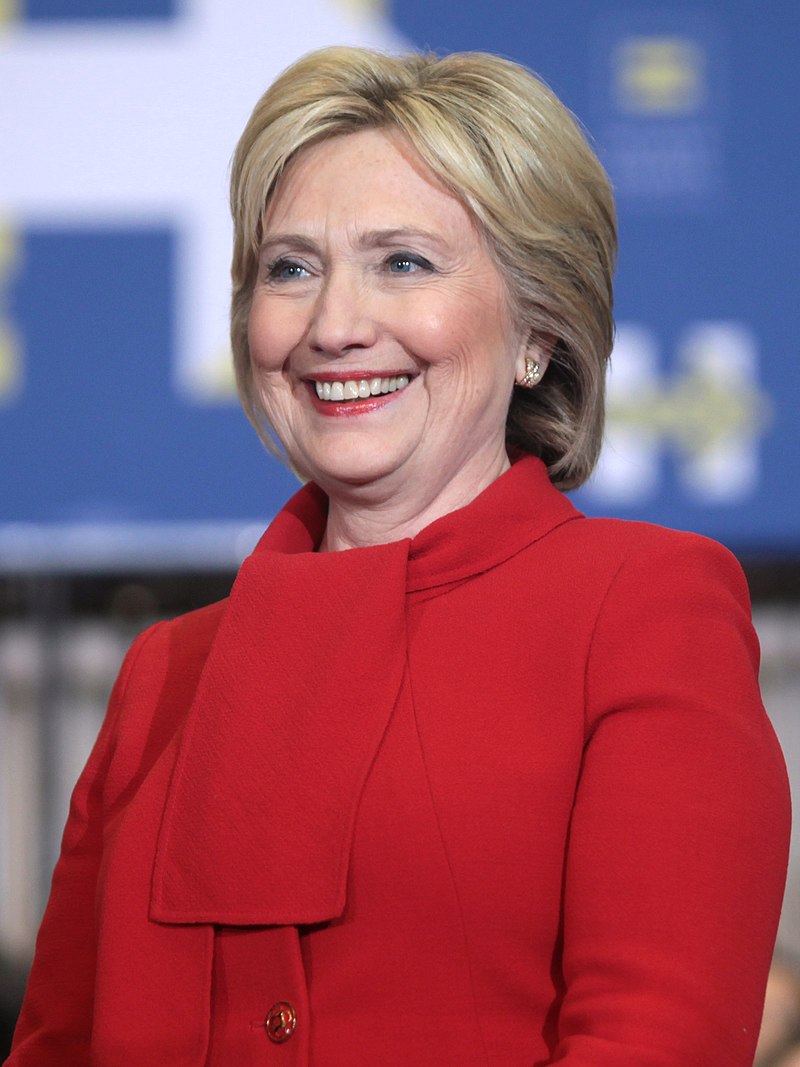
Hillary Clinton, born Hillary Diane Rodham on October 26, 1947, in Chicago, Illinois, is one of the most influential and recognizable figures in American politics. With a career that spans decades, she has been a First Lady, U.S. Senator, Secretary of State, and the first woman to secure the presidential nomination from a major American political party. Her journey from a suburban upbringing to the pinnacle of American politics is a story of resilience, intelligence, and a commitment to public service.
Early Life and Education
Hillary Clinton grew up in the middle-class suburb of Park Ridge, Illinois, where her early life was shaped by her Methodist faith and the strong work ethic of her parents. Her father, Hugh Ellsworth Rodham, was the son of English immigrants and ran a small but successful textile business. Her mother, Dorothy Emma Howell Rodham, was a homemaker who instilled in Hillary the values of hard work, education, and perseverance.
From a young age, Hillary was a high achiever. She attended Maine East High School and later Maine South High School, where she was involved in numerous extracurricular activities, including student government and the National Honor Society. Her academic success earned her a place at Wellesley College, a prestigious all-women’s college in Massachusetts, where she further developed her interest in politics and social justice.
At Wellesley, Hillary became an active student leader, and her political views began to take shape. Initially a supporter of Republican Barry Goldwater in the 1964 presidential election, Hillary’s political ideology evolved over her college years, influenced by the civil rights movement and the growing opposition to the Vietnam War. By the time she graduated in 1969, she had become a committed Democrat.
Law School and Early Career
After graduating from Wellesley, Hillary Clinton attended Yale Law School, one of the most prestigious law schools in the United States. At Yale, she continued to focus on social justice issues, particularly those related to children’s rights and family law. It was at Yale that she met her future husband, Bill Clinton, a fellow law student who shared her passion for public service.
Following her graduation from Yale in 1973, Hillary worked with the Children’s Defense Fund, where she began her lifelong advocacy for children’s rights. Her early legal work included investigating the treatment of migrant workers and advocating for better education and health care for children. These experiences solidified her belief in using the law as a tool for social change.
Hillary’s career took a significant turn when she joined the House Judiciary Committee’s legal staff during the Watergate scandal, which led to the resignation of President Richard Nixon. Her work during this time earned her national recognition and further cemented her reputation as a skilled and dedicated lawyer.
Marriage to Bill Clinton and Life in Arkansas
In 1975, Hillary married Bill Clinton, whom she had met at Yale. The couple moved to Arkansas, where Bill was pursuing a political career. While Bill quickly rose through the political ranks, Hillary continued to build her legal career. She joined the faculty at the University of Arkansas School of Law and worked at the Rose Law Firm, one of the state’s most prestigious law firms.
Hillary’s work in Arkansas extended beyond her legal practice. She became a leading advocate for children’s rights and education reform, helping to establish the Arkansas Advocates for Children and Families, a nonprofit organization dedicated to improving the lives of children in the state. Her work in this area earned her national recognition and accolades, including being named one of the 100 most influential lawyers in America by the National Law Journal.
As Bill Clinton’s political career progressed—first as Attorney General of Arkansas and later as Governor—Hillary balanced her role as a political spouse with her professional and advocacy work. In 1980, the Clintons welcomed their daughter, Chelsea, who would become a central figure in their public and private lives.
First Lady of the United States
In 1992, Bill Clinton was elected the 42nd President of the United States, and Hillary Clinton became the First Lady. Unlike many of her predecessors, Hillary took an active role in her husband’s administration, serving as an influential advisor and leading several key initiatives.
One of Hillary’s most ambitious projects as First Lady was her effort to reform the U.S. healthcare system. Appointed by her husband to head the Task Force on National Health Care Reform, she advocated for a comprehensive plan that aimed to provide universal health coverage. However, the plan faced intense opposition from both Republicans and the healthcare industry, ultimately failing to pass in Congress. Despite this setback, Hillary’s efforts brought national attention to the issue of healthcare reform and laid the groundwork for future efforts.
During her time as First Lady, Hillary also championed issues related to women’s rights and children’s welfare. She traveled extensively, both domestically and internationally, advocating for human rights, economic development, and education. Her famous 1995 speech at the United Nations Fourth World Conference on Women in Beijing, where she declared that “women’s rights are human rights,” solidified her status as a global advocate for gender equality.
Hillary’s time as First Lady was not without controversy. The Whitewater investigation, which scrutinized the Clintons’ involvement in a failed Arkansas land deal, and the Monica Lewinsky scandal, which led to Bill Clinton’s impeachment, placed Hillary in the national spotlight. Throughout these challenges, she maintained her public role, demonstrating resilience and a commitment to her causes.
U.S. Senate Career
As Bill Clinton’s presidency came to an end, Hillary Clinton embarked on her own political career. In 2000, she ran for and won a seat in the U.S. Senate, representing the state of New York. Her election made her the first First Lady to hold public office.
As a senator, Hillary Clinton focused on a wide range of issues, including healthcare, national security, and veterans’ rights. She served on several important committees, including the Armed Services Committee, where she worked to improve conditions for U.S. service members and their families.
In the aftermath of the September 11, 2001, terrorist attacks, Hillary played a key role in securing federal funds for the recovery and rebuilding efforts in New York City. Her work in the Senate earned her respect from both sides of the aisle, and she was re-elected in 2006 with a significant majority.
Presidential Campaigns and Secretary of State
In 2007, Hillary Clinton announced her candidacy for the Democratic nomination for President of the United States in the 2008 election. Her campaign was historic, as she sought to become the first female president in U.S. history. Despite leading in early polls, she faced a formidable opponent in Senator Barack Obama, who ultimately secured the Democratic nomination.
After Obama won the presidency, he appointed Hillary Clinton as Secretary of State, a position she held from 2009 to 2013. As Secretary of State, Hillary was responsible for managing the United States’ foreign relations and played a crucial role in several key international issues.
One of her significant achievements as Secretary of State was the “pivot to Asia” strategy, which aimed to strengthen U.S. relations with Asian nations and counterbalance China’s growing influence in the region. She also played a vital role in the U.S. response to the Arab Spring, a series of uprisings in the Middle East and North Africa that challenged authoritarian regimes. Her advocacy for U.S. involvement in the NATO-led intervention in Libya in 2011, which led to the overthrow of Muammar Gaddafi, was both praised and criticized.
Hillary’s tenure as Secretary of State was not without controversy. The 2012 attack on the U.S. consulate in Benghazi, Libya, which resulted in the deaths of four Americans, including Ambassador Christopher Stevens, led to intense scrutiny and multiple congressional investigations. Although no wrongdoing was found on her part, the incident became a focal point of criticism during her subsequent political campaigns.
2016 Presidential Campaign
In 2015, Hillary Clinton announced her second bid for the presidency, this time seeking to succeed Barack Obama. Her campaign emphasized her extensive experience in government, her commitment to social justice, and her vision for a more inclusive America. She faced a strong challenge from Senator Bernie Sanders, whose progressive platform galvanized a significant portion of the Democratic electorate.
Hillary ultimately secured the Democratic nomination, becoming the first woman to be nominated for president by a major political party in the United States. Her campaign faced numerous challenges, including questions about her use of a private email server during her time as Secretary of State and allegations of favoritism within the Democratic National Committee.
The 2016 general election was one of the most contentious in modern American history. Hillary Clinton faced off against the Republican nominee, Donald Trump, in a campaign marked by deep political divisions, personal attacks, and widespread misinformation. Despite winning the popular vote by nearly three million votes, Hillary lost the electoral college and the presidency to Trump.
The outcome of the 2016 election was a significant moment in American politics, highlighting the deep divides within the country and the challenges facing women in leadership. In the aftermath, Hillary continued to be a vocal advocate for democratic values, women’s rights, and political reform.
Post-Election Life and Legacy
Since the 2016 election, Hillary Clinton has remained an active figure in public life. She has authored several books, including What Happened, a memoir detailing her experiences during the 2016 campaign, and The Book of Gutsy Women, co-authored with her daughter Chelsea. Through these works and her public appearances, Hillary has continued to advocate for issues such as voting rights, gender equality, and democratic governance.
Hillary Clinton’s legacy is multifaceted. She is widely regarded as a trailblazer for women in politics, having broken numerous barriers throughout her career. Her work as an advocate for children’s rights, healthcare reform, and gender equality has had a lasting impact on American society. However, her career has also been marked by controversy, with critics pointing to her handling of the Benghazi attack, the email server investigation, and her role in the 2016 election.
Despite these challenges, Hillary Clinton’s influence on American politics and her contributions to public service are undeniable. She has inspired countless women to pursue careers in politics and public service, and her commitment to the causes she cares about continues to resonate with people around the world.
In conclusion, Hillary Clinton’s life and career are a testament to the power of resilience, dedication, and public service. From her early days as a student activist to her roles as First Lady, Senator, Secretary of State, and presidential candidate, she has consistently worked to make a positive impact on the world. Her legacy, while complex, is one of breaking barriers and advocating for a more just and equitable society.


