
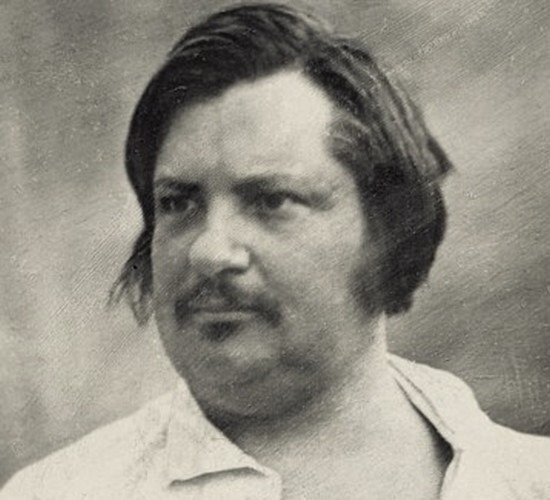
Honoré de Balzac, born on May 20, 1799, in Tours, France, is one of the most prolific and influential novelists of the 19th century. His works, particularly “La Comédie Humaine,” are celebrated for their intricate detail, realism, and profound exploration of human nature and society. Balzac’s life was as complex and multifaceted as the characters he created, marked by relentless ambition, financial struggles, and an enduring legacy that continues to resonate in the literary world.
Early Life and Education
Honoré de Balzac was born into a bourgeois family during a period of significant social and political upheaval in France. His father, Bernard-François Balssa, was a civil servant who had risen from humble beginnings, and his mother, Charlotte-Laure Sallambier, came from a wealthy Parisian family. The family’s social aspirations and Bernard-François’ bureaucratic career influenced young Honoré’s early life.
Balzac’s childhood was far from idyllic. He was sent away to the Oratorian school in Vendôme at a young age, where the rigid discipline and strict academic demands took a toll on his health. The emotional and physical strain of his schooling led to a nervous breakdown, forcing him to take a year off to recover. This period of convalescence, however, allowed him to immerse himself in reading, laying the foundation for his future literary career.
After recovering, Balzac continued his education in Paris, where his family had relocated. He enrolled in law school, following his father’s wishes, but his passion for literature soon took precedence over his legal studies. By 1819, after completing his law degree, Balzac informed his family of his decision to become a writer—a decision that would shape the rest of his life.
Early Literary Career and Financial Struggles
Honoré de Balzac’s early literary career was fraught with challenges. Between 1821 and 1829, he wrote several works under various pseudonyms, including Horace de Saint-Aubin and Lord R’Hoone. These early novels were formulaic and geared toward popular tastes, but they did not bring him the success he sought. Despite these initial setbacks, Balzac’s determination to succeed in the literary world only grew stronger.
Balzac’s restlessness and entrepreneurial spirit led him to explore other ventures in addition to writing. He established a publishing house, a printing press, and a type foundry, all of which ultimately failed and left him deeply in debt. However, these failures did not deter Balzac; rather, they fueled his ambition and provided him with a wealth of experiences that would later inform his writing.
It wasn’t until 1829, with the publication of “Les Chouans,” that Balzac began to gain recognition as a serious novelist. This historical novel, set against the backdrop of the French Revolution, marked a turning point in his career. That same year, he published “La Physiologie du Mariage,” a satirical essay on marriage that garnered significant attention for its controversial content and wit. These works laid the groundwork for the development of “La Comédie Humaine,” the magnum opus that would define his career.
The Creation of La Comédie Humaine
In 1834, Balzac conceived the ambitious idea of creating a vast literary project that would depict the entirety of French society. This project, which he titled “La Comédie Humaine,” was envisioned as a comprehensive portrait of life in France during the Restoration and July Monarchy periods. Inspired by the naturalist theories of Jean-Baptiste de Lamarck and Étienne Geoffroy Saint-Hilaire, Balzac sought to explore the complexities of human behavior and the social forces that shaped individuals’ lives.
“La Comédie Humaine” was divided into three main categories: Études de Mœurs (Studies of Manners), Études Philosophiques (Philosophical Studies), and Études Analytiques (Analytical Studies). These categories were further subdivided into scenes of private life, provincial life, Parisian life, political life, military life, and country life. Through this monumental work, Balzac aimed to create a detailed and interconnected universe of characters, many of whom appeared in multiple novels, creating a rich tapestry of narratives that reflected the diversity and complexity of French society.
Some of the most famous works within “La Comédie Humaine” include “Le Père Goriot” (1834-35), “Eugénie Grandet” (1833), “Illusions Perdues” (1837-1843), “La Cousine Bette” (1846), and “Le Cousin Pons” (1847). These novels are notable for their realism, psychological depth, and the meticulous detail with which Balzac depicted his characters’ lives and surroundings.
Balzac’s portrayal of society was unflinching, often focusing on the darker aspects of human nature and the corrupting influence of money and power. His characters are frequently driven by ambition, greed, and desire, reflecting the materialism and social climbing that characterized the bourgeoisie of his time. Balzac’s work was groundbreaking in its exploration of these themes, and it laid the foundation for the realist movement in literature.
Personal Life and Relationships
Honoré de Balzac’s personal life was as turbulent as his literary career. He maintained a long-term relationship with Laure de Berny, a woman 22 years his senior, who played a significant role in his early life. Laure provided Balzac with emotional and financial support during his early struggles, and their relationship had a profound impact on his work.
Balzac was also known for his passionate and often tumultuous relationships with other women. One of the most significant figures in his life was the Polish noblewoman Ewelina Hańska, with whom he began a correspondence in 1832. Their relationship, which spanned nearly two decades, was marked by intense emotion and numerous obstacles, including Hańska’s marriage to another man. After years of anticipation, they finally married in 1850, just months before Balzac’s death.
Throughout his life, Balzac’s financial situation remained precarious. Despite the success of his novels, he was constantly in debt due to his extravagant lifestyle, failed business ventures, and the costs associated with his ambitious literary projects. He often worked long hours, fueled by coffee, to meet deadlines and satisfy his creditors.
Health Decline and Final Years
Balzac’s relentless work ethic and financial struggles took a toll on his health. By the mid-1840s, his physical condition had begun to deteriorate, and he suffered from a range of ailments, including heart problems and high blood pressure. Despite these health issues, Balzac continued to write, driven by his desire to complete “La Comédie Humaine.”
In 1847, Balzac was honored with the title of Chevalier of the Legion of Honor, a recognition of his contributions to French literature. However, this accolade did little to alleviate his financial woes or improve his declining health.
After finally marrying Ewelina Hańska in 1850, Balzac’s health rapidly worsened. The couple returned to Paris, where Balzac spent his final months. On August 18, 1850, at the age of 51, Honoré de Balzac passed away. His death marked the end of a remarkable literary career, but his influence on literature and culture endures to this day.
Balzac was buried in the Père-Lachaise Cemetery in Paris, where his funeral was attended by many prominent figures of the time, including Victor Hugo, who delivered a eulogy in his honor. Hugo, a contemporary and admirer of Balzac, described him as a “literary colossus” whose work would stand the test of time.
The Legacy of Honoré de Balzac
Honoré de Balzac’s legacy is immense. “La Comédie Humaine” remains one of the most important works in the history of literature, offering a detailed and insightful examination of 19th-century French society. Balzac’s ability to capture the intricacies of human behavior, his exploration of social dynamics, and his unflinching portrayal of the pursuit of wealth and power have made his work timeless.
Balzac’s influence extends far beyond his native France. His novels have been translated into numerous languages and have inspired generations of writers, including Marcel Proust, Émile Zola, and Charles Dickens. His work laid the foundation for the realist movement in literature, and his characters—complex, flawed, and deeply human—continue to resonate with readers today.
Balzac’s impact is also evident in other forms of art and culture. His novels have been adapted into countless films, television series, and plays, ensuring that his stories continue to reach new audiences. His exploration of themes such as ambition, greed, and the corrupting influence of money remains relevant in contemporary society, making his work as pertinent today as it was in the 19th century.
Conclusion
Honoré de Balzac was a literary giant whose work has left an indelible mark on the world of literature. His life was a testament to the power of perseverance, creativity, and ambition. Despite facing numerous challenges, including financial difficulties and health problems, Balzac’s dedication to his craft never wavered. His creation of “La Comédie Humaine” stands as one of the greatest achievements in literary history, offering a profound and comprehensive exploration of human nature and society.
Balzac’s influence continues to be felt in the literary world and beyond, as his work remains a source of inspiration for writers, artists, and thinkers. His legacy is one of brilliance, complexity, and an unwavering commitment to depicting the truths of the human experience.


