
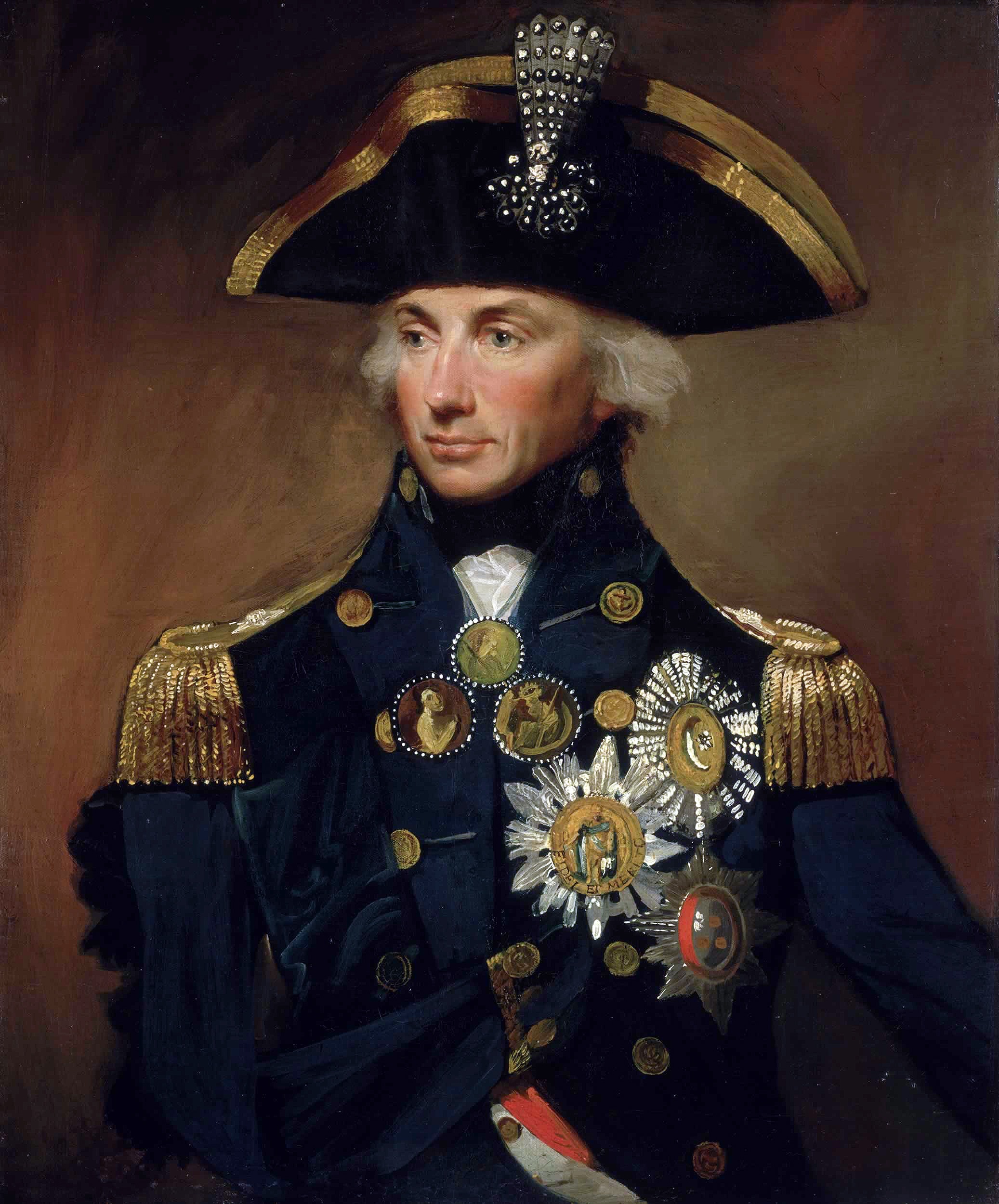
Horatio Nelson, one of Britain’s most celebrated naval heroes, was born on September 29, 1758, in Burnham Thorpe, Norfolk, England. Known for his leadership, strategic brilliance, and courageous spirit, Nelson played a pivotal role in the British Royal Navy during the Napoleonic Wars. His legacy is most famously associated with his victory at the Battle of Trafalgar in 1805, a triumph that secured Britain’s naval supremacy for over a century. This article delves into the life of Horatio Nelson, exploring his early years, rise to fame, key battles, and the historical context that shaped his career. We will also examine the nuances of his legacy, which is both celebrated and critiqued, ensuring a comprehensive understanding of his impact on British and world history.
Early Life and Education
Horatio Nelson was born into a large family, the sixth of eleven children, to Reverend Edmund Nelson and his wife, Catherine Suckling. His mother was a descendant of Sir Robert Walpole, Britain’s first Prime Minister, indicating that Nelson came from a family with significant historical ties. Unfortunately, his mother passed away when he was just nine years old, a loss that profoundly affected young Nelson and left a lasting impression on his emotional development.
At the age of 12, Nelson joined the Royal Navy, a common path for boys of his social standing, particularly those with familial connections to the military. His uncle, Captain Maurice Suckling, played a crucial role in facilitating his entry into the navy. Nelson’s early years at sea were challenging; he often struggled with seasickness, a condition that plagued him throughout his naval career. Despite this, his determination and innate leadership qualities began to emerge, setting the stage for his future accomplishments.
Nelson’s naval career officially began in 1771 when he enlisted as a midshipman aboard the HMS Raisonnable, commanded by his uncle. Over the next few years, he gained valuable experience in various naval campaigns, including service in the Caribbean, where he developed a strong disdain for the practice of slavery—a rare sentiment for the time. By 1777, at the age of 19, Nelson had passed his lieutenant’s exam, marking the beginning of a rapid ascent through the ranks.
During the American War of Independence, Nelson served with distinction, though he often found himself frustrated by the limitations of the British naval strategy. His first significant command came in 1781 when he was given control of the HMS Badger. His aggressive tactics and ability to inspire his men were evident early on, characteristics that would define his career.
Rising Through the Ranks: Courage and Controversy
Nelson’s reputation for bravery and tactical brilliance grew during the late 18th century. One of the key moments in his early career came in 1797 during the Battle of Cape St. Vincent. Despite receiving orders to hold his position, Nelson boldly decided to engage the Spanish fleet directly. His daring actions led to a decisive British victory and earned him a promotion to Rear Admiral, as well as the admiration of his peers and the British public.
However, Nelson’s career was not without its challenges and controversies. In the same year, while attempting to capture the Spanish-held island of Tenerife, Nelson was severely wounded. His right arm was so badly injured that it had to be amputated, an ordeal that tested his resilience. Far from being deterred, Nelson returned to duty with a renewed sense of purpose, famously referring to his lost limb as his “fin.”
Despite his successes, Nelson often felt underappreciated by the British Admiralty. He believed that his lack of noble birth and political connections hindered his career advancement. This sense of injustice fueled his drive to achieve even greater victories, as he sought to prove himself worthy of the recognition he believed he deserved.
The Battle of the Nile: A Defining Victory
One of Nelson’s most significant victories came in 1798 during the Battle of the Nile. As part of his campaign to thwart Napoleon Bonaparte’s ambitions in the Mediterranean, Nelson led the British fleet in a surprise attack against the French navy at Aboukir Bay. The battle was a decisive victory for the British, effectively trapping Napoleon’s forces in Egypt and preventing them from threatening British interests in India.
The victory at the Battle of the Nile elevated Nelson to near-mythical status in Britain. He was hailed as a national hero, and his contributions were recognized with the title of Baron Nelson of the Nile. However, the title fell short of Nelson’s expectations, as he had hoped for a higher rank. This perceived slight only deepened his feelings of being undervalued by the British establishment.
The aftermath of the Battle of the Nile also marked a significant turning point in Nelson’s personal life. During his time in Naples, he met Emma Hamilton, the wife of the British ambassador, Sir William Hamilton. Nelson and Emma began a passionate affair, which became the subject of much gossip and scandal in British society. Their relationship, while deeply romantic, would later complicate Nelson’s career and reputation.
The Controversial Hero: Naples and the Siege of Copenhagen
Following his success in the Mediterranean, Nelson’s career took him to Naples, where he became embroiled in the complex politics of the region. The Kingdom of Naples was under threat from French revolutionary forces, and Nelson’s role was to support the royal family and defend British interests. His involvement in the suppression of the Neapolitan Republic, which included the controversial execution of rebels, tarnished his reputation among some contemporaries and historians.
In 1801, Nelson played a central role in the Battle of Copenhagen, a key engagement during the War of the Second Coalition. The battle aimed to break the neutrality of Denmark-Norway, which was seen as a threat to British naval dominance. Nelson’s leadership was instrumental in the British victory, but the battle was also notable for his infamous decision to ignore a signal to retreat, claiming that he did not see the order because he was looking through his blind eye. This act of defiance was emblematic of Nelson’s bold and unconventional approach to warfare.
The Battle of Trafalgar: Nelson’s Legacy Sealed
The pinnacle of Nelson’s career came on October 21, 1805, at the Battle of Trafalgar. As the commander of the British fleet, Nelson faced the combined naval forces of France and Spain, who were attempting to break Britain’s control of the seas. The battle was a resounding victory for the British, with Nelson’s innovative tactics—such as the daring decision to divide his fleet and attack perpendicularly—playing a crucial role in the outcome.
However, the victory came at a great cost. During the battle, Nelson was struck by a French sniper’s bullet, which lodged in his spine. He remained conscious for several hours, long enough to learn of his fleet’s triumph, before succumbing to his injuries. His death was a profound loss for Britain, and he was mourned as a national hero.
The Battle of Trafalgar secured Britain’s naval dominance for the next century, ensuring that Napoleon’s ambitions of invading Britain would never be realized. Nelson’s leadership and sacrifice became legendary, and his memory was immortalized in numerous monuments, including the iconic Nelson’s Column in Trafalgar Square, London.
To fully appreciate Nelson’s achievements, it is important to consider the broader historical context in which he lived and fought. The late 18th and early 19th centuries were a period of intense geopolitical conflict, as the rise of revolutionary France under Napoleon Bonaparte threatened the established order in Europe. Britain, with its powerful navy, played a crucial role in countering French expansion and protecting its own global interests.
The Napoleonic Wars (1803-1815) were a series of conflicts that pitted Napoleon’s French Empire against a coalition of European powers, including Britain, Russia, Austria, and Prussia. Control of the seas was vital to Britain’s strategy, as it allowed the nation to maintain trade routes, support its colonies, and launch military campaigns against Napoleon’s forces. Nelson’s victories, particularly at the Battle of the Nile and the Battle of Trafalgar, were instrumental in securing Britain’s naval supremacy and limiting Napoleon’s ambitions.
The Complex Legacy of Horatio Nelson
Horatio Nelson’s legacy is complex and multifaceted. On one hand, he is celebrated as a brilliant tactician and a fearless leader whose victories were crucial in shaping the course of European history. His ability to inspire his men and his willingness to take bold risks made him one of the most successful naval commanders in history.
However, Nelson’s career is not without its controversies. His actions in Naples, where he supported the harsh repression of republican forces, have been criticized as excessively brutal. Additionally, his personal life, particularly his affair with Emma Hamilton, scandalized British society and complicated his public image.
Despite these complexities, Nelson’s contributions to British naval power and his role in the defeat of Napoleon have cemented his status as a national hero. His life and career continue to be the subject of study and admiration, and his legacy remains a source of pride for many in Britain.
Conclusion: The Enduring Legend of Horatio Nelson
Horatio Nelson’s life is a testament to the power of determination, courage, and strategic brilliance. From his humble beginnings in Norfolk to his rise as one of Britain’s greatest naval heroes, Nelson’s story is one of resilience and unwavering commitment to duty. His victories at the Battle of the Nile and the Battle of Trafalgar not only secured his place in history but also ensured Britain’s naval dominance for generations.
Nelson’s legacy, though marked by both triumph and controversy, remains a symbol of British naval power and the enduring spirit of leadership. As we reflect on his life, we are reminded of the complexities of heroism and the lasting impact that one individual can have on the course of history.


