
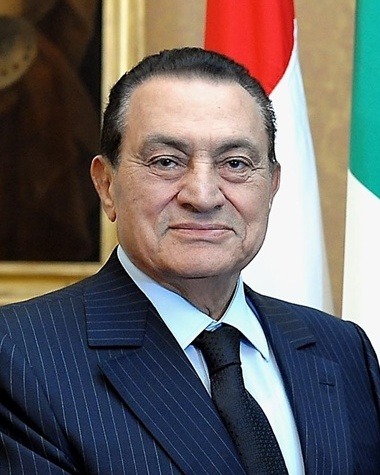
Hosni Mubarak, born on May 4, 1928, in Kafr El-Meselha, Egypt, was a towering figure in Middle Eastern politics, best known for his three-decade-long presidency in Egypt. His tenure was marked by significant geopolitical shifts, economic reforms, and controversies that have left an indelible mark on both Egypt and the broader Middle Eastern region. This article explores the life, achievements, and controversies surrounding Hosni Mubarak, providing detailed insights into his rise to power, his policies, and his eventual fall from grace.
Early Life and Military Career
Born into a family of the upper-middle class, Mubarak’s early life was shaped by the aspirations and values of his time. His parents, particularly his father, encouraged him to pursue a career in the military, recognizing his resolute and determined nature from a young age. This guidance led Mubarak to enroll in Egypt’s Military Academy, where he received rigorous training that would lay the foundation for his future career.
Mubarak’s military education did not end there. He furthered his studies at the Egyptian Air Academy and later attended the prestigious Frunze Military Academy in the Soviet Union, one of the leading military institutions of its time. By the age of 22, Mubarak had joined the Egyptian Air Force, beginning a military career that would span over two decades. His commitment and strategic acumen did not go unnoticed, and he steadily rose through the ranks, ultimately becoming the Chief of Staff of the Egyptian Air Force in 1969 and Commander-in-Chief in 1972.
The Yom Kippur War and Rise to Prominence
One of the pivotal moments in Mubarak’s military career came during the Yom Kippur War in 1973, also known as the October War. During this conflict, which saw Egyptian and Syrian forces launch a surprise attack on Israeli-held territories, Mubarak played a crucial role in the Egyptian Air Force’s operations. His leadership and the effectiveness of the air campaign under his command were significant factors in Egypt’s initial successes in the war. The performance of the Egyptian Air Force during the conflict enhanced Mubarak’s reputation, setting the stage for his entry into politics.
Following the war, Mubarak’s influence in the Egyptian military and government grew. In 1975, he was appointed Vice President of Egypt by President Anwar Sadat. This role positioned Mubarak as one of Sadat’s closest advisors and a key figure in the government, responsible for various military and political duties. His loyalty and effectiveness in this role earned him Sadat’s trust, and he was seen as a steady hand who could be relied upon during tumultuous times.
Assassination of Anwar Sadat and Mubarak’s Rise to Power
The assassination of President Anwar Sadat on October 6, 1981, during a military parade in Cairo, marked a dramatic turning point in Egypt’s history. The assassination was carried out by Islamist militants who were opposed to Sadat’s policies, particularly the peace treaty with Israel. As Vice President, Mubarak was sitting next to Sadat during the attack and was slightly injured. In the wake of Sadat’s death, Mubarak, who had maintained a relatively low profile until then, was thrust into the spotlight as the logical successor.
On October 13, 1981, just a week after Sadat’s assassination, Hosni Mubarak was elected President of Egypt. His ascent to the presidency was initially marked by uncertainty, as many questioned whether he could maintain the delicate balance between Egypt’s various political factions and continue Sadat’s legacy. However, Mubarak quickly consolidated power, embarking on a journey that would see him become one of the most influential leaders in the Arab world.
Domestic Policies and Economic Reforms
Mubarak’s early years in office were characterized by efforts to stabilize Egypt internally. Recognizing the need to address the growing discontent among the population, Mubarak took steps to open up the political landscape, albeit cautiously. He authorized the publication of Islamic newspapers and allowed some political pluralism, although these measures were often carefully controlled to prevent any significant challenge to his authority.
Economically, Mubarak faced the daunting task of managing a rapidly growing population amidst rising inflation and unemployment. His administration pursued a series of economic reforms aimed at liberalizing the economy, which included privatizing state-owned enterprises and encouraging foreign investment. These reforms, while necessary for economic modernization, often led to social tensions, particularly as the benefits of economic growth were unevenly distributed.
One of Mubarak’s significant achievements was his focus on developing Egypt’s infrastructure, particularly in the tourism sector. Recognizing the potential of tourism as a major revenue source, his government invested in enhancing tourist facilities and promoting Egypt as a premier destination. This strategy paid off, as Egypt became one of the most popular tourist destinations in the world, known for its rich cultural heritage and historic sites.
Foreign Policy and Role in Middle Eastern Politics
On the international stage, Hosni Mubarak was known for his pragmatic and cautious approach to foreign policy. He continued Anwar Sadat’s policy of maintaining peace with Israel, recognizing that stability in relations with the Jewish state was crucial for Egypt’s economic and political interests. Mubarak positioned Egypt as a mediator in the Israeli-Palestinian conflict, leveraging his country’s strategic position and diplomatic relationships to facilitate negotiations.
Mubarak’s relationship with the United States was a cornerstone of his foreign policy. Egypt, under Mubarak, became one of the largest recipients of U.S. military and economic aid, second only to Israel. This relationship was built on mutual interests, with Egypt playing a key role in maintaining stability in the Middle East, particularly after the Camp David Accords. Mubarak’s alignment with U.S. interests was evident during the Gulf War in 1990-1991, when Egypt joined the U.S.-led coalition against Iraq following Saddam Hussein’s invasion of Kuwait. In return, Egypt received debt relief and increased economic aid, further strengthening Mubarak’s regime.
Despite his close ties with the West, Mubarak also sought to maintain strong relations with other Arab nations. He advocated for Arab unity and often played a mediating role in regional disputes. His efforts to balance these relationships, while maintaining Egypt’s leadership role in the Arab world, were a testament to his diplomatic skills.
Challenges and Criticisms: The 1990s and Early 2000s
The 1990s and early 2000s were challenging years for Mubarak’s presidency. Domestically, his government faced growing unrest due to economic disparities, high unemployment rates, and allegations of corruption within the regime. The rapid population growth exacerbated these issues, leading to increased pressure on Mubarak’s government to implement reforms that could address the socio-economic challenges facing the country.
Mubarak’s political opposition began to gain momentum during this period, with various groups, including Islamists, liberals, and leftists, criticizing his regime for its authoritarian practices. The extension of the state of emergency, initially imposed after Sadat’s assassination, became a focal point of criticism. The emergency laws allowed for preventive arrests and placed significant restrictions on political freedoms and the media, leading to accusations that Mubarak was using them to suppress dissent and maintain his grip on power.
In the international arena, Mubarak’s consistent support for peace with Israel and his close ties with the United States drew criticism from both domestic and regional actors who viewed these policies as too accommodating to Western interests. However, Mubarak’s pragmatism and his emphasis on stability over ideological positions helped him navigate these criticisms, maintaining Egypt’s position as a key player in Middle Eastern politics.
The 2011 Egyptian Revolution and Mubarak’s Downfall
The beginning of 2011 marked the most tumultuous period in Hosni Mubarak’s political career. Inspired by the successful uprisings in Tunisia, which had led to the ousting of President Zine El Abidine Ben Ali, Egyptian protesters took to the streets in January 2011, demanding an end to Mubarak’s nearly 30-year rule. The protests, which were part of the broader Arab Spring movement, were driven by widespread frustration over economic stagnation, corruption, political repression, and the lack of basic freedoms.
Despite attempts to quell the protests through concessions and reshuffling his government, Mubarak was unable to appease the demonstrators. The situation escalated as millions of Egyptians continued to rally in Cairo’s Tahrir Square and other cities across the country, calling for Mubarak’s resignation. The pressure on Mubarak intensified as international leaders, including those from the United States, began urging him to step down.
On February 11, 2011, after 18 days of mass protests and mounting opposition, Hosni Mubarak resigned from the presidency, ending his three-decade rule. His resignation was met with jubilation across Egypt, but it also marked the beginning of a turbulent transition period for the country.
Trial, Conviction, and Final Years
Following his resignation, Mubarak was placed under house arrest and later faced trial on charges of corruption and complicity in the deaths of protesters during the revolution. In June 2012, Mubarak was sentenced to life imprisonment for his role in ordering the use of deadly force against protesters. However, the legal proceedings were complex and prolonged, with various retrials and appeals. In 2017, Mubarak was acquitted of the charges related to the deaths of protesters, although he had already spent several years in detention.
Mubarak’s health deteriorated during his time in custody, and he spent much of his final years in a military hospital. Despite the dramatic fall from power and the legal battles that ensued, Mubarak remained a controversial figure in Egypt. To some, he was a stabilizing force who had maintained peace and economic growth in Egypt; to others, he was a dictator who had ruled with an iron fist, suppressing dissent and perpetuating inequality.
Hosni Mubarak passed away on February 25, 2020, at the age of 91, in Cairo. His death marked the end of an era in Egyptian history, leaving behind a complex legacy that continues to be debated and analyzed.
Legacy and Impact
Hosni Mubarak’s legacy is one of complexity and contradiction. On one hand, he was a leader who brought a degree of stability to Egypt, maintaining peace with Israel and fostering economic development. His pragmatic approach to foreign policy and his role as a mediator in the Israeli-Palestinian conflict earned him respect on the global stage.
On the other hand, Mubarak’s regime was marked by authoritarianism, with widespread corruption, human rights abuses, and a lack of political freedom. The state of emergency that persisted throughout his presidency was a tool for suppressing opposition and controlling the media, leading to a stifled political environment that ultimately contributed to the revolutionary fervor that ended his rule.
The 2011 revolution that led to Mubarak’s downfall was a turning point in Egyptian history, and his resignation marked the beginning of a new, uncertain chapter for the country. While Mubarak’s rule is often criticized for its failings, his impact on Egypt and the Middle East remains significant, shaping the region’s political landscape for decades.
Conclusion
Hosni Mubarak’s life and career encapsulate the complexities of leadership in a tumultuous region. His rise from a military officer to one of the most influential leaders in the Arab world is a story of both ambition and pragmatism. However, his eventual downfall serves as a reminder of the limitations of authoritarian rule and the power of popular movements in shaping history. Mubarak’s legacy continues to influence Egypt and the broader Middle Eastern region, as the country navigates the challenges of post-revolutionary governance and seeks to build a more inclusive and democratic society.


