
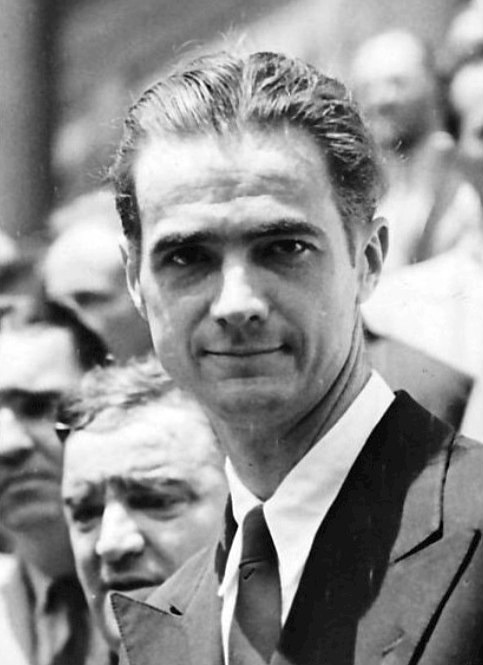
Howard Hughes, a name that resonates with tales of innovation, eccentricity, and mystery, was one of the most influential and controversial figures in American history. Born on December 24, 1905, in Humble, Texas (though some sources cite Houston), Hughes was a man whose life was marked by staggering achievements and deep personal turmoil. He was an aviator, filmmaker, and industrialist whose legacy is a blend of genius and madness. This article delves into the life, career, and enduring influence of Howard Hughes, providing a comprehensive overview of his age, fame, and life highlights.
Early Life and Background
Howard Robard Hughes Jr. was born into a family that was already wealthy and well-connected. His father, Howard Hughes Sr., was the founder of the Hughes Tool Company, a pioneering business in the oil industry that made its fortune by manufacturing a revolutionary drill bit that allowed for deeper oil drilling. This innovation would secure the family’s wealth for generations.
Hughes’s mother, Allene Gano, came from a prominent Dallas family, and she was intensely protective of her son, instilling in him a fear of disease and germs that would later manifest as severe obsessive-compulsive disorder. This early influence played a significant role in shaping the man Hughes would become, contributing to both his incredible drive and his eventual reclusiveness.
Educated at prestigious schools, Hughes demonstrated an early aptitude for engineering and an insatiable curiosity for how things worked. He attended the Thacher School in California and later studied at the California Institute of Technology, though he never completed his formal education. Instead, Hughes was drawn to the practical world of innovation and enterprise, where he could apply his talents more directly.
Ascendancy in Hollywood
In 1924, at the age of 18, Hughes’s life took a dramatic turn when his father died suddenly of a heart attack. Inheriting the Hughes Tool Company, he became a millionaire almost overnight. However, it wasn’t just his father’s fortune that Hughes inherited—he also took on the weight of expectation and the pressure to live up to the family name.
Hughes soon moved to Los Angeles, where he married socialite Ella Rice in 1925. The marriage was short-lived, ending in divorce in 1929, but it was during this time that Hughes found his true passion: filmmaking. Hughes immersed himself in Hollywood, using his wealth to produce films that would push the boundaries of the industry.
His first significant success came with the production of Hell’s Angels (1930), a World War I epic that Hughes not only produced but also directed. The film was a massive undertaking, involving over 87 aircraft and the hiring of the best pilots in the world. It was a financial risk, costing nearly $4 million—a staggering amount at the time—but it paid off, establishing Hughes as a major player in Hollywood.
Following Hell’s Angels, Hughes continued to produce and direct films that were both commercially successful and artistically innovative. Among his notable works were Scarface (1932), directed by Howard Hawks, and The Outlaw (1943), which caused a scandal due to its provocative content, particularly the onscreen presence of actress Jane Russell. Hughes’s flair for publicity and his willingness to court controversy helped cement his reputation as a Hollywood maverick.
Aviation Achievements
While Hughes made his mark in Hollywood, his true passion lay in aviation. In 1932, he founded the Hughes Aircraft Company, which would become one of the most influential aerospace firms in history. Hughes was not content to simply manage the company—he was an active participant in the design and testing of new aircraft.
One of his most significant contributions to aviation was the H-1 Racer, an aircraft that Hughes himself designed and flew. On September 13, 1935, Hughes set a new airspeed record, reaching 352 miles per hour in the H-1 Racer. This achievement was just the beginning of Hughes’s impact on the aviation industry.
In 1938, Hughes completed a record-breaking around-the-world flight, covering the distance in just 91 hours. This feat made him a national hero and solidified his reputation as one of the greatest aviators of his time. His success in aviation was not limited to personal achievements; Hughes Aircraft Company would go on to become a major contractor for the U.S. military, particularly during World War II, when the company produced a variety of aircraft and weapons systems.
However, Hughes’s ventures into aviation were not without their controversies. His attempts to produce military aircraft, such as the Hughes XF-11 reconnaissance plane and the H-4 Hercules, also known as the “Spruce Goose,” were marred by delays, technical challenges, and massive cost overruns. The H-4 Hercules, a colossal flying boat intended to transport troops and materials during the war, famously flew only once, for about one minute, in 1947. Despite its failure as a practical aircraft, the “Spruce Goose” remains an iconic symbol of Hughes’s ambition and the sometimes fine line between genius and folly.
Business Ventures and Personal Life
Hughes’s interests were not confined to aviation and filmmaking. He was a shrewd businessman with a keen eye for investment opportunities. In the 1950s and 1960s, Hughes began investing heavily in Las Vegas, purchasing several hotels and casinos, including the Desert Inn. His influence on the city’s development was profound, and he is credited with helping to transform Las Vegas into the entertainment capital it is today.
However, Hughes’s business acumen was often overshadowed by his increasingly erratic behavior. By the late 1950s, he had become reclusive, retreating from public life and conducting business from a series of isolated residences. His mental health deteriorated, with his obsessive-compulsive disorder becoming more pronounced. He developed a severe fear of germs, and his once charismatic personality gave way to paranoia and isolation.
Hughes’s personal life was as tumultuous as his professional endeavors. He had numerous high-profile relationships with actresses and socialites, including Katharine Hepburn, Ava Gardner, and Jean Peters, whom he married in 1957. However, his marriages and relationships were often strained by his obsessive tendencies and his increasingly reclusive lifestyle.
By the 1960s, Hughes’s mental and physical health had declined to the point where he became almost entirely secluded, living in darkened rooms and rarely seeing anyone outside of a small circle of aides. Despite this, he continued to wield considerable influence in the business world, particularly in Las Vegas, where his financial power allowed him to control much of the city’s real estate and gaming industry.
The Final Years and Legacy
The last years of Howard Hughes’s life were marked by a tragic descent into madness. He became increasingly paranoid, convinced that he was the target of conspiracies and plots. His health deteriorated further, exacerbated by his refusal to seek medical treatment for his various ailments. By the early 1970s, Hughes was living in near-total isolation, moving between hotel rooms in various cities and conducting all business through intermediaries.
Hughes’s death on April 5, 1976, at the age of 70, was the final chapter in a life that had captivated the public for decades. He died on board an aircraft en route to Houston, Texas, a fitting end for a man whose life had been so closely tied to aviation. At the time of his death, Hughes’s estate was valued at approximately $2 billion, making him one of the wealthiest individuals in the world.
In the years since his death, Howard Hughes has become an almost mythical figure, a symbol of both the heights of American ingenuity and the depths of personal despair. His life has been the subject of numerous books, films, and documentaries, most notably Martin Scorsese’s The Aviator (2004), which starred Leonardo DiCaprio as Hughes and depicted his rise to fame and subsequent decline into madness.
Hughes’s legacy is a complex one. On the one hand, he was a visionary who made significant contributions to aviation, filmmaking, and business. His innovations in aerospace technology helped lay the groundwork for modern aviation, and his influence on Hollywood is still felt today. On the other hand, his life was also a cautionary tale about the dangers of unchecked ambition and the toll that mental illness can take on even the most brilliant minds.
Despite his many flaws, Hughes remains an iconic figure in American history, a man who embodied both the promise and the perils of the American Dream. His life story serves as a reminder of the thin line between success and failure, and the ways in which personal demons can shape—and sometimes destroy—a person’s destiny.


