
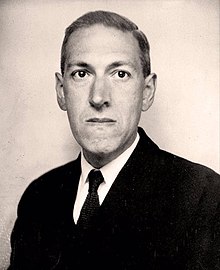
Howard Phillips Lovecraft, born on August 20, 1890, in Providence, Rhode Island, is often heralded as one of the most significant and influential figures in the genre of horror literature. His unique blend of cosmic horror, a genre he practically invented, and his meticulous crafting of an interconnected mythos have made him a towering figure in the world of speculative fiction. This article explores the life, career, and enduring legacy of H.P. Lovecraft, providing a detailed examination of his journey from obscurity to posthumous fame.
Early Life: A Solitary Childhood in Providence
Lovecraft was born into an affluent family, the only child of Winfield Scott Lovecraft and Sarah Susan Phillips Lovecraft. However, his early life was marred by tragedy and isolation. His father, a traveling salesman, suffered a mental breakdown due to syphilis and was institutionalized when Lovecraft was just three years old. He never recovered and died in 1898, leaving Lovecraft to be raised by his mother, two aunts, and his maternal grandfather.
Lovecraft’s mother, Sarah, was an overprotective and emotionally unstable woman. She imposed strict restrictions on young Howard, limiting his interactions with other children and contributing to his lifelong social anxiety and introversion. Despite these limitations, Lovecraft was an intellectually precocious child. He developed a deep love for reading at an early age, particularly in the areas of classical mythology, history, and science. His grandfather’s extensive library became his refuge, and it was here that he first encountered the works of Edgar Allan Poe, who would become a significant influence on his writing.
Lovecraft’s childhood was also marked by frequent illness, which further isolated him from his peers. He suffered from various health issues, including what was likely a nervous disorder, and this frailty prevented him from completing his formal education. Despite these challenges, Lovecraft was a prodigious reader and writer from a young age, composing his first stories before he was ten.
The Formative Years: Early Writing and Intellectual Development
Lovecraft’s early works were heavily influenced by the Gothic tradition, particularly the writings of Poe. His fascination with the macabre and the unknown led him to explore themes of cosmic horror and the insignificance of humanity in the grand scheme of the universe—ideas that would later define his literary legacy.
By the time he was a teenager, Lovecraft had already begun to write extensively, producing short stories, poetry, and essays. His early work, however, was sporadic and mostly unpublished, as Lovecraft was notoriously self-critical and often dismissed his own writing as inferior.
In 1914, Lovecraft joined the United Amateur Press Association (UAPA), a network of amateur writers and publishers. This involvement marked a turning point in his life, providing him with a platform to share his work and connect with other writers. It was through the UAPA that Lovecraft began to develop his distinctive style and voice, and it was here that he first began to experiment with the themes that would later dominate his fiction.
Literary Breakthrough: The Call of Cthulhu and the Birth of Cosmic Horror
The year 1917 was a pivotal moment in Lovecraft’s career. After failing to enlist in the army due to health issues and his mother’s insistence, Lovecraft decided to devote himself more seriously to writing. His work from this period is marked by a growing confidence and maturity, as he began to move away from the derivative Gothic tales of his youth and toward the creation of his unique brand of horror.
In 1926, Lovecraft wrote what would become his most famous story, “The Call of Cthulhu.” This story introduced readers to the now-iconic figure of Cthulhu, a cosmic entity of immense power and malevolence that lies dormant beneath the sea, waiting to rise again. “The Call of Cthulhu” is notable not just for its terrifying subject matter, but for its innovative structure, which combines multiple narratives and perspectives to create a sense of vast, unknowable horror.
“The Call of Cthulhu” was published in the pulp magazine Weird Tales in 1928, and it quickly established Lovecraft as a leading figure in the world of weird fiction. The story also laid the groundwork for what would later be known as the “Cthulhu Mythos,” a complex and interconnected web of stories, characters, and entities that Lovecraft would develop over the course of his career.
The concept of “cosmic horror” is central to Lovecraft’s work. Unlike traditional horror, which often focuses on the fear of death or the supernatural, Lovecraft’s horror is rooted in the idea that humanity is insignificant in the face of an indifferent and often hostile universe. His stories frequently depict characters who encounter forces beyond their comprehension, leading to madness or destruction. This sense of cosmic dread is a hallmark of Lovecraft’s fiction and has influenced countless writers, filmmakers, and artists.
The Lovecraft Circle: Collaboration and the Expansion of the Mythos
Lovecraft’s influence extended far beyond his own writing. He was an active and prolific correspondent, maintaining letters with a wide circle of fellow writers, many of whom became his close friends and collaborators. This group, often referred to as the “Lovecraft Circle,” included notable authors such as Robert E. Howard, Clark Ashton Smith, August Derleth, and Frank Belknap Long.
Through these correspondences, Lovecraft shared ideas, offered feedback, and collaborated on stories that expanded the Cthulhu Mythos. He encouraged his friends to use elements from his stories in their own work, leading to the creation of a shared literary universe that spanned multiple authors and publications.
This collaborative spirit was crucial to the development of the Cthulhu Mythos, as it allowed the mythology to grow and evolve beyond Lovecraft’s original stories. The Mythos became a living, breathing entity, with new characters, settings, and concepts being added by different writers over time. This collaborative approach was relatively rare in literature and helped to create a sense of depth and richness in Lovecraft’s fictional universe.
Personal Struggles and the “Solitario di Providence”
Despite his growing reputation within the world of weird fiction, Lovecraft’s personal life was marked by poverty, isolation, and tragedy. After the death of his mother in 1921, Lovecraft married Sonia H. Greene, a writer and businesswoman, in 1924. The marriage was short-lived, however, and they separated after just two years, partly due to Lovecraft’s reluctance to leave Providence and his increasing financial difficulties.
Lovecraft’s financial situation was precarious throughout his life. He earned little money from his writing and often relied on editing and ghostwriting to make ends meet. Despite his struggles, he refused to commercialize his work, prioritizing artistic integrity over financial gain. This commitment to his craft, while admirable, contributed to his ongoing poverty.
Lovecraft’s later years were characterized by a deepening sense of alienation and despair. He became increasingly reclusive, earning the nickname “The Solitary of Providence.” His correspondence with friends and fellow writers became a lifeline, providing him with intellectual stimulation and emotional support.
One of the most remarkable aspects of Lovecraft’s life was his voluminous correspondence. It is estimated that he wrote over 100,000 letters during his lifetime, many of which are as carefully crafted and thoughtful as his published works. These letters provide invaluable insight into his thoughts, beliefs, and creative process, revealing a complex and deeply intellectual individual who was constantly grappling with the mysteries of existence.
The Legacy of H.P. Lovecraft: Posthumous Fame and Influence
Howard Phillips Lovecraft died of cancer on March 15, 1937, at the age of 46. At the time of his death, he was relatively unknown outside of the small circle of writers and fans who admired his work. However, in the decades following his death, Lovecraft’s reputation grew significantly, and he is now regarded as one of the most important and influential writers of the 20th century.
Lovecraft’s influence extends far beyond the realm of literature. His ideas and themes have permeated popular culture, inspiring films, television shows, video games, music, and even philosophy. The concept of “Lovecraftian horror” has become a genre in its own right, characterized by themes of existential dread, cosmic indifference, and the limits of human understanding.
The Cthulhu Mythos, in particular, has become a cultural phenomenon. The figure of Cthulhu, with its tentacled visage and colossal form, has become an enduring symbol of cosmic horror, appearing in countless adaptations, parodies, and references across various media. The Mythos has been expanded and reinterpreted by countless writers, ensuring that Lovecraft’s legacy continues to evolve.
One of the most significant aspects of Lovecraft’s legacy is the way he challenged and redefined the boundaries of horror fiction. By shifting the focus from the supernatural to the cosmic, Lovecraft opened up new possibilities for the genre, allowing it to explore themes of science, philosophy, and the unknown in ways that had never been done before.
Conclusion: The Enduring Power of Lovecraft’s Work
H.P. Lovecraft’s work is a testament to the power of imagination and the enduring appeal of horror as a means of exploring the deepest and darkest aspects of the human experience. His stories continue to captivate and terrify readers, offering a glimpse into a universe that is vast, indifferent, and often terrifying.
Lovecraft’s influence on modern horror and speculative fiction is immeasurable. His creation of the Cthulhu Mythos, his pioneering of cosmic horror, and his unwavering commitment to his artistic vision have made him a seminal figure in literature. Despite the challenges he faced during his lifetime, Lovecraft’s work has achieved a level of recognition and reverence that few authors attain.
As we continue to explore the boundaries of the unknown, Lovecraft’s stories remain a vital part of that journey, reminding us of the fragility of human existence in the face of a vast and uncaring cosmos. His legacy is one of creativity, innovation, and an unflinching exploration of the mysteries that lie beyond the veil of our understanding.


