
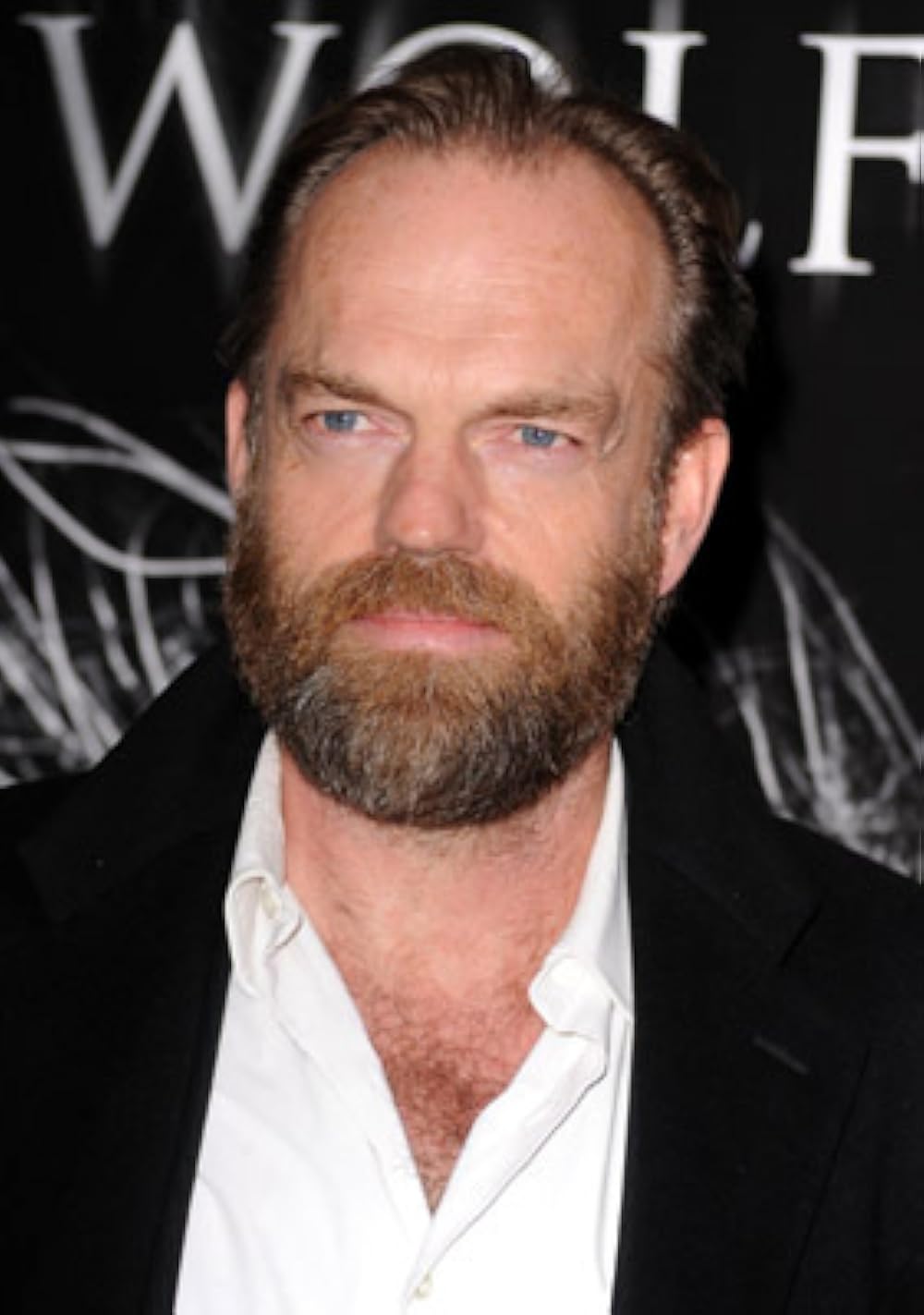
Hugo Wallace Weaving, born on April 4, 1960, in Ibadan, Nigeria, is a prominent British-Australian actor renowned for his versatile roles in both blockbuster films and critically acclaimed indie productions. His parents, who were originally from the United Kingdom, had moved to Nigeria due to his father’s work as a seismologist. Weaving’s early life was marked by frequent relocations, including stints in South Africa and the United Kingdom, before eventually settling in Australia.
Early Life and Introduction to Acting
Weaving’s early years were a blend of diverse cultural experiences. After spending his first year in South Africa, his family moved to the United Kingdom, where he attended Queen Elizabeth’s Hospital School in Bristol. It was here that Hugo Weaving developed an interest in acting, a passion that would shape the course of his life. His education continued in Australia, where he attended Knox Grammar School and later graduated from the prestigious National Institute of Dramatic Arts (NIDA) in Sydney, solidifying his foundation in the performing arts.
Weaving’s early acting career was not without challenges. At the age of 13, he experienced his first epileptic seizure during a performance at the Sydney Opera House. This condition would later influence his personal and professional choices, including his decision never to obtain a driver’s license.
The Beginning of a Storied Career
Weaving’s professional acting debut came in 1983 with the Australian film “The City’s Edge,” a modest production that marked the beginning of a long and varied career. The following year, he garnered attention for his role as Douglas Jardine, the captain of a cricket team, in the television miniseries “Bodyline.” This role was a stepping stone that led to further opportunities, including his participation in the miniseries “The Dirtwater Dynasty” and the CBS film “Trappola Mortale,” where he starred alongside Sarah Jessica Parker.
In the late 1980s and early 1990s, Weaving continued to build his reputation in Australian television and film. His performance in “Proof” (1991), where he portrayed a blind photographer named Martin, earned him the Australian Film Institute Award for Best Actor. This role, which required a nuanced and sensitive portrayal of a person with a disability, showcased Weaving’s ability to bring depth and authenticity to his characters.
Breakthrough with “Priscilla” and Global Recognition
The mid-1990s saw Weaving’s breakthrough into international stardom with his role as Tick/Mitzi, a drag queen, in the film “The Adventures of Priscilla, Queen of the Desert” (1994). This film, which became a cult classic, was celebrated for its vibrant portrayal of LGBTQ+ themes and Australian outback culture. Weaving’s performance was both humorous and poignant, earning him widespread acclaim and solidifying his status as a versatile actor.
Following this success, Weaving lent his voice to the character of Rex, a sheepdog, in the family film “Babe” (1995). His voice work was praised for adding emotional depth to the character, and he would reprise the role in the sequel, “Babe: Pig in the City” (1998).
The Matrix and The Lord of the Rings: Iconic Roles
Weaving’s career reached new heights at the turn of the millennium with his casting as Agent Smith in the Wachowskis’ groundbreaking science fiction film “The Matrix” (1999). As the embodiment of the system’s oppressive force, Agent Smith became one of the most memorable villains in cinematic history. Weaving’s portrayal was marked by his calm, menacing demeanor and his ability to convey a sense of existential dread. Despite suffering a hip injury during filming, Weaving’s commitment to the role was unwavering, contributing to the film’s monumental success.
In 2001, Weaving took on another iconic role as Elrond, the lord of Rivendell, in Peter Jackson’s epic adaptation of J.R.R. Tolkien’s “The Lord of the Rings: The Fellowship of the Ring.” As the wise and noble leader of the Elves, Weaving brought gravitas and elegance to the character. His performance in the trilogy, which included “The Two Towers” (2002) and “The Return of the King” (2003), was universally praised and cemented his place in the annals of fantasy cinema.
Continued Success and New Challenges
The success of “The Matrix” and “The Lord of the Rings” trilogies catapulted Weaving to international fame, allowing him to take on a variety of roles in both mainstream and independent films. In 2006, he reunited with the Wachowskis for “V for Vendetta,” where he played the enigmatic and masked revolutionary V. Despite the challenge of performing behind a mask, Weaving delivered a powerful performance, using his voice to convey the character’s emotions and ideals. His portrayal of V became emblematic of resistance against oppression, resonating with audiences worldwide.
Weaving continued to explore diverse roles, from the villainous Red Skull in “Captain America: The First Avenger” (2011) to the complex characters in “Cloud Atlas” (2012), another collaboration with the Wachowskis. His role in “Cloud Atlas” required him to play multiple characters across different timelines, showcasing his versatility and commitment to his craft.
Return to Middle-Earth and Other Notable Roles
Weaving returned to Middle-earth in Peter Jackson’s “The Hobbit” trilogy (2012-2014), reprising his role as Elrond. While these films did not achieve the same critical acclaim as “The Lord of the Rings” trilogy, Weaving’s performance remained a highlight, providing continuity and a sense of history to the expansive narrative.
During this period, Weaving also appeared in a variety of films, including “Oranges and Sunshine” (2010), a drama about the forced migration of children from the UK to Australia, and “The Dressmaker” (2015), a darkly comedic tale set in rural Australia. His ability to seamlessly transition between genres and characters has made him one of the most respected actors of his generation.
Personal Life and Advocacy
Outside of his acting career, Hugo Weaving is known for his commitment to social and environmental causes. He has been a long-time supporter of animal rights and serves as an ambassador for the Australian organization Voiceless, which advocates for the rights of animals. Weaving’s personal life is characterized by his humility and dedication to his family. He has been in a long-term relationship with Katrina Greenwood since 1984, and the couple has two children together.
Weaving’s battle with epilepsy has been a significant aspect of his life, influencing his decision-making both personally and professionally. His choice to avoid driving due to the risk of seizures is a testament to his pragmatic approach to managing the condition.
Legacy and Impact
Hugo Weaving’s career spans over four decades, during which he has portrayed some of the most memorable characters in film history. From the menacing Agent Smith to the noble Elrond, his performances have left an indelible mark on popular culture. Weaving’s ability to bring depth and nuance to a wide range of characters, coupled with his distinctive voice and commanding presence, has made him a beloved figure in the entertainment industry.
As an actor who has successfully navigated both mainstream and independent cinema, Weaving’s legacy is one of versatility, dedication, and artistic integrity. His contributions to film have not only entertained audiences but have also challenged and expanded the boundaries of cinematic storytelling.


