
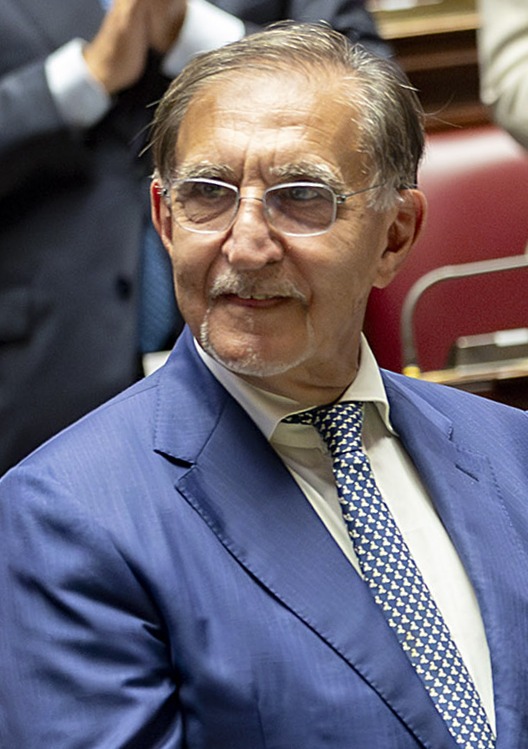
Ignazio La Russa is a significant figure in Italian politics, known for his unwavering commitment to right-wing ideologies and his substantial influence in shaping the political landscape of modern Italy. Born on July 18, 1947, in Paternò, Sicily, La Russa’s journey from a small town in southern Italy to becoming one of the country’s most prominent political leaders is marked by determination, resilience, and an unwavering dedication to his beliefs. This article explores the life, achievements, and enduring influence of Ignazio La Russa, offering insights into his political career, personal life, and the historical context that shaped his rise to fame.
Early Life and Education: Foundations of a Political Career
Ignazio Benito Maria La Russa was born into a family with deep-rooted political beliefs. His father, Antonino La Russa, was a prominent figure in the Italian Social Movement (MSI), a neo-fascist political party that emerged after World War II. Growing up in such an environment, it was almost inevitable that young Ignazio would be drawn to politics. His formative years were spent in an atmosphere where political discourse was a part of daily life, laying the foundation for his future career.
La Russa pursued his education in Switzerland, attending St. Gallen College, before returning to Italy to study law at the University of Pavia. He graduated with a degree in Jurisprudence, and although he was drawn to the legal profession, his passion for politics never waned. La Russa went on to become a successful criminal lawyer, gaining significant recognition for his work in high-profile cases, including those related to the politically charged environment of Italy during the “Years of Lead”—a period marked by social unrest and terrorism.
Despite his legal career, La Russa’s true calling was politics. His early involvement in political activism, particularly within the MSI, set the stage for a lifetime of public service. He quickly rose through the ranks of the party, becoming a key figure in the right-wing political scene in Italy.
Political Rise in the 1980s and 1990s: Shaping the Italian Right
The 1980s and 1990s were pivotal decades for Ignazio La Russa as he established himself as a leading voice in Italian politics. His political journey began in earnest when he was elected as a regional councilor in Lombardy in 1985, representing the Italian Social Movement. His leadership qualities and his ability to connect with the electorate soon led to further political successes.
In 1992, La Russa was elected to both the Italian Senate and the Chamber of Deputies, representing Milan. His dual victory underscored his growing influence within the right-wing political sphere. That same year, he played a crucial role in the transformation of the MSI into the National Alliance (Alleanza Nazionale), a more moderate right-wing party. This shift marked a significant turning point in Italian politics, as the National Alliance sought to distance itself from the more extreme elements of its neo-fascist past and position itself as a mainstream conservative party.
La Russa was a key architect of this transformation. His vision for the party included broadening its appeal to a wider electorate, particularly in the economically vibrant regions of northern Italy. He was instrumental in the creation of a political alliance with Forza Italia, the party led by media magnate Silvio Berlusconi, which became the cornerstone of the center-right coalition known as the “Casa delle Libertà” (House of Freedoms).
In the 1994 general elections, La Russa was re-elected to the Chamber of Deputies with a significant personal mandate. His role as Vice President of the Chamber further solidified his status as a key figure in the Italian right. Throughout the 1990s, La Russa became known for his outspoken views on national security, immigration, and the preservation of Italian identity—issues that continue to resonate in Italian politics today.
The 2000s: A Decade of Influence and Leadership
The turn of the millennium marked a period of significant influence for Ignazio La Russa within both his party and the broader Italian political landscape. In 2001, he was elected to the Chamber of Deputies for the fifth consecutive time, representing the Milan 2 constituency. His electoral success was not limited to Lombardy; he was also elected in the proportional lists for Eastern Sicily, reflecting his national appeal.
That same year, La Russa was appointed President of the National Alliance parliamentary group in the Chamber of Deputies. Under his leadership, the group played a crucial role in supporting the government of the Casa delle Libertà coalition, which was led by Silvio Berlusconi. La Russa’s legislative work during this period was characterized by a focus on issues such as justice reform, national security, and the promotion of conservative values.
One of La Russa’s most notable contributions during this time was his involvement in the constitutional reform process. He authored a bill that sought to recognize Italian as the official language of the Republic, a move that was passed in its first reading in the Chamber. This initiative was part of a broader effort by La Russa and his party to emphasize the importance of national identity and cohesion in a rapidly globalizing world.
In 2003, La Russa was appointed National Coordinator of the National Alliance by Gianfranco Fini, the party’s leader. This role placed him at the heart of the party’s strategic decision-making process. He was instrumental in steering the party through a period of internal reform, which aimed to eliminate factionalism and create a more unified political force.
In May 2008, following the general elections, La Russa was appointed Minister of Defense in Berlusconi’s government. His tenure as Defense Minister was marked by his staunch support for Italy’s military commitments abroad, including missions in Afghanistan and Iraq. La Russa’s leadership during this period was characterized by a strong emphasis on the modernization of Italy’s armed forces and the enhancement of national security.
The Formation of Fratelli d’Italia and the 2010s
The political landscape in Italy underwent significant changes in the 2010s, and Ignazio La Russa was once again at the forefront of these developments. In December 2012, La Russa, along with Giorgia Meloni and Guido Crosetto, left the People of Freedom (PdL) party, which had succeeded the National Alliance, to form a new political movement—Fratelli d’Italia (Brothers of Italy).
The decision to establish Fratelli d’Italia was driven by a desire to create a party that would remain true to the conservative values of the Italian right, while also addressing the challenges of a rapidly changing political environment. La Russa’s experience and leadership were crucial in shaping the new party’s identity and direction.
Fratelli d’Italia quickly gained traction, particularly among voters who felt disillusioned with the mainstream center-right parties. In the 2013 general elections, La Russa was elected to the Chamber of Deputies, representing the Apulia region. His election was a testament to his enduring popularity and his ability to connect with voters on issues such as national sovereignty, immigration, and economic reform.
Throughout the 2010s, La Russa continued to play a central role in Italian politics. In 2018, after 26 years in the Chamber of Deputies, he was elected to the Senate of the Republic. His election to the Senate marked a new phase in his political career, where he continued to advocate for conservative values and the interests of the Italian people.
On March 28, 2018, La Russa was elected Vice President of the Senate, a position that further solidified his influence within the Italian political system. His role as Vice President allowed him to shape the legislative agenda and ensure that the voices of the right were heard in the upper chamber of Parliament.
The 2020s: Continuing Influence and the Presidency of the Senate
The 2020s have seen Ignazio La Russa continue to exert significant influence within Italian politics. The early part of the decade was marked by the rise of Fratelli d’Italia as a major force in Italian politics, with the party consistently polling as one of the top political groups in the country.
In the snap general elections held on September 25, 2022, Fratelli d’Italia emerged as the largest party in the Italian Parliament. This victory was a culmination of years of work by La Russa and his colleagues to build a strong, cohesive political movement that resonated with a broad spectrum of the Italian electorate.
Following this electoral success, La Russa was elected President of the Senate on October 13, 2022. His election to this prestigious position, the second-highest office in the Italian Republic, marked the pinnacle of his long and distinguished political career. As President of the Senate, La Russa plays a crucial role in guiding the legislative process and ensuring that the Senate functions effectively as a key institution of Italian democracy.
La Russa’s tenure as President of the Senate is expected to be marked by his continued advocacy for conservative values, national sovereignty, and the protection of Italian identity. His leadership in this role is seen as a reflection of his deep commitment to public service and his dedication to the principles that have guided his political career for more than four decades.
Conclusion: The Enduring Legacy of Ignazio La Russa
Ignazio La Russa’s life and career are a testament to the power of conviction and the impact that one individual can have on the political landscape of a nation. From his early days as a young activist in the Italian Social Movement to his current role as President of the Senate, La Russa has consistently been a champion of conservative values, national sovereignty, and the interests of the Italian people.
His contributions to Italian politics have been substantial, whether through his work in Parliament, his leadership in the National Alliance and Fratelli d’Italia, or his tenure as Minister of Defense. La Russa’s ability to adapt to the changing political environment while remaining true to his core beliefs has earned him the respect and admiration of both his supporters and his political opponents.
As Italy continues to navigate the challenges of the 21st century, Ignazio La Russa’s legacy will undoubtedly continue to shape the direction of the country’s political discourse. His influence as a leader, a legislator, and a defender of Italian identity will be felt for many years to come, making him one of the most significant figures in the history of modern Italian politics.


