
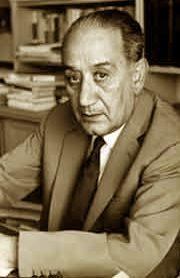
Ignazio Silone, born Secondo Tranquilli on May 1, 1900, in Pescina dei Marsi, Italy, is a name synonymous with literary courage and political defiance. As one of the most significant Italian writers and political thinkers of the 20th century, Silone’s life and work reflect the tumultuous history of his era—marked by war, political repression, and the struggle for justice. This article delves into the life of Ignazio Silone, exploring his rise to fame, the key highlights of his career, and the enduring legacy of his literary and political contributions.
Early Life and Personal Tragedy
Ignazio Silone’s early life was shaped by profound personal tragedy and the harsh realities of rural Italy. Born to a modest family, his mother was a weaver, and his father owned a small piece of land. Silone was the eldest of six children, and his life took a tragic turn in 1915 when a devastating earthquake struck the Marsica region, killing his father and five of his siblings. The loss left Silone, then only 14 years old, alone with his mother, who was already struggling to make ends meet.
The earthquake not only claimed the lives of his family members but also destroyed much of his hometown. This tragedy marked the beginning of Silone’s deep sense of social justice and his commitment to fighting for the marginalized and the poor—a theme that would dominate his literary work. After the earthquake, Silone abandoned his formal education and became involved in political activism, driven by a desire to address the social inequalities he witnessed.
Political Activism and the Rise of Fascism
Silone’s early involvement in politics was rooted in the socialist movement. In the years following World War I, Italy was in turmoil, with rising unemployment, political instability, and the growing influence of fascism. Silone joined the Italian Socialist Party (PSI) and quickly became an active member, participating in protests against Italy’s involvement in the war and advocating for the rights of workers and peasants.
In 1921, Silone attended the Congress of the Italian Socialist Party in Livorno, where the party split, leading to the formation of the Italian Communist Party (PCI). Silone aligned himself with the communists, seeing in them the most effective force against fascism. He became a prominent figure within the party, taking on various roles, including directing the party’s newspaper “L’Avanguardia” and later editing “Il Lavoratore” in Trieste.
However, the rise of Mussolini and the fascist regime in the 1920s forced Silone into a life of clandestine activism. He collaborated closely with other communist leaders, including Antonio Gramsci, working to resist the fascist regime. Silone’s commitment to the communist cause led him to undertake dangerous missions abroad and live in hiding to avoid arrest. Despite the increasing dangers, he remained steadfast in his opposition to fascism.
Breaking with Communism: A Crisis of Conscience
The 1930s marked a turning point in Silone’s life, as he began to experience a profound crisis of conscience regarding his communist beliefs. As he became more aware of the brutal tactics employed by Joseph Stalin in the Soviet Union, including purges, forced labor camps, and the repression of dissent, Silone grew increasingly disillusioned with the communist movement.
Silone was one of the few Italian communists who openly criticized Stalin’s regime, recognizing the dictator’s true nature as a tyrant rather than a liberator of the working class. His decision to break away from the Communist Party in 1930 was a courageous and lonely one, leading to his ostracization from former comrades and the loss of many friendships. Silone’s rejection of communism was not just a political act but a deeply personal one, rooted in his commitment to truth, justice, and human dignity.
After leaving the Communist Party, Silone found himself in a precarious position, both financially and personally. He had severed ties with the very network that had supported him for years, and he was now living in exile in Switzerland. Adding to his personal anguish, his younger brother, who had been involved in communist activities, was arrested by the fascist authorities in 1928. This period of exile and isolation, however, proved to be a fertile ground for Silone’s literary work.
Literary Career and the Publication of Fontamara
It was during his time in exile that Silone began to write his most famous novel, “Fontamara.” Published in 1933, “Fontamara” is a powerful depiction of the struggles of impoverished peasants in a small Italian village. The novel is a searing critique of the exploitation and oppression faced by the rural poor under both fascism and the broader system of economic and social inequality.
“Fontamara” was initially published in Zurich, Switzerland, where Silone had found refuge from fascist persecution. The novel quickly gained international acclaim and was translated into multiple languages, making Silone a prominent figure in global literature. The success of “Fontamara” marked the beginning of Silone’s reputation as a writer who gave voice to the voiceless and exposed the harsh realities of life under totalitarian regimes.
Silone followed up “Fontamara” with several other significant works, including “Vino e pane” (1936) and “Il seme sotto la neve” (1941). These novels continued to explore themes of social justice, the conflict between individual conscience and political ideology, and the moral dilemmas faced by those living under oppressive regimes. Silone’s writing is characterized by its deep empathy for the oppressed and its unwavering commitment to moral integrity.
Return to Italy and Post-War Activities
After World War II, Ignazio Silone returned to Italy, where he re-engaged with the political scene, albeit with a more moderate and reflective approach. He joined the Italian Socialist Party (PSI) and became involved in efforts to rebuild the country after the devastation of the war. Silone took on various editorial roles, including directing the socialist newspaper “L’Avanti!” and founding the magazine “Europa Socialista.”
Silone’s post-war political activities were marked by a continued disillusionment with ideological extremism. He sought to promote a form of socialism that was rooted in humanism and individual dignity rather than rigid dogma. This approach often put him at odds with other political figures, but it also won him respect as a thinker who was willing to challenge prevailing orthodoxies.
In 1956, Silone co-founded the influential magazine “Tempo Presente” with Nicola Chiaromonte. The magazine became a platform for intellectuals who, like Silone, were critical of both Soviet-style communism and Western capitalism. Through “Tempo Presente,” Silone continued to advocate for a society based on justice, freedom, and human rights.
Legacy and Influence
Ignazio Silone’s legacy as a writer and thinker is profound. His works, particularly “Fontamara,” have become classics of Italian literature and are still widely read and studied today. Silone’s ability to convey the plight of the poor and the oppressed with both compassion and clarity has made him an enduring voice for social justice.
Silone’s break with communism and his critique of Stalinism have also had a lasting impact on political thought. His willingness to speak out against the atrocities committed by the Soviet regime, even at great personal cost, has been recognized as a courageous stand for truth and integrity. Silone’s work continues to inspire those who seek to balance the pursuit of social justice with a commitment to individual freedom and moral responsibility.
In his later years, Silone received numerous accolades for his contributions to literature and human rights. Despite the controversies and challenges he faced throughout his life, he remained committed to the principles that had guided him from his youth—a deep concern for the marginalized, a passion for justice, and a belief in the power of the written word to effect change.
Conclusion: The Enduring Relevance of Ignazio Silone
Ignazio Silone’s life and work offer a powerful example of the intersection between literature and political activism. His commitment to social justice, his critique of totalitarianism, and his exploration of the moral dilemmas faced by individuals in times of political turmoil make his work as relevant today as it was during his lifetime.
Silone’s novels, particularly “Fontamara,” remain essential reading for those interested in the human impact of political and economic oppression. His work challenges readers to consider the complexities of social justice and the importance of remaining true to one’s principles, even in the face of overwhelming adversity.
As we continue to navigate the challenges of the 21st century, Ignazio Silone’s voice resonates as a reminder of the importance of courage, integrity, and the relentless pursuit of justice. His legacy as a writer and thinker continues to inspire new generations to stand up for what is right, even when it means standing alone.


