
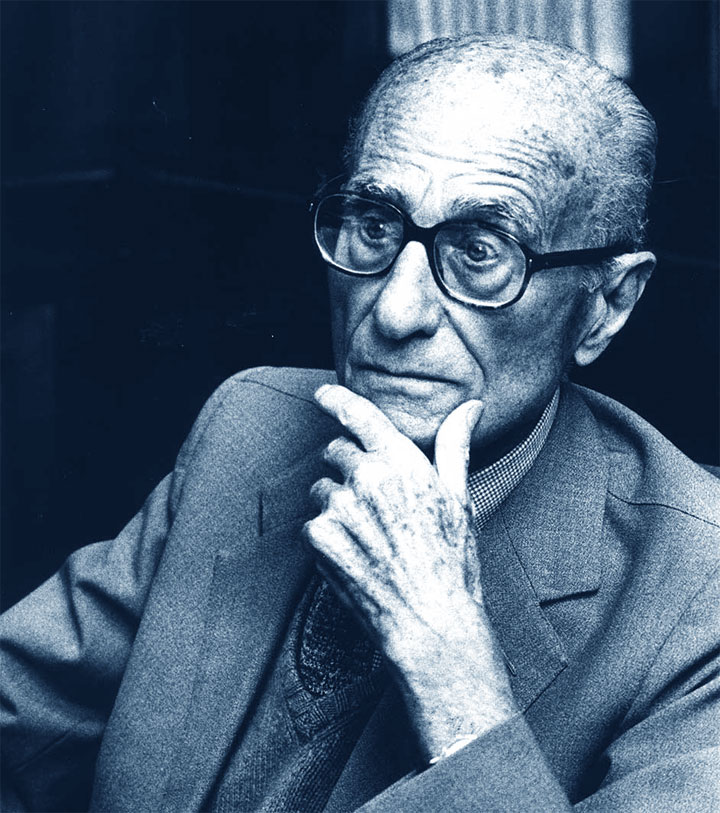
Indro Montanelli, an iconic figure in Italian journalism, is remembered as one of the most influential and uncompromising journalists of the 20th century. Born on April 22, 1909, in the small town of Fucecchio, located between Pisa and Florence, Montanelli’s career spanned over six decades, during which he became a symbol of journalistic integrity and a critical voice in Italian culture. This article explores Montanelli’s age, the trajectory of his fame, and the highlights of his life, offering an in-depth look at the man who shaped the landscape of Italian media and public discourse.
Early Life and Education
Indro Montanelli was born into a family with a strong intellectual tradition. His grandfather, Giuseppe Montanelli, was a writer and politician, and this legacy of intellectualism seemed to be passed down to Indro. He displayed a keen interest in writing from a young age, a passion that would later define his career. Montanelli pursued higher education with vigor, earning degrees in law and political science. These academic achievements laid the foundation for his analytical approach to journalism.
After completing his studies, Montanelli moved to France, where he began his career as a reporter with the newspaper Paris Soir. This period abroad was formative for Montanelli, as it exposed him to different perspectives and honed his skills as a writer and observer. It was during this time that he developed a reputation for his incisive and often provocative style of reporting, a characteristic that would define his career.
The Rise of a Journalistic Legend
Montanelli’s career took a significant turn in the mid-1930s when he decided to join the 20th Eritrean Battalion, a decision influenced by his upbringing under the fascist regime in Italy. His experiences in Eritrea were documented in a diary that received enthusiastic reviews back home, particularly from Ugo Ojetti, a revered figure in Italian journalism. This work marked the beginning of Montanelli’s transformation from a writer into a journalist of note.
In the late 1930s, Montanelli’s career as a journalist truly began to flourish. He was sent to cover the Spanish Civil War for Il Messaggero, one of Italy’s leading newspapers. His reports from Spain were notable for their unflinching criticism of the fascist regime, a stance that eventually led to his expulsion from the country and his subsequent estrangement from the Italian Fascist Party. Despite this, Montanelli continued to write with a fervor that defied political pressures, cementing his reputation as a fearless journalist.
World War II and Imprisonment
As World War II loomed, Montanelli’s journalistic prowess was called upon to cover some of the most significant events of the time. He reported from Germany as the Third Reich advanced towards Danzig and even had the opportunity to interview Adolf Hitler. Montanelli’s dispatches from the front lines, particularly his coverage of the Russo-Finnish conflict, further established him as one of Europe’s premier war correspondents.
However, Montanelli’s outspoken nature and his anti-fascist sentiments eventually led to his imprisonment in 1944. He was incarcerated in San Vittore, a notorious prison in Milan, and was sentenced to death by the Nazis. It was only through the intervention of his mother, who managed to appeal to the Archbishop of Milan, Cardinal Ildefonso Schuster, that Montanelli’s life was spared. This harrowing experience deeply affected him and later inspired one of his most famous works, Il Generale Della Rovere, which was adapted into a film by Roberto Rossellini and won the Golden Lion at the Venice Film Festival.
Post-War Career and the Corriere della Sera Era
After World War II, Montanelli returned to journalism with renewed vigor. He rejoined Corriere della Sera, Italy’s most prestigious newspaper, where he became one of the paper’s most prominent and respected voices. His reports from various global hotspots, including his firsthand account of the Hungarian Revolution in 1956, where he was among the first to report on the anti-Stalinist sentiments within the communist movement, solidified his status as a leading journalist of his time.
Montanelli’s relationship with Corriere della Sera was not without its challenges. He often found himself at odds with the paper’s editorial direction, particularly during the 1970s when the paper shifted towards a more left-leaning stance under the direction of Piero Ottone. Montanelli, a staunch liberal and conservative, found this shift unacceptable and decided to part ways with the publication.
Founding Il Giornale and the Turbulent 1970s
In 1974, dissatisfied with the direction of Corriere della Sera, Montanelli, along with several colleagues, founded Il Giornale Nuovo, later simply known as Il Giornale. This new venture was a bold move, reflecting Montanelli’s desire to maintain journalistic independence and uphold the values he believed were being eroded in mainstream Italian media. Il Giornale quickly gained a reputation for its rigorous reporting and Montanelli’s characteristic sharp wit and insightful commentary.
However, the 1970s in Italy were marked by political turmoil and violence, known as the “Years of Lead.” During this period, Montanelli became a target for his outspoken views. On June 2, 1977, he was shot in the legs by the Red Brigades, a Marxist-Leninist terrorist organization. Despite the attack, Montanelli remained undeterred, continuing to write and lead Il Giornale with the same passion and commitment that had characterized his entire career.
The financial stability of Il Giornale came into question in the following years, and the newspaper was eventually acquired by Silvio Berlusconi, a media magnate who would later become Italy’s Prime Minister. The relationship between Montanelli and Berlusconi was complex; Montanelli was fiercely independent and often clashed with Berlusconi, particularly when the latter entered the political arena. Montanelli’s refusal to compromise on his journalistic principles eventually led him to leave Il Giornale.
Later Years and La Voce
In the early 1990s, Montanelli embarked on another ambitious project by founding La Voce, a newspaper that he envisioned as a platform for liberal and anti-conformist ideas. However, despite its noble intentions, La Voce struggled to find a foothold in the competitive Italian media landscape. The newspaper ceased publication in 1995, marking a rare but significant setback in Montanelli’s illustrious career.
Despite this, Montanelli continued to contribute to public discourse through various mediums. He became a prominent figure on Italian television and maintained a strong presence in print media, writing columns and editorials that continued to influence public opinion. One of his most notable contributions during this period was “La Stanza di Montanelli,” a column in which he engaged directly with readers, offering insights into political and social issues with his trademark candor and intellectual rigor.
Legacy and Impact
Indro Montanelli passed away on July 22, 2001, at the age of 92, leaving behind a legacy that continues to influence Italian journalism. His career was defined by his unwavering commitment to truth, his sharp analytical mind, and his ability to communicate complex ideas in a way that was accessible to the general public. Montanelli was a journalist who lived by his principles, often at great personal cost, and his work remains a testament to the power of the press as a force for good in society.
Montanelli’s life was not without controversy. His early association with fascism and his later criticisms of the Italian left made him a polarizing figure. However, it is his ability to evolve and critique his own past, along with his relentless pursuit of the truth, that has cemented his place in history as one of Italy’s most respected and influential journalists.
His memoirs, written with the same clarity and wit that characterized his journalism, offer a window into the mind of a man who witnessed and documented some of the most significant events of the 20th century. Montanelli’s contributions to journalism are not just in the stories he reported, but in the standards of excellence he set for future generations of journalists.
Today, Indro Montanelli is remembered not just as a journalist, but as a symbol of the enduring power of the press. His work continues to inspire journalists around the world, reminding them of the importance of independence, integrity, and the relentless pursuit of truth.


