
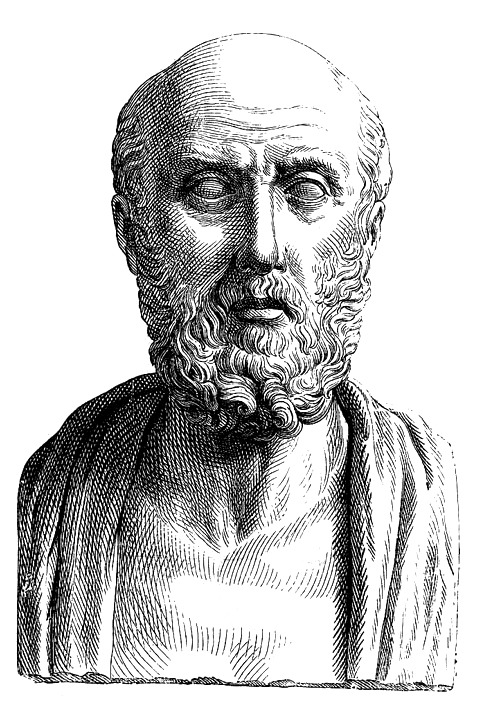
Ippocrate di Coo, also known as Hippocrates of Kos, is a towering figure in the history of medicine, often referred to as the “Father of Medicine.” Born on the Greek island of Kos (also known as Coo) around 460-450 BCE, Hippocrates established principles and practices that would lay the foundation for modern medicine. His influence extends beyond the medical field, touching on ethics, philosophy, and the general approach to scientific inquiry. This comprehensive exploration will delve into his life, the historical context in which he lived, his contributions to medicine, and his enduring legacy.
Early Life and Background
Hippocrates was born into a family with a strong tradition in medicine and science. His father, Heraclides, was a physician, and his mother, Phanarete, came from an aristocratic lineage. It is believed that Hippocrates’ family claimed descent from Asclepius, the Greek god of medicine, which positioned them as part of the Asclepiad guild, a group of medical practitioners who revered this deity.
Growing up in such an environment, Hippocrates was exposed to medical practices and scientific inquiry from a young age. His early education likely included training in various disciplines, such as philosophy, anatomy, and the natural sciences. This diverse foundation would later inform his holistic approach to medicine, where he emphasized understanding the human body in relation to the natural world.
The Historical Context: Greece in the Classical Era
Hippocrates’ life unfolded during the Classical Era of Greece, a period marked by remarkable advancements in philosophy, science, and the arts. The Greek city-states were flourishing, with Athens at the cultural and intellectual forefront. This era produced great philosophers like Socrates, Plato, and Aristotle, whose ideas on logic, ethics, and the natural world would significantly influence Hippocrates.
In the medical field, however, knowledge was still rudimentary, and illnesses were often attributed to supernatural causes. Greek medicine before Hippocrates was heavily influenced by religious and mythological beliefs. Diseases were seen as punishments from the gods, and healing often involved rituals and prayers. Hippocrates would challenge these notions, advocating for a more rational and systematic approach to understanding and treating illnesses.
Hippocrates and the Birth of Scientific Medicine
Hippocrates’ most significant contribution to medicine was his rejection of supernatural explanations for disease. Instead, he proposed that illnesses had natural causes, which could be studied and understood through observation and reason. This shift in perspective marked the beginning of scientific medicine, where diagnosis and treatment were based on empirical evidence rather than religious or mystical beliefs.
Central to Hippocrates’ approach was the concept of the four humors: blood, phlegm, yellow bile, and black bile. He believed that the balance of these humors within the body determined a person’s health. An imbalance, he argued, would result in disease, and the role of the physician was to restore balance through various treatments, including diet, exercise, and medication.
The “Hippocratic Corpus,” a collection of around seventy medical texts, provides insight into his methods and philosophies. Although it is unlikely that Hippocrates wrote all these works himself, they collectively represent the medical practices and ethical standards of his time. Key texts from the corpus, such as “On the Nature of Man” and “Aphorisms,” outline the principles of diagnosis, prognosis, and treatment, emphasizing the importance of careful observation and patient care.
The Hippocratic Oath: Ethical Foundations of Medicine
One of the most enduring legacies of Hippocrates is the Hippocratic Oath, an ethical code that has guided physicians for centuries. Although the exact origins of the oath are debated, it is widely attributed to Hippocrates or his followers. The oath establishes the responsibilities and moral obligations of physicians, including principles like “do no harm,” confidentiality, and the prioritization of the patient’s well-being.
The Hippocratic Oath marked a significant departure from previous practices, where the power dynamics between physician and patient were often skewed. By codifying the ethical responsibilities of doctors, Hippocrates helped to professionalize medicine, making it a respected and trusted practice.
Hippocrates’ Travels and Influence Across the Ancient World
Hippocrates was not only a physician but also a traveler. His journeys took him across Greece and into neighboring regions, where he studied various medical practices and shared his knowledge. He is known to have visited cities like Athens and Abdera, where he interacted with other intellectuals, including the philosopher Democritus, who espoused atomist theories that may have influenced Hippocrates’ views on the natural causes of disease.
Hippocrates also traveled to Thessaly, Macedonia, and Thrace, practicing medicine and offering his services to rulers like Perdiccas II of Macedonia. His reputation as a healer grew, and he was sought after by many for his expertise. However, according to legend, he refused an invitation from the Persian king Artaxerxes, who offered him wealth and power to treat a plague in Persia. Hippocrates’ loyalty to Greece and his commitment to the principles of his homeland were evident in this decision.
Hippocrates’ School of Medicine: Legacy and Contributions
Hippocrates is credited with founding a medical school on the island of Kos, where he taught his methods and philosophies to students. This school became a center for medical learning, attracting scholars from across the Mediterranean. The teachings of Hippocrates and his school would spread far and wide, influencing medical practices in both the ancient and medieval worlds.
The school’s approach was characterized by its emphasis on observation, diagnosis, and prognosis. Hippocrates taught that physicians should study the patient’s lifestyle, environment, and psychological state to understand the root causes of illness. This holistic approach was revolutionary for its time and laid the groundwork for modern medical practices that consider the whole person rather than just the symptoms.
Hippocrates also made significant contributions to the fields of anatomy and pathology. Although human dissection was not widely practiced in ancient Greece, Hippocrates and his students gained knowledge of the human body through careful observation and the study of injuries and wounds. This understanding of anatomy was crucial for developing effective treatments and surgical procedures.
The Influence of Hippocrates on Later Thinkers
Hippocrates’ influence extended beyond his lifetime, shaping the work of later philosophers and scientists. Plato, in his dialogues, references the “Hippocratic method” as an ideal approach to understanding both the human body and the broader natural world. Aristotle, too, was influenced by Hippocratic thought, particularly in his studies of biology and ethics.
The Roman physician Galen, who lived several centuries after Hippocrates, was perhaps the most significant figure to build on his legacy. Galen’s works, which dominated medical thought for over a millennium, were heavily influenced by Hippocratic teachings. Galen expanded on the theory of the four humors and integrated it into his own medical philosophy, ensuring that Hippocrates’ ideas remained central to medical practice well into the Middle Ages.
The Legacy of Hippocrates in Modern Medicine
Hippocrates’ impact on medicine is profound and enduring. The principles he established continue to underpin modern medical practice, particularly the emphasis on ethics, careful observation, and the holistic treatment of patients. The Hippocratic Oath, although modernized, remains a cornerstone of medical ethics, taken by physicians around the world as they enter the profession.
Hippocrates’ approach to medicine also laid the foundation for the scientific method, which emphasizes empirical observation and the testing of hypotheses. His belief that diseases have natural causes and can be understood through study and reason was a radical departure from the mystical explanations prevalent in his time and set the stage for the development of modern science.
In addition to his contributions to medicine, Hippocrates’ name has become synonymous with the ethical practice of the healing arts. The term “Hippocratic” is often used to describe medical practices that prioritize patient care and adhere to high ethical standards. This association with integrity and professionalism has helped to elevate the status of medicine as a noble and respected profession.
Conclusion: The Enduring Legacy of Hippocrates
Hippocrates of Kos remains a pivotal figure in the history of medicine, whose influence can still be felt today. His insistence on natural explanations for disease, his development of ethical guidelines for physicians, and his holistic approach to patient care have all left an indelible mark on the field of medicine.
As we reflect on Hippocrates’ life and contributions, it is clear that he was not just a physician but a visionary who transformed the practice of medicine. His teachings have endured for over two millennia, shaping the way we understand and treat illness. In recognizing the legacy of Hippocrates, we honor a tradition of medical practice that values knowledge, ethics, and the well-being of patients above all else.
Hippocrates’ life and work serve as a reminder that the pursuit of knowledge and the commitment to ethical practice are timeless values that continue to guide the medical profession. His legacy is not only preserved in the annals of history but also lives on in the daily practice of doctors around the world who strive to uphold the principles he championed.


