
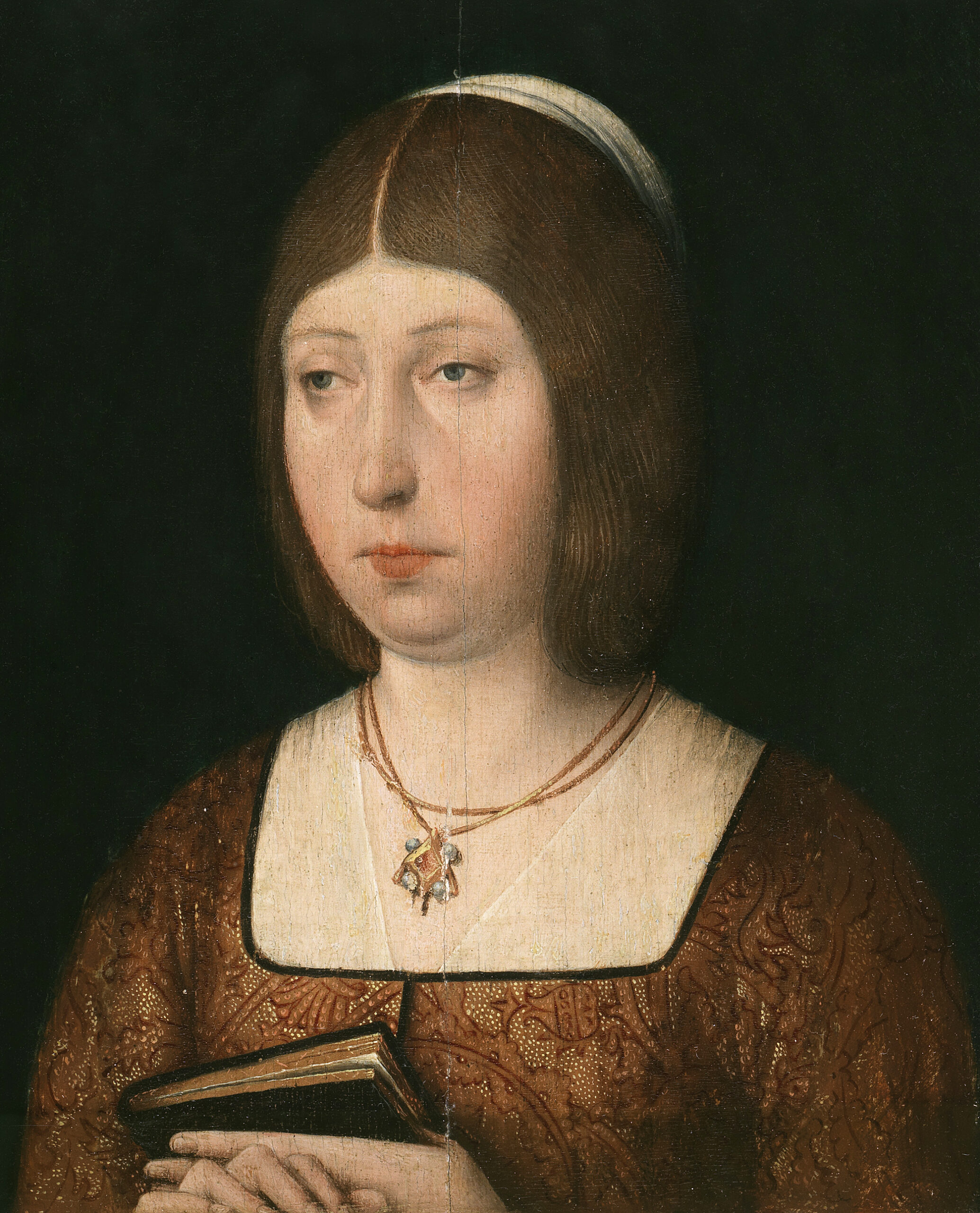
Isabella di Castiglia, born on April 22, 1451, in Madrigal de las Altas Torres, Spain, is one of the most significant figures in European history. Her life and reign as Queen of Castile were pivotal in shaping the future of Spain and, by extension, the world. Isabella’s legacy is deeply intertwined with the unification of Spain, the exploration of the New World, and the establishment of the Spanish Inquisition. This article delves into the life, achievements, and historical context of Isabella di Castiglia, examining her role in the formation of modern Spain and her impact on global history.
Early Life and Background
Isabella was born into the royal family of Castile, one of the most powerful kingdoms in medieval Spain. Her father, King John II of Castile, married Isabella of Portugal after the death of his first wife, Maria of Aragon. Isabella’s birth came at a time of political uncertainty, as her father’s reign was marked by internal conflicts and power struggles. Isabella’s early years were spent in relative seclusion, particularly after her father’s death in 1454, when she was just three years old.
Her half-brother, Henry IV, ascended to the throne after the death of their father. Isabella was not initially expected to play a significant role in the kingdom’s politics, as the throne was to pass to Henry’s offspring or their younger brother, Alfonso. However, the death of Alfonso in 1468 and the ongoing political turmoil in Castile would soon propel Isabella into a position of power.
Ascension to the Throne
Isabella’s path to the throne was far from straightforward. The political landscape of Castile was fraught with factionalism, and Henry IV’s rule was increasingly unpopular due to his perceived weaknesses as a monarch. In 1468, following the death of her brother Alfonso, Henry IV was forced to recognize Isabella as his heir, naming her Princess of Asturias, the title traditionally given to the heir to the Castilian throne.
Isabella’s rise to power was marked by her astute political acumen. She was well-educated, with a strong grounding in literature, music, and humanistic studies. These qualities, coupled with her innate intelligence, allowed her to navigate the complex political landscape of Castile effectively.
In choosing a husband, Isabella demonstrated her independence and strategic thinking. She rejected offers of marriage from several powerful suitors, including the King of Portugal and the Grand Master of the Order of Calatrava, instead choosing to marry Ferdinand of Aragon, her cousin. This marriage, which took place in secret on October 19, 1469, would have profound implications for the future of Spain.
The Unification of Spain
The marriage of Isabella and Ferdinand marked the beginning of the unification of Spain. Although the two kingdoms of Castile and Aragon remained legally separate, their marriage created a powerful alliance that would lead to the eventual consolidation of the Spanish nation-state.
Isabella’s marriage to Ferdinand was not initially recognized by her half-brother, Henry IV, who disinherited her in favor of his daughter, Joanna. However, upon Henry’s death in 1474, Isabella moved quickly to secure her claim to the throne. She was crowned Queen of Castile on December 13, 1474, in Segovia, a move that sparked a succession crisis known as the War of the Castilian Succession.
The war pitted Isabella and Ferdinand against supporters of Joanna, who was backed by Portugal and France. The conflict culminated in the Battle of Toro in 1476, where Isabella’s forces achieved a decisive victory. This victory solidified Isabella’s position as the legitimate ruler of Castile and effectively ended the civil war.
The death of Ferdinand’s father, John II of Aragon, in 1479, further strengthened the couple’s power, as Ferdinand inherited the throne of Aragon. Although Castile and Aragon remained distinct political entities, Isabella and Ferdinand ruled jointly, with each monarch retaining authority over their respective kingdoms. This dual monarchy laid the foundation for the unified Spanish state.
The Reconquista and the Fall of Granada
One of the most significant achievements of Isabella’s reign was the completion of the Reconquista, the centuries-long effort to reclaim the Iberian Peninsula from Muslim rule. By the time Isabella and Ferdinand came to power, only the Emirate of Granada remained under Muslim control. The Reconquista had become a central element of Christian Spain’s identity, and Isabella was determined to complete the task.
The campaign against Granada began in 1482 and culminated in the city’s surrender on January 2, 1492. The fall of Granada was a momentous event in Spanish history, marking the end of Muslim rule in Spain and the consolidation of Christian power across the peninsula. It also earned Isabella and Ferdinand the title of “Los Reyes Católicos” (The Catholic Monarchs) from Pope Innocent VIII, recognizing their efforts to strengthen and expand the Catholic faith.
The fall of Granada was celebrated as a great victory for Christendom and solidified Isabella’s reputation as a powerful and determined ruler. However, the conquest also had significant consequences for the Muslim and Jewish populations of Spain, who faced persecution and forced conversion under the newly established Christian rule.
The Spanish Inquisition
The establishment of the Spanish Inquisition is one of the most controversial aspects of Isabella’s reign. The Inquisition was originally intended as a means of ensuring religious conformity among Spain’s Christian population, particularly focusing on conversos—Jews and Muslims who had converted to Christianity but were suspected of secretly practicing their former faiths.
In 1478, Isabella and Ferdinand received permission from Pope Sixtus IV to establish the Inquisition in Castile. The tribunal quickly expanded its reach, and by 1480, it had been extended to Aragon as well. The Inquisition became a powerful tool for enforcing religious orthodoxy, and its methods—often involving torture and execution—were notorious for their brutality.
The most significant and tragic outcome of the Inquisition was the Alhambra Decree of 1492, which ordered the expulsion of all Jews from Spain. Those who refused to convert to Christianity were forced to leave the country, resulting in the displacement of tens of thousands of people. This decree had profound social and economic consequences for Spain, as the Jewish community had played a vital role in the country’s economy and culture.
The Inquisition also targeted Muslims, particularly after the conquest of Granada. In 1502, Isabella issued a decree mandating the conversion of all Muslims in Castile. Those who refused were expelled or forced into hiding. The Inquisition’s legacy is a dark chapter in Spanish history, reflecting the religious intolerance of the time and the harsh measures used to enforce conformity.
Sponsorship of Christopher Columbus
Isabella’s reign is perhaps best known for her sponsorship of Christopher Columbus’s voyage to the New World. Columbus, an ambitious Genoese navigator, had spent years seeking support for his plan to reach Asia by sailing westward across the Atlantic. After being rejected by several European courts, Columbus finally gained the backing of Isabella and Ferdinand in 1492.
Isabella’s decision to support Columbus was motivated by a combination of factors, including the potential for expanding Spanish influence, gaining access to new trade routes, and spreading Christianity to newly discovered lands. The agreement, known as the Capitulations of Santa Fe, granted Columbus significant privileges, including the title of Admiral of the Ocean Sea and a share of the wealth from any lands he discovered.
On August 3, 1492, Columbus set sail from the port of Palos de la Frontera with three ships: the Niña, the Pinta, and the Santa María. His voyage culminated in the discovery of the Americas on October 12, 1492, an event that would have far-reaching consequences for the world.
The discovery of the New World marked the beginning of Spain’s expansion into the Americas, leading to the establishment of vast colonies and the accumulation of immense wealth. Isabella’s decision to support Columbus’s expedition was a turning point in world history, paving the way for the era of European exploration and colonization.
Consolidation of Power and Domestic Policy
Isabella’s reign was marked by significant efforts to consolidate royal power and strengthen the central authority of the monarchy. She and Ferdinand implemented a series of reforms aimed at curbing the power of the nobility, reorganizing the administration of justice, and improving the efficiency of the government.
One of Isabella’s key initiatives was the establishment of the Santa Hermandad, a rural police force tasked with maintaining law and order in the countryside. The Hermandad played a crucial role in reducing crime and curbing the influence of local warlords, thereby enhancing the power of the crown.
Isabella also sought to reform the church and improve the moral and spiritual standards of the clergy. She worked closely with leading church figures, including Cardinal Cisneros, to implement reforms that emphasized education, discipline, and pastoral care. These efforts contributed to the strengthening of the Catholic Church in Spain and reinforced the close relationship between the monarchy and the church.
In the realm of governance, Isabella and Ferdinand established the Cortes, representative assemblies that included members of the nobility, clergy, and towns. The Cortes played a role in advising the monarchs and approving new laws, helping to create a more structured and centralized system of governance.
Later Years and Death
In the later years of her reign, Isabella faced personal and political challenges. The death of her only son, Prince Juan, in 1497 was a devastating blow, as it threatened the succession and stability of the Spanish monarchy. Isabella’s daughter, Joanna, who was married to Philip the Handsome of Burgundy, was named her heir, but Joanna’s mental instability raised concerns about her ability to rule.
Isabella’s health began to decline in the early 1500s, and she became increasingly preoccupied with securing the future of her kingdom. In her will, she outlined her wishes for the succession and the governance of Castile, emphasizing the importance of maintaining the unity of Spain and preserving the Catholic faith.
On November 26, 1504, Isabella di Castiglia passed away at the age of 53 in Medina del Campo. Her death marked the end of an era, but her legacy lived on through the institutions she established and the monumental changes she set in motion.
Legacy and Historical Impact
Isabella di Castiglia’s legacy is both profound and complex. She is remembered as a powerful and determined ruler who played a central role in the unification of Spain and the expansion of its influence across the world. Her reign saw the completion of the Reconquista, the establishment of the Spanish Inquisition, and the beginning of European colonization in the Americas.
Isabella’s impact on world history cannot be overstated. Her support for Columbus’s voyage led to the discovery of the New World, an event that reshaped global trade, politics, and culture. The wealth generated from the Spanish colonies in the Americas would fuel Spain’s rise as a global superpower in the 16th and 17th centuries.
However, Isabella’s legacy is also marked by the darker aspects of her reign, particularly the persecution of Jews and Muslims under the Inquisition and the forced conversions and expulsions that followed. These actions left a lasting scar on Spanish society and contributed to the religious and cultural tensions that would continue to affect Spain for centuries.
Conclusion: The Life of Isabella di Castiglia
Isabella di Castiglia was a queen who shaped the course of history through her determination, intelligence, and vision. Her reign was a turning point for Spain, transforming it into a unified and powerful nation poised to dominate the world stage. Isabella’s legacy is a testament to the complexities of leadership, where great achievements often come with significant moral and ethical challenges.
As we reflect on Isabella’s life and reign, it is clear that she was a monarch of immense significance, whose actions and decisions continue to resonate in the modern world. Whether celebrated for her role in the unification of Spain and the exploration of the New World, or criticized for her involvement in the Inquisition, Isabella di Castiglia remains a figure of enduring historical importance.


