
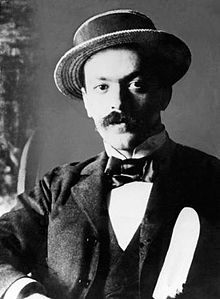
Italo Svevo, born Ettore Schmitz on December 19, 1861, in Trieste, Italy, is a towering figure in modern Italian literature. Known for his introspective novels and psychological depth, Svevo’s works explore the complexities of the human condition, blending irony with a deep understanding of human frailty. Despite his relatively late recognition, Svevo’s contributions to literature have cemented his place among the greats, with his novel “La coscienza di Zeno” (Zeno’s Conscience) regarded as a seminal work in modernist literature. This article delves into the life, career, and legacy of Italo Svevo, shedding light on the nuances that shaped his unique literary voice.
Early Life and Education
Italo Svevo was born into a well-off Jewish family in Trieste, then part of the Austro-Hungarian Empire. His father, Francesco Schmitz, was a successful glass merchant, while his mother, Allegra Moravia, was a nurturing presence in his life. Growing up, Svevo was exposed to a multilingual environment, which would later influence his literary style and identity. His early education was typical of the upper middle class, with an emphasis on languages and commerce, reflecting his father’s hopes that Svevo would follow in his footsteps as a businessman.
At the age of twelve, Svevo and his brothers were sent to a boarding school in Segnitz, near Würzburg, Germany. There, he received a rigorous education in commercial subjects and became fluent in German, a language that would play a crucial role in his later literary career. During this period, Svevo developed a passion for literature, immersing himself in the works of German writers such as Goethe, Schiller, and the philosopher Schopenhauer. This early exposure to German literature and philosophy left a lasting imprint on his intellectual development and literary output.
Early Career and Struggles with Identity
After returning to Trieste in 1878, Svevo enrolled at the Istituto Revoltella, a commercial school in his hometown, where he continued his studies in business. However, his passion for literature persisted, leading him to secretly harbor ambitions of becoming a writer. Despite his literary inclinations, Svevo was forced to confront the harsh realities of life when his family’s business faced financial difficulties, compelling him to seek employment.
In 1880, Svevo began working at the Trieste branch of Unionbank, a Viennese bank, where he was responsible for correspondence in French and German. Although the job provided financial stability, it left Svevo with little time to pursue his literary interests. Nevertheless, he managed to contribute articles and short stories to the local newspaper “L’Indipendente,” gradually establishing himself as a writer in the vibrant intellectual circles of Trieste.
During this period, Svevo wrote several plays and short stories, often under the pseudonym Ettore Samigli. However, his work went largely unnoticed, and he struggled with feelings of inadequacy and self-doubt. This sense of being an outsider, both culturally and linguistically, would later become a central theme in his writing.
The Birth of Italo Svevo and Early Literary Works
In 1892, Svevo adopted the pseudonym Italo Svevo, a name that reflected his dual heritage—Italo, symbolizing his Italian identity, and Svevo, denoting his Germanic roots. Under this new name, Svevo published his first novel, “Una Vita” (A Life), which was released at his own expense. The novel, which chronicles the life of Alfonso Nitti, a young man who struggles with his ambitions and self-worth, was largely ignored by critics and the public. Despite its lack of success, “Una Vita” marked the beginning of Svevo’s exploration of the themes of existential uncertainty and the complexities of human consciousness.
Svevo’s second novel, “Senilità” (As a Man Grows Older), was published in 1898, also at his own expense. The novel tells the story of Emilio Brentani, a man who, like Alfonso Nitti, is plagued by indecision and a sense of failure. “Senilità” delves deeper into the psychological aspects of its characters, foreshadowing the themes that would dominate Svevo’s later work. However, much like “Una Vita,” “Senilità” was met with indifference, leading Svevo to temporarily abandon his literary ambitions.
Disheartened by the lack of recognition, Svevo withdrew from the literary world and focused on his career in the family business. In 1896, he married his cousin Livia Veneziani, and the couple settled into a comfortable life in Trieste. Despite his decision to step away from writing, Svevo continued to read voraciously, particularly the works of French and Russian novelists such as Flaubert, Tolstoy, and Dostoevsky. These authors would later influence his approach to character development and narrative structure.
The Influence of James Joyce and Return to Writing
The turning point in Italo Svevo’s literary career came in 1907, when he met James Joyce, an Irish writer who had moved to Trieste to teach English at the Berlitz School. The two men quickly formed a close friendship, bonded by their shared love of literature and their status as expatriates in Trieste. Joyce, who had read Svevo’s earlier novels, recognized his talent and encouraged him to continue writing. Their friendship proved to be a catalyst for Svevo’s return to literature, as Joyce’s praise and support rekindled his confidence in his abilities as a writer.
During this period, Svevo became increasingly interested in the emerging field of psychoanalysis, particularly the work of Sigmund Freud. The exploration of the unconscious mind and the complexities of human behavior in Freud’s theories resonated with Svevo, who began to incorporate these ideas into his writing. This newfound interest in psychology, combined with Joyce’s encouragement, led Svevo to embark on what would become his most famous work, “La coscienza di Zeno” (Zeno’s Conscience).
“La coscienza di Zeno” and Literary Recognition
Published in 1923, “La coscienza di Zeno” is a groundbreaking novel that chronicles the life of Zeno Cosini, an unreliable narrator who recounts his life story as part of his psychoanalytic therapy. The novel is structured as a series of memoirs, in which Zeno reflects on his failed attempts to quit smoking, his troubled relationships with women, and his feelings of inadequacy and self-deception.
“La coscienza di Zeno” is notable for its innovative use of stream-of-consciousness narration and its exploration of the complexities of human psychology. The novel delves into the contradictions and ambiguities of Zeno’s character, offering a nuanced portrayal of a man who is both self-aware and self-deluded. Through Zeno, Svevo presents a critique of the modern condition, capturing the existential anxiety and moral uncertainty that define the 20th-century experience.
Despite its literary merits, “La coscienza di Zeno” initially received little attention in Italy. However, Joyce’s continued support for the novel helped it gain recognition in literary circles outside of Italy, particularly in France. The novel eventually caught the attention of influential French critics, who praised its psychological depth and innovative narrative style. This international acclaim led to a reappraisal of Svevo’s work in Italy, where he was finally recognized as a major literary figure.
Later Life and Legacy
The success of “La coscienza di Zeno” brought Italo Svevo late but well-deserved recognition as a significant voice in modern literature. By the mid-1920s, Svevo was celebrated in both Italy and abroad, and he was invited to Paris, where he met with French literary figures who admired his work. His newfound fame also led to a reassessment of his earlier novels, “Una Vita” and “Senilità,” which were now recognized for their psychological insight and innovative use of narrative techniques.
In the years following the publication of “La coscienza di Zeno,” Svevo continued to write, producing short stories, essays, and plays. However, his health began to decline, and he was diagnosed with emphysema, a condition exacerbated by his lifelong smoking habit. Despite his illness, Svevo remained intellectually active, continuing to explore new ideas and correspond with fellow writers and intellectuals.
In 1928, Svevo began working on a fourth novel, tentatively titled “Il vecchione” (The Old Man), which was to be a continuation of his exploration of the human psyche. However, the novel remained unfinished, as Svevo’s life was tragically cut short in September 1928 following a car accident in Motta di Livenza.
Influence and Historical Context
Italo Svevo’s work is deeply rooted in the intellectual and cultural milieu of early 20th-century Europe. His novels reflect the anxieties and uncertainties of a world in transition, where traditional values were being questioned, and new ideas were emerging in fields such as psychology, philosophy, and literature. Svevo’s exploration of the inner workings of the human mind, particularly in “La coscienza di Zeno,” places him among the pioneers of modernist literature, alongside figures such as Joyce, Proust, and Kafka.
Svevo’s writing also reflects his unique position as a writer who straddled two cultures—Italian and German. This dual identity is evident in his use of language, narrative techniques, and themes, which often draw on both Italian and German literary traditions. Svevo’s works are characterized by a deep sense of irony and a focus on the contradictions and ambiguities of human experience, elements that have resonated with readers and critics alike.
Conclusion: Italo Svevo’s Enduring Legacy
Italo Svevo’s journey from obscurity to recognition is a testament to the power of perseverance and the importance of intellectual curiosity. His ability to blend psychological insight with narrative innovation has left a lasting impact on modern literature, influencing generations of writers and readers. Svevo’s exploration of the human condition, with all its complexities and contradictions, continues to resonate today, making his works as relevant now as they were a century ago.
Svevo’s legacy is one of literary brilliance and profound human understanding. His works not only provide a window into the anxieties and uncertainties of his time but also offer timeless insights into the nature of existence itself. As readers continue to discover and rediscover his novels, Italo Svevo’s place in the pantheon of great literary figures remains secure, a testament to his enduring contribution to the world of letters.


