
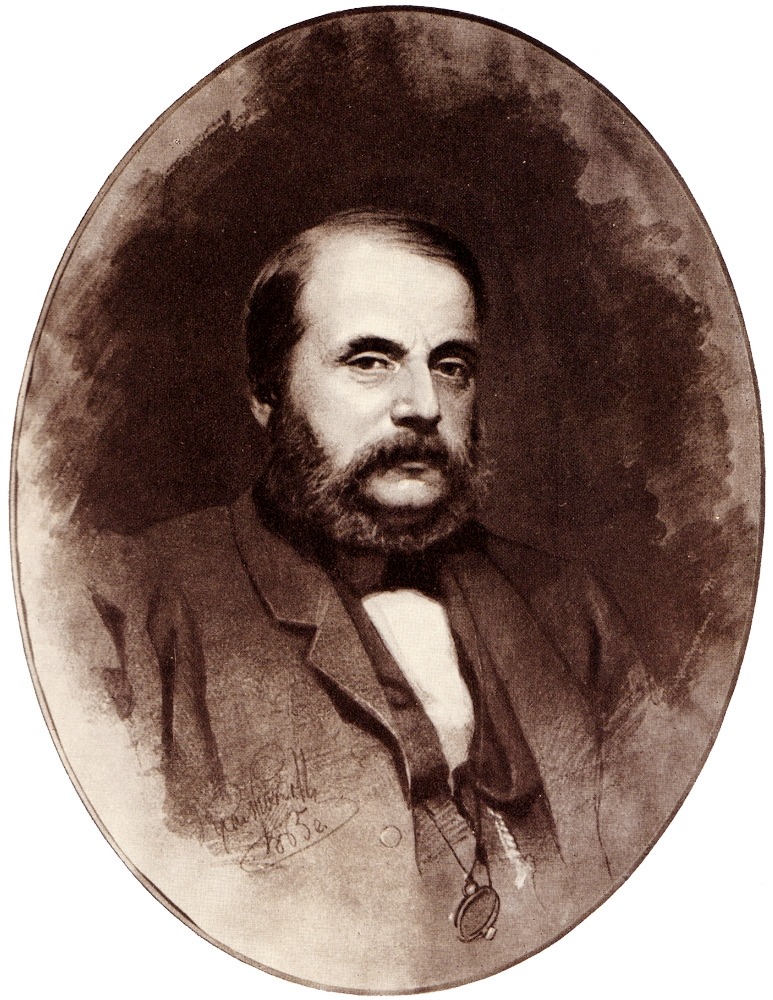
Ivan Aleksandrovich Goncharov, born on June 18, 1812, in Simbirsk, Russia, is a prominent figure in Russian literature. Best known for his seminal work, “Oblomov,” Goncharov’s life and career were marked by a deep engagement with the literary and intellectual currents of his time. His works, characterized by their exploration of the human condition and social critique, have left an indelible mark on the landscape of Russian literature. This article delves into the life of Ivan Goncharov, exploring his early years, academic pursuits, literary contributions, and the legacy he left behind.
Early Life and Education
Ivan Goncharov was born into a mercantile family, the son of Aleksandr and Avdotya Goncharov. His early life was shaped by the loss of his father at the age of seven, after which he was raised by his mother and his godfather, Nikolai Tregubov, a retired sailor. This early loss would have a profound effect on Goncharov, influencing his later literary themes of loss, detachment, and introspection.
Goncharov’s early education took place in a private institute run by Reverend Fyodor S. Troitsky. It was here that Goncharov developed a passion for literature, learning German and French, and immersing himself in European literary works. This early exposure to Western literature would play a significant role in shaping his literary style and thematic concerns.
In 1822, Goncharov moved to Moscow, where he enrolled in the College of Commerce. His time at the college was marked by unhappiness, as he found the education lacking and the discipline stifling. Dissatisfied with his formal education, Goncharov turned to self-study, devouring the works of Russian authors like Nikolai Karamzin and Aleksandr Pushkin. This period of self-directed learning would prove crucial in his development as a writer, laying the foundation for his later literary achievements.
Academic Pursuits and Intellectual Growth
In 1830, Goncharov left the College of Commerce and, after surviving a cholera epidemic in Moscow, enrolled at Moscow State University in 1831. Here, he pursued studies in philology, with a particular focus on architecture, art, and literature. The university environment, with its vibrant intellectual atmosphere and lively debates, rekindled Goncharov’s enthusiasm for learning. During this time, he had the opportunity to witness a public debate between his literary idol, Aleksandr Pushkin, and Professor Mikhail T. Katkov, an experience that left a lasting impression on him.
While his contemporaries at the university, such as Vissarion Belinsky, Alexander Herzen, and Nikolay Ogaryov, were deeply involved in the political and social revolutionary movements of the time, Goncharov remained largely indifferent to these ideals. His primary interests lay in literature and translation, pursuits that would define his career.
Early Literary Career and First Publications
Goncharov’s literary career began in earnest in 1832 when he published his first work, a translation of two chapters from Eugene Sue’s novel “Atar-Gull,” in the magazine “Telescope.” This early foray into the literary world marked the beginning of a long and fruitful career as a writer and translator.
After graduating from Moscow State University in 1834, Goncharov returned to his hometown of Simbirsk, where he initially intended to work in the office of the governor, Zagryazhsky. However, his ambitions soon led him to Saint Petersburg, where he secured a position as a translator for the Foreign Trade Department of the Ministry of Finance.
Saint Petersburg, the cultural capital of Russia at the time, proved to be an ideal setting for Goncharov’s literary ambitions. He quickly became involved in the city’s vibrant literary circles, establishing connections with prominent literary figures such as Dmitry Grigorovich, Fyodor Dostoevsky, and Ivan Turgenev. These relationships provided Goncharov with both inspiration and support as he embarked on his literary career.
In 1838, Goncharov published his first official work, a satirical novella titled “The Evil Disease,” in the magazine “Snowdrop.” The novella, which poked fun at the sentimentalism of the Romantic movement, was well-received and established Goncharov as a writer to watch.
Major Literary Works and Achievements
Goncharov’s first major novel, “A Common Story,” was published in 1847. The novel explores the conflict between the romantic idealism of a young Russian nobleman and the pragmatic realism of the emerging mercantile class in Saint Petersburg. “A Common Story” received mixed reviews but succeeded in establishing Goncharov’s reputation as a significant literary figure. The novel introduced the term “Aduyevschina,” derived from the protagonist Aduyev, which became synonymous with “useless romantic aspiration” in Russian literary discourse.
The success of “A Common Story” paved the way for Goncharov’s most famous work, “Oblomov.” The novel, which began as a short story titled “The Dream of Oblomov” published in “Sovremennik” in 1849, was expanded into a full-length novel and published in 1859. “Oblomov” tells the story of Ilya Ilyich Oblomov, a Russian landowner who embodies the traits of inertia and indecision. The novel is a profound exploration of the Russian psyche, and the character of Oblomov has become an iconic figure in Russian literature, representing the concept of “Oblomovism,” or the tendency towards inaction and passivity.
Despite its significance in Russian literature, “Oblomov” was not an immediate success with contemporary readers. However, over time, the novel has been recognized as one of the great works of Russian literature, offering a poignant critique of the social and cultural conditions of 19th-century Russia.
Later Life and Travels
In 1852, Goncharov embarked on a journey that would greatly influence his later works. As the secretary to Admiral Yevfimy Putyatin, he joined a mission to inspect Russian territories in the Far East and establish trade relations with Japan. This journey, which took him from England to Japan via Africa, and then back to Russia through Siberia and the Ural Mountains, provided him with a wealth of material for his writing.
Upon his return to Saint Petersburg in 1855, Goncharov began work on a travelogue, “The Frigate Pallada,” which was serialized in the magazine “Otechestvennye Zapiski” and later published as a book in 1858. “The Frigate Pallada” was well-received and praised for its vivid descriptions of the places Goncharov visited and its insightful commentary on Russian and foreign cultures.
Following the publication of “The Frigate Pallada,” Goncharov continued to write, but his later works did not achieve the same level of success as “Oblomov.” His final novel, “The Precipice,” published in 1869, was a complex and ambitious work that explored themes of love, betrayal, and redemption. However, it failed to resonate with readers in the same way as his earlier works.
Legacy and Influence
Ivan Goncharov passed away on September 27, 1891, in Saint Petersburg, at the age of 79. Despite the uneven reception of his works during his lifetime, Goncharov’s contributions to Russian literature have been widely recognized in the years since his death.
“Oblomov,” in particular, has had a lasting impact on Russian culture and literature. The character of Oblomov has become a symbol of the inertia and indecision that Goncharov saw as characteristic of the Russian intelligentsia of his time. The term “Oblomovism” has entered the Russian lexicon as a descriptor for this particular form of passivity, and the novel continues to be studied and appreciated for its deep psychological insights and social critique.
Goncharov’s work also reflects the broader literary and cultural currents of 19th-century Russia. His exploration of the tensions between romantic idealism and pragmatic realism, as well as his critiques of social and cultural norms, align him with other great Russian writers of his time, such as Fyodor Dostoevsky and Leo Tolstoy. However, Goncharov’s unique perspective, shaped by his personal experiences and worldview, sets his work apart and ensures his place in the pantheon of Russian literature.
In the decades since his death, Goncharov’s works have been translated into numerous languages, allowing readers around the world to appreciate his literary contributions. His novels, particularly “Oblomov,” continue to be read and studied, offering timeless insights into the human condition and the complexities of Russian society.
Conclusion: The Enduring Relevance of Ivan Goncharov
Ivan Goncharov remains a towering figure in Russian literature, his works offering a window into the social and cultural landscape of 19th-century Russia. Through his novels, Goncharov explored the tensions between tradition and modernity, idealism and realism, and action and inaction. His characters, particularly the iconic Oblomov, resonate with readers today as they grapple with similar dilemmas in a rapidly changing world.
Goncharov’s legacy is one of enduring relevance. His insights into the human condition, his critique of social norms, and his exploration of the complexities of the Russian psyche continue to captivate readers and scholars alike. As we continue to navigate the challenges of modern life, the works of Ivan Goncharov offer valuable perspectives on the timeless struggles of the human experience.


