
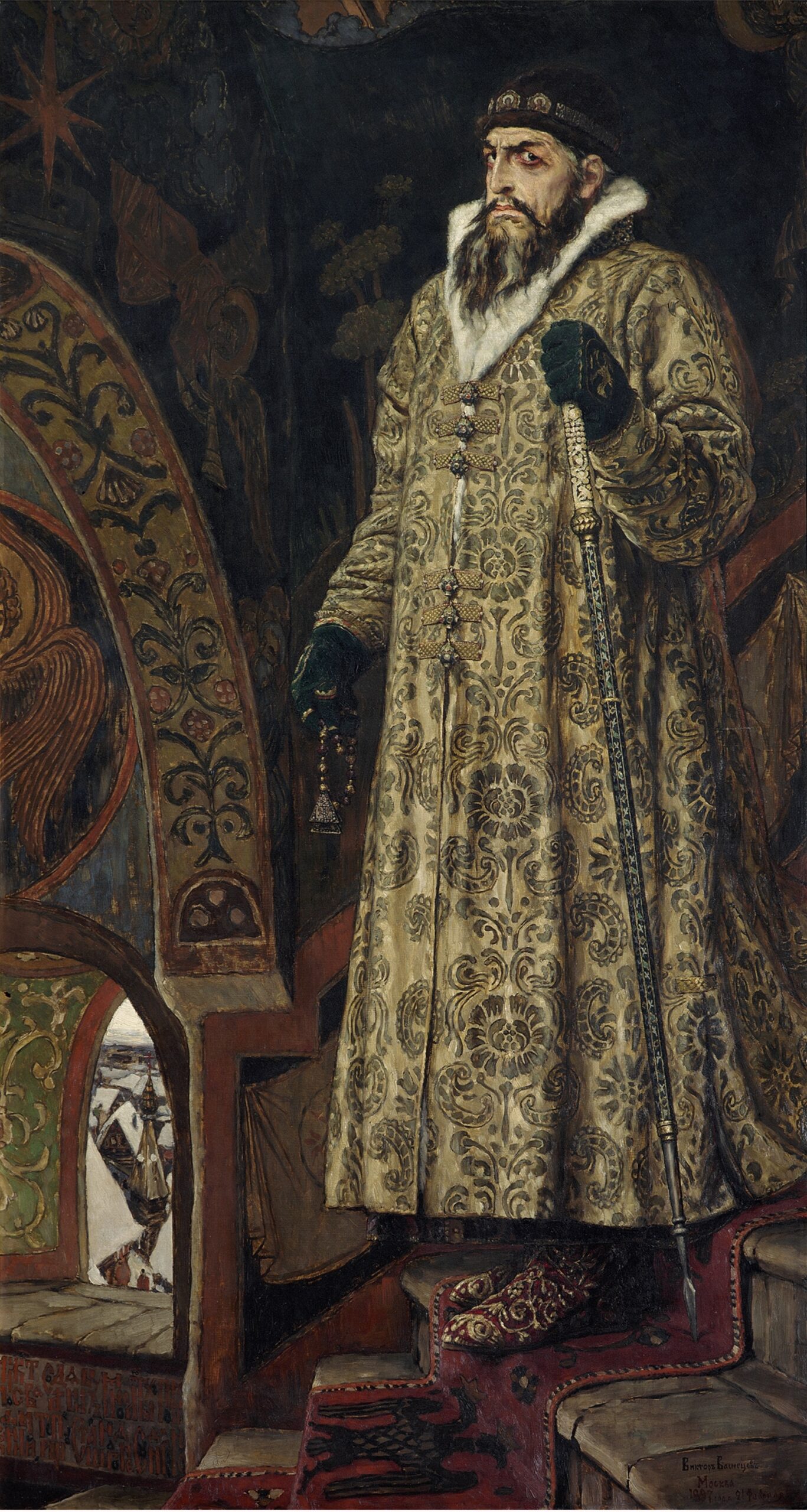
Ivan IV Vasilyevich, widely known as Ivan the Terrible, stands as one of the most controversial figures in Russian history. His reign as the first Tsar of Russia was marked by significant achievements and equally notorious brutality. This detailed exploration will delve into Ivan’s life, his rise to power, his notable accomplishments, and his lasting impact on Russian history.
Early Life and Background
Ivan IV was born on August 25, 1530, in Moscow, Russia, to Grand Prince Vasily III and Elena Glinskaya. His early life was fraught with tragedy and instability. Ivan’s father died when Ivan was just three years old, leaving the young prince under the guardianship of his mother. Elena, too, died under mysterious circumstances in 1538, which left Ivan orphaned by the age of eight. This loss thrust him into the turbulent world of Russian politics, where power struggles among the nobility, known as the boyars, dominated.
Ivan’s early years were marked by neglect and political intrigue. With his mother’s death, the regency was contested, leading to a period of intense power struggles and civil unrest. The boyars, who were influential in the Russian court, vied for control, leaving young Ivan in a precarious position. His childhood was spent in isolation and hardship, often overlooked and underfed as the political factions fought for dominance.
Adolescence and Rise to Power
Despite the tumultuous environment of his youth, Ivan proved to be both intelligent and ambitious. He carefully maneuvered through the political landscape by feigning incompetence to mislead the boyars, particularly the Suisky family, who were regents controlling him. By 1544, Ivan took a decisive step by orchestrating the assassination of his rival, Andrei Suisky, an act that marked his transition from a pawn in the political game to a formidable player.
In January 1547, at the age of 16, Ivan IV was crowned Tsar of Russia, a title he was the first to adopt. The title of “Tsar” (or “Czar”) was derived from “Caesar,” reflecting his ambition to position Russia as a dominant power similar to the Roman Empire. This move was not only a symbolic act but also a practical one, consolidating his authority over the fragmented Russian principalities.
Reforms and Policies
Ivan IV’s reign was characterized by a series of ambitious reforms aimed at centralizing and modernizing Russia. One of his significant achievements was the creation of a standing army, the streltsy, which played a crucial role in diminishing the power of the boyars and increasing his control over the military.
Ivan also sought to reform the Russian legal system and government. He introduced the Sudebnik of 1550, a new code of laws that aimed to streamline legal proceedings and improve governance. Additionally, he established a council of nobles known as the Oprichnina to help administer justice and maintain control over the nobility. However, the Oprichnina became infamous for its brutality and repression, which led to widespread fear and suffering among the Russian populace.
Military Campaigns and Expansion
Ivan IV was an ambitious military leader who sought to expand Russian territory and influence. One of his major military achievements was the conquest of the Khanate of Kazan in 1552. This victory was significant as it marked the end of Tatar rule in the region and solidified Russian dominance over the Volga River basin.
Ivan also pursued campaigns in the west, targeting the Livonian Order, a medieval Germanic knightly organization that controlled parts of the Baltic region. His campaigns in Livonia were less successful, resulting in a prolonged and costly conflict known as the Livonian War. The war ultimately weakened Russia’s military and economic position, leading to increased internal strife.
Personal Life and Marriages
Ivan’s personal life was marked by complexity and drama. In 1547, he married Anastasia Romanovna, a member of the Romanov family, which later became one of the most influential dynasties in Russian history. Anastasia’s marriage to Ivan was initially a source of stability and support, but her death in 1560 deeply affected Ivan, contributing to his growing paranoia and erratic behavior.
Ivan’s subsequent marriages were troubled and often marked by political intrigue. His second wife, Maria Temryukovna, was accused of infidelity and subsequently executed, while his third wife, Anna Koltovskaya, was divorced under suspicious circumstances. These personal dramas further fueled Ivan’s reputation for cruelty and capriciousness.
The Oprichnina and Repression
One of the darkest chapters of Ivan IV’s reign was the establishment of the Oprichnina, a policy that involved creating a separate territory within Russia governed directly by the Tsar. This period, from 1565 to 1572, was marked by a campaign of terror against perceived enemies, including the boyars and anyone suspected of disloyalty. The Oprichniki, Ivan’s personal enforcers, were notorious for their brutality, including acts of torture and mass executions.
The Oprichnina left a lasting scar on Russian society and contributed to Ivan’s fearsome reputation. While the policy was intended to strengthen Ivan’s control, it ultimately led to widespread suffering and contributed to the instability of his later years.
Decline and Legacy
Ivan IV’s later years were marked by a decline in his health and mental stability. In 1581, during a heated argument, Ivan struck his son, Ivan Ivanovich, fatally injuring him. This event had a profound impact on Ivan’s psyche and governance, leading to increased paranoia and erratic behavior.
Ivan IV died on March 18, 1584, at the age of 53. His death marked the end of a tumultuous reign that had left a mixed legacy. While his efforts to centralize and expand Russian territory were significant, his methods and policies left a legacy of fear and repression.
In modern times, historical assessments of Ivan the Terrible remain divided. He is remembered as a powerful ruler who expanded Russia and reformed its state institutions, but also as a tyrant whose reign was marked by cruelty and oppression. His life and legacy continue to be subjects of study and debate, reflecting the complex nature of his rule and its impact on Russian history.


