
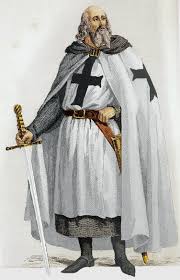
Jacques de Molay (c. 1243 – March 18, 1314) is one of history’s most enigmatic figures, remembered primarily as the last Grand Master of the Knights Templar, a medieval Christian military order that became immensely powerful and influential during the Crusades. De Molay’s life and death are emblematic of the rise and fall of the Templars, whose legacy continues to capture the imagination of historians, conspiracy theorists, and popular culture alike. This article delves into the life of Jacques de Molay, exploring his rise to fame, the controversies surrounding the Templars, and the events leading up to his tragic demise.
Early Life and Background
Jacques de Molay was born around 1243 in Molay, a region in the vicinity of Besançon, in what is now eastern France. Although the exact details of his early life are obscure, it is generally accepted that he hailed from a noble family, with his father, Jean de Longwy, being a minor nobleman. His mother was reportedly the daughter of the King of Rahon, further entrenching him in the aristocratic circles of the time.
De Molay’s entry into the Templar Order occurred around 1265 when he was initiated at the Templar Commandery of Beaune. The ceremony was conducted by Amalric de Ruppe and Ymbert de Peraudo, marking the beginning of a life dedicated to the Templars’ mission. At the time, the Templars were at the height of their power, known for their military prowess, vast wealth, and significant influence across Europe and the Holy Land.
Rise within the Templar Order
Jacques de Molay’s early years within the Templar Order are shrouded in mystery, but it is known that by 1270, he had already traveled to the Holy Land, then referred to as Outremer. This period was marked by the Templars’ active participation in the Crusades, defending Christian territories against Muslim forces. De Molay’s experiences in the Holy Land would have been formative, exposing him to the challenges and responsibilities of leading men in both military and spiritual capacities.
In 1291, the fall of Acre, the last significant Crusader stronghold in the Holy Land, marked a turning point for the Templars and the broader Christian presence in the region. Jacques de Molay, who was in Cyprus at the time, did not participate in the defense of Acre, a fact that would later contribute to his sense of disappointment with the Templars’ situation. The loss of Acre signaled the end of the Crusader states, forcing the Templars to retreat to their European strongholds.
In 1294, Jacques de Molay was elected as the 23rd Grand Master of the Knights Templar. His election came during a period of decline for the Order, as it struggled to find a new purpose following the loss of its territories in the Holy Land. As Grand Master, de Molay sought to reform the Order and restore its former glory. He recognized the need for the Templars to adapt to the changing political and military landscape of Europe, advocating for new strategies and alliances to secure the Order’s future.
The Templar Controversy and Arrest
Despite Jacques de Molay’s efforts to revitalize the Templars, the Order’s immense wealth and influence had begun to attract the envy and suspicion of European monarchs, particularly King Philip IV of France, known as Philip the Fair. Philip IV, who was deeply in debt to the Templars, saw an opportunity to eliminate his financial obligations and seize the Order’s assets by accusing them of heresy and other crimes.
On Friday, October 13, 1307, a date that has since become synonymous with misfortune, King Philip ordered the arrest of Jacques de Molay and many other Templars across France. The Templars were charged with a wide range of offenses, including heresy, idolatry, blasphemy, and financial corruption. The accusations were largely based on confessions extracted under torture, a practice common in the medieval inquisitorial system.
Jacques de Molay was subjected to brutal torture, and under duress, he confessed to some of the charges, including denying Christ and spitting on the cross during the Templar initiation rituals. However, de Molay later recanted his confession, declaring that it had been forced out of him through unbearable physical pain. His retraction did little to change his fate, as the political machinations of King Philip and the papacy had already set the stage for the Templars’ destruction.
The Trial and Execution
The trial of Jacques de Molay and the Templars was a prolonged and complex affair, influenced heavily by the power struggle between King Philip IV and Pope Clement V. The pope, who was residing in Avignon at the time and heavily influenced by Philip, initially sought to absolve the Templars and reform the Order. However, the political pressure exerted by the French king proved too great, leading Clement V to reluctantly dissolve the Order in 1312.
De Molay, along with several other senior Templar leaders, was imprisoned for several years during the trial. The proceedings were characterized by numerous inconsistencies, with many Templars retracting their confessions when not under torture. Despite this, the Order was formally suppressed, and its vast wealth was transferred to other religious orders, though much of it ended up in the hands of the French crown.
On March 18, 1314, after years of imprisonment, Jacques de Molay was sentenced to death by burning at the stake. Alongside him was Geoffrey de Charney, the Preceptor of Normandy, who had also retracted his confession. The execution took place on the Île de la Cité in Paris, near the Cathedral of Notre-Dame. As the flames consumed him, de Molay is said to have maintained his innocence, cursing both King Philip IV and Pope Clement V, summoning them to appear before God’s judgment within the year. Remarkably, both men died within the same year, giving rise to the legend of de Molay’s curse.
Legacy and Impact
Jacques de Molay’s death marked the end of the Knights Templar as a powerful and influential force in medieval Europe. However, it also marked the beginning of the Templars’ transformation from a historical reality into a symbol of mystery, conspiracy, and legend. The circumstances surrounding the Order’s downfall and de Molay’s dramatic execution fueled speculation and myth-making, which has persisted for centuries.
One of the most enduring aspects of de Molay’s legacy is his association with the curse that allegedly brought about the deaths of King Philip IV and Pope Clement V. This story became particularly popular during the French Revolution, when it was suggested that the execution of King Louis XVI was the final fulfillment of the Templar curse, symbolizing the end of the French monarchy.
In the modern era, Jacques de Molay has been immortalized in various cultural and historical contexts. The DeMolay International, a Masonic youth organization founded in the United States in 1919, is named in his honor. The organization emphasizes values such as leadership, honor, and service, drawing inspiration from the perceived virtues of de Molay and the Templars.
De Molay has also been the subject of numerous books, films, and songs that explore the mysteries of the Templars and their enduring influence on history. For example, the German heavy metal band Grave Digger recorded a song titled “The Curse of Jacques” that recounts the story of de Molay’s curse and its impact on the French monarchy.
Historical Context and Nuances
The story of Jacques de Molay cannot be fully understood without considering the broader historical context of his time. The Templars were founded in the early 12th century as a military and religious order dedicated to protecting Christian pilgrims in the Holy Land. Over the centuries, they accumulated vast wealth and influence, establishing a network of fortifications, banks, and estates across Europe and the Middle East.
The decline of the Templars was closely linked to the changing political and religious landscape of medieval Europe. By the late 13th century, the Crusades had largely failed, and the Christian presence in the Holy Land was in terminal decline. The Templars, who had been created to serve the Crusades, found themselves without a clear purpose, leading to internal divisions and external scrutiny.
The rise of powerful monarchs like Philip IV of France further complicated the Templars’ position. Philip, who was known for his ruthlessness and ambition, saw the Templars as both a financial threat and a political obstacle. His decision to move against the Order was motivated by a desire to eliminate his debts and consolidate his power, a goal he achieved through manipulation of the church and the use of torture to extract confessions.
Pope Clement V, though nominally the head of the church, was effectively under Philip’s control, as the papacy had been relocated to Avignon in what became known as the “Babylonian Captivity.” This situation allowed Philip to exert considerable influence over ecclesiastical matters, including the trial of the Templars.
Conclusion
Jacques de Molay’s life and death represent a pivotal moment in medieval history, marking the end of one of the most powerful and enigmatic institutions of the time. His legacy is a complex tapestry of historical fact, legend, and cultural symbolism, reflecting the enduring fascination with the Templars and their tragic downfall. De Molay’s story continues to captivate and inspire, serving as a reminder of the perils of power, the fragility of justice, and the enduring quest for truth in the face of persecution.
As we look back on the life of Jacques de Molay, we are reminded of the ways in which history is shaped not only by the deeds of great men but also by the myths and legends that grow around them. His legacy, preserved through centuries of storytelling, remains a powerful testament to the enduring allure of the Knights Templar and their place in the annals of history.


