
Introduction:
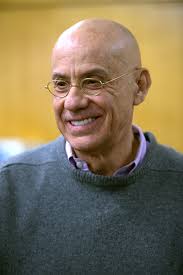
James Ellroy, born Lee Earle Ellroy on March 4, 1948, in Los Angeles, California, is one of America’s most influential and controversial crime writers. Best known for his dark and gritty depictions of Los Angeles, Ellroy has become synonymous with the noir genre, crafting intricate narratives that explore the underbelly of American society. With a career spanning over four decades, Ellroy has left an indelible mark on the literary world, producing works that have been adapted into major films and earning a reputation as a master of crime fiction. This article delves into the life, fame, and highlights of James Ellroy, exploring his journey from a troubled youth in Los Angeles to a literary icon.
Early Life and Tragedy:
James Ellroy’s early life was marked by tragedy and turmoil, events that would profoundly shape his writing. Born in Los Angeles to Armand and Geneva Hilliker Ellroy, his parents divorced when he was young, and he moved with his mother to El Monte, California. In 1958, when Ellroy was just ten years old, his mother was brutally murdered in a crime that remains unsolved to this day. This traumatic event left a lasting scar on Ellroy, fueling his obsession with crime, the Los Angeles Police Department (LAPD), and the darker aspects of human nature.
The same year as his mother’s murder, Ellroy’s father gave him a copy of The Badge by Jack Webb, a book about the LAPD. This gift, coupled with the unresolved murder of his mother, ignited a fascination with crime that would become a central theme in Ellroy’s work. Another formative influence was the infamous “Black Dahlia” case, the unsolved 1947 murder of Elizabeth Short, which occurred near where Ellroy lived as a child. These events would later serve as inspiration for some of his most famous works.
Descent into Chaos:
Ellroy’s adolescence and early adulthood were marked by a descent into chaos. After dropping out of high school, Ellroy joined the U.S. Army in 1965, but his military career was short-lived. He faked a nervous breakdown to secure a discharge, after which he spiraled into a life of petty crime, drug and alcohol abuse, and homelessness. Ellroy spent several years living on the streets of Los Angeles, committing burglaries and other minor crimes to support his habits. He was arrested multiple times and spent periods in county jail.
Ellroy’s lifestyle during this period was self-destructive, and he came close to death on several occasions due to pneumonia and other health issues. However, in 1975, he decided to turn his life around. Quitting drugs and alcohol, Ellroy began to channel his experiences and obsessions into writing. This marked the beginning of his journey as a crime novelist.
Literary Beginnings:
Ellroy’s first novel, Brown’s Requiem, was published in 1981. The book, which draws heavily on Ellroy’s experiences as a caddie and his familiarity with the seedier side of Los Angeles, introduced readers to his signature style: a blend of hard-boiled detective fiction and psychological complexity. Although Brown’s Requiem was not a commercial success, it established Ellroy as a writer to watch in the crime genre.
Over the next few years, Ellroy published several more novels, including Clandestine (1982) and the Lloyd Hopkins Trilogy, which includes Blood on the Moon (1984), Because the Night (1984), and Suicide Hill (1985). These early works garnered attention for their raw, unflinching portrayal of violence and corruption, as well as Ellroy’s unique narrative voice. However, it was his next novel that would catapult him to fame.
The Black Dahlia and Breakthrough Success:
In 1987, Ellroy published The Black Dahlia, a fictionalized account of the notorious 1947 murder of Elizabeth Short. The novel was the first in what would become known as the “L.A. Quartet,” a series of four novels set in 1940s and 1950s Los Angeles that explore the city’s criminal underworld, police corruption, and social decay. The Black Dahlia was a critical and commercial success, earning Ellroy widespread acclaim and solidifying his reputation as one of the leading voices in crime fiction.
The Black Dahlia was followed by The Big Nowhere (1988), L.A. Confidential (1990), and White Jazz (1992), each of which delved deeper into the dark, violent world of mid-20th century Los Angeles. L.A. Confidential, in particular, became a cultural phenomenon, thanks in part to its 1997 film adaptation directed by Curtis Hanson. The film, starring Kevin Spacey, Russell Crowe, and Kim Basinger, won two Academy Awards and introduced Ellroy’s work to a global audience.
My Dark Places and Exploration of Personal Trauma:
In 1996, Ellroy published My Dark Places, a memoir that represents one of the most personal and revealing works of his career. In this book, Ellroy recounts the murder of his mother and his subsequent investigation into the crime, which remained unsolved. My Dark Places is not only a true crime memoir but also a meditation on grief, guilt, and the impact of unresolved trauma. The book received widespread acclaim for its raw honesty and unflinching exploration of the darker aspects of Ellroy’s psyche.
My Dark Places marked a turning point in Ellroy’s career, as he began to explore more autobiographical themes in his work. This shift is evident in his later novels, which continue to blend fact and fiction while delving into the complexities of human nature and the American experience.
American Tabloid and the Underworld USA Trilogy:
Following the success of the L.A. Quartet, Ellroy embarked on a new series of novels known as the “Underworld USA Trilogy.” The first book in the series, American Tabloid (1995), is a sprawling, ambitious work that examines the intersection of crime, politics, and power in post-war America. Set in the years leading up to the assassination of President John F. Kennedy, American Tabloid presents a revisionist history of the era, blending real-life events and figures with Ellroy’s fictional characters.
American Tabloid was followed by The Cold Six Thousand (2001) and Blood’s a Rover (2009), both of which continue the trilogy’s exploration of America’s dark underbelly. These novels are characterized by their dense, staccato prose, complex plotlines, and a cast of morally ambiguous characters. The Underworld USA Trilogy cemented Ellroy’s reputation as a master of historical crime fiction and a chronicler of America’s most turbulent decades.
Film Adaptations and Cultural Impact:
James Ellroy’s work has had a significant impact on popular culture, particularly through film adaptations of his novels. In addition to the critically acclaimed L.A. Confidential, Ellroy’s novel The Black Dahlia was adapted into a film in 2006, directed by Brian De Palma. Although the film received mixed reviews, it brought renewed attention to Ellroy’s work and introduced a new generation of readers to his dark, complex narratives.
Ellroy’s influence extends beyond literature and film. His depiction of Los Angeles as a city of corruption, violence, and moral decay has become a defining element of the noir genre, influencing countless writers, filmmakers, and artists. Ellroy’s style—characterized by its terse, rhythmic prose, intricate plotting, and psychological depth—has also inspired a generation of crime writers.
Personal Life and Legacy:
Despite his success, James Ellroy has remained a deeply private and enigmatic figure. He describes himself as a “narcissist” and has often spoken about his intense focus on his work to the exclusion of almost everything else. Ellroy’s personal life has been marked by both triumph and tragedy, including a difficult second marriage to author Helen Knode and a return to Los Angeles after their divorce in 2006.
Ellroy’s legacy as a writer is secure. He is widely regarded as one of the greatest crime novelists of all time, and his influence on the genre is profound. His exploration of the dark side of the American dream, his unflinching portrayal of violence and corruption, and his innovative narrative techniques have left an indelible mark on modern literature.
Conclusion:
James Ellroy’s life and career are a testament to the power of literature to explore and expose the darker aspects of human nature. From his troubled youth in Los Angeles to his rise as a literary icon, Ellroy has consistently pushed the boundaries of the crime genre, creating works that are both gripping and thought-provoking. His novels, marked by their intricate plots, vivid characters, and unrelenting intensity, have earned him a place among the greats of American literature.
Ellroy’s ability to weave together fact and fiction, history and imagination, has resulted in some of the most compelling and influential crime novels of the past century. Whether through his exploration of Los Angeles in the L.A. Quartet or his examination of America’s political underbelly in the Underworld USA Trilogy, Ellroy has provided readers with a dark, unflinching look at the forces that shape society.
As readers continue to discover and rediscover his work, James Ellroy’s influence on the crime genre and American literature as a whole will undoubtedly endure. His legacy as a master storyteller, a chronicler of the American experience, and a fearless explorer of the human condition is assured.


