
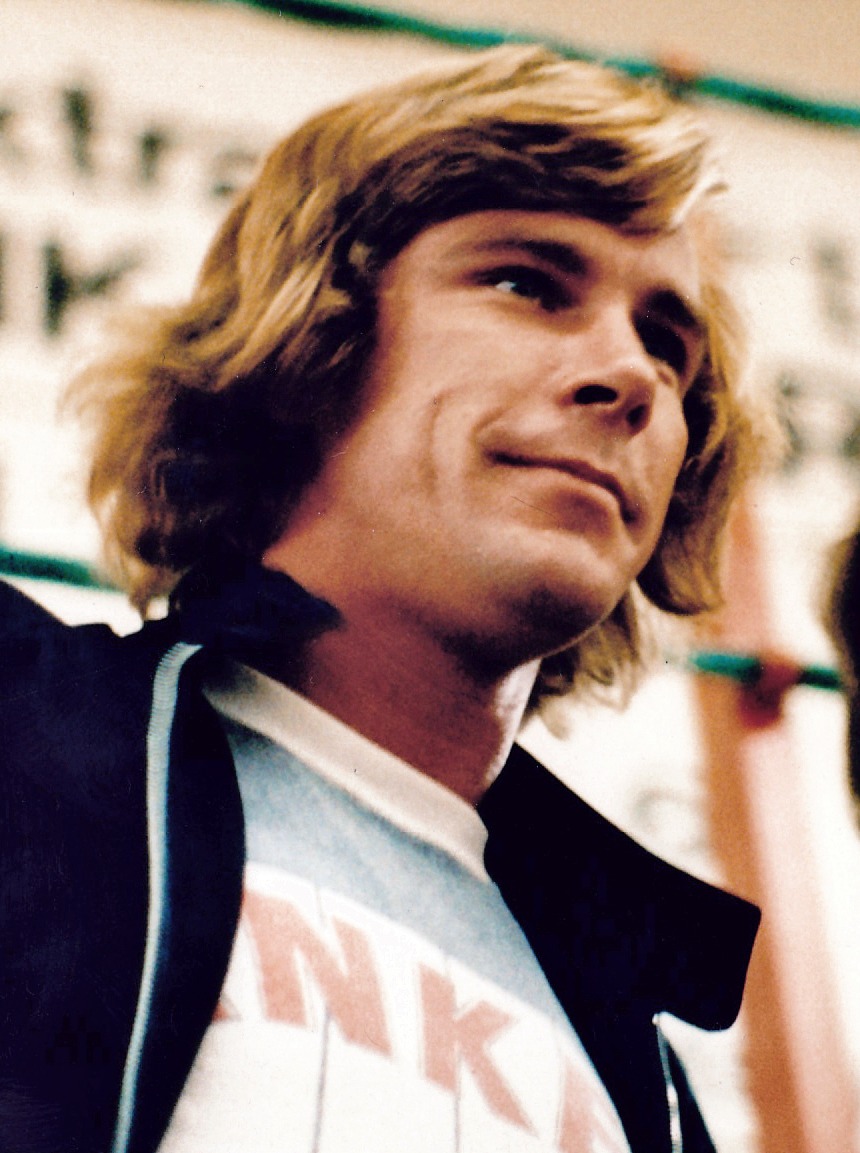
James Hunt, born on August 29, 1947, in London, is remembered as one of the most charismatic and controversial figures in Formula One racing. His life, both on and off the track, was a whirlwind of excitement, danger, and notoriety. Known for his fearless driving style, flamboyant personality, and intense rivalry with Niki Lauda, Hunt’s legacy in the world of motorsport is enduring and complex. This article delves into the life and career of James Hunt, exploring his rise to fame, the challenges he faced, and his lasting impact on the sport.
Early Life and Background
James Simon Wallis Hunt was born into a well-off family in London. His father, Wallis Hunt, was a successful stockbroker, and his mother, Sue Hunt, was a homemaker. The family lived a comfortable life in the Surrey suburb of Cheam before moving to Sutton when James was 11 years old. Hunt attended Westerleigh School in Hastings and later the Wellington College in Berkshire, where he initially aspired to become a doctor. However, his rebellious nature and growing interest in sports soon led him down a different path.
As a young man, Hunt was an accomplished athlete, excelling in cricket, soccer, and tennis. His competitive spirit and love for speed eventually drew him to the world of motorsport. His introduction to racing came through participation in amateur events, particularly those featuring Mini cars. Despite a shaky start—his first race at Snetterton was aborted due to an irregularity with his car—Hunt quickly showed promise as a driver.
Early Racing Career: The Path to Formula One
Hunt’s formal racing career began in 1968 when he joined Formula Ford, driving a Russell-Alexis Mk 14. Despite technical issues during his first race, he finished fifth and soon earned his first victory at Lydden Hill. This success propelled him into Formula Three the following year, where he drove a Merylin Mk11A. Hunt’s aggressive driving style and consistent top finishes quickly caught the attention of teams in higher racing categories.
In 1973, Hunt made his Formula One debut with the March team at the Monaco Grand Prix. Starting 18th on the grid, he impressively finished eighth. After a brief hiatus, he returned to the French Grand Prix, securing a surprising sixth-place finish. His consistent performance earned him a permanent spot in the British Grand Prix, where he recorded the fastest lap and finished fourth. By the end of the season, Hunt had achieved two podium finishes, marking him as a rising star in the world of Formula One.
The Hesketh Years: Building a Reputation
James Hunt’s reputation as a talented yet unconventional driver grew during his time with the Hesketh Racing team. Founded by the wealthy and eccentric Lord Hesketh, the team was known for its lavish lifestyle and disregard for traditional motorsport norms. In 1974, Hunt’s first full season with Hesketh, he secured three podium finishes, solidifying his position as a competitive driver in the Formula One circuit.
The following year, Hunt claimed his first Formula One victory at the Dutch Grand Prix in Zandvoort. His success, combined with his off-track antics and playboy lifestyle, earned him a significant following among fans and the media. Hunt’s brash personality, often described as anti-establishment, set him apart from other drivers of the era, making him a unique and polarizing figure in the sport.
The McLaren Years: A Championship and Rivalry with Niki Lauda
Hunt’s move to McLaren in 1976 marked the peak of his career. That year, he won six Grand Prix races and engaged in one of the most famous rivalries in Formula One history with Ferrari’s Niki Lauda. The 1976 season was a dramatic one, with Lauda dominating the early races until a horrific crash at the German Grand Prix left him with life-threatening injuries. Lauda’s miraculous recovery and return to racing just six weeks later set the stage for a thrilling battle for the championship.
The season culminated in the Japanese Grand Prix at Fuji, where torrential rain created treacherous conditions. Lauda, deeming the track too dangerous, withdrew from the race, leaving the door open for Hunt to clinch the title. Despite tire issues that saw him drop back during the race, Hunt managed to finish third, securing the World Championship by a single point.
Hunt’s victory was celebrated as one of the most exciting and unpredictable in Formula One history. However, it also marked the beginning of the end of his racing career. The intense pressure and public scrutiny that came with being a world champion took a toll on Hunt, both mentally and physically.
Post-Championship Years: Decline and Retirement
Following his championship win, Hunt continued to race for McLaren but struggled to replicate his previous success. In 1977, he won three races but failed to mount a serious challenge for the title. His performances became increasingly inconsistent, and by 1978, his results were disappointing. A notable incident during the 1978 Italian Grand Prix at Monza saw Hunt accuse fellow driver Riccardo Patrese of causing the crash that led to the death of Ronnie Peterson. This accusation sparked controversy, and later video evidence suggested that multiple drivers, including Hunt himself, bore responsibility.
In 1979, Hunt joined the Wolf Racing team but found little success. Frustrated with the sport and disillusioned by the increasing importance of technology over driver skill, Hunt retired from Formula One after the Monaco Grand Prix. His decision to leave the sport was seen by many as a result of his declining motivation and the toll that years of hard living had taken on his physical and mental health.
Life After Racing: Commentary and Media Appearances
After retiring from racing, James Hunt transitioned to a career as a television commentator. He was recruited by Jonathan Martin, the head of BBC Sports, to co-host the “Grand Prix” program alongside Murray Walker. Hunt’s candid, often critical commentary style earned him a new following, as well as occasional backlash from the motorsport community. His sharp wit and no-nonsense approach to broadcasting made him a popular figure, though his personal struggles with alcohol and erratic behavior sometimes overshadowed his professional achievements.
Hunt’s media career also included a brief appearance in the 1979 slapstick comedy film The Plank and a series of advertisements for Texaco Havoline. Despite his growing presence in the media, Hunt’s post-racing life was marred by personal difficulties, including financial troubles and struggles with substance abuse.
Personal Life and Legacy
James Hunt’s personal life was as tumultuous as his racing career. Known for his hedonistic lifestyle, Hunt was often in the headlines for his relationships, partying, and extravagant behavior. He was married twice—first to Suzy Miller, who later left him for actor Richard Burton, and then to Sarah Lomax, with whom he had two children. Both marriages ended in divorce, and Hunt’s personal relationships were often strained by his lifestyle and the pressures of his career.
Hunt’s untimely death on June 15, 1993, at the age of 45, shocked the motorsport world. He suffered a heart attack at his home in Wimbledon, London. While the official cause of death was a heart attack, it is widely believed that his years of heavy drinking, smoking, and partying contributed to his early demise.
Despite his relatively short life and career, James Hunt left an indelible mark on the world of Formula One. His 1976 championship victory, his rivalry with Niki Lauda, and his larger-than-life persona have become the stuff of legend. Hunt’s story was immortalized in the 2013 film Rush, directed by Ron Howard, in which actor Chris Hemsworth portrayed the British racing icon. The film renewed interest in Hunt’s life and career, introducing a new generation of fans to his remarkable story.
The Legacy of James Hunt
James Hunt’s legacy in Formula One is complex. He was a driver who, at his best, was capable of extraordinary performances, yet his career was also marked by inconsistency and personal turmoil. Hunt embodied the spirit of the 1970s—a decade of excess, freedom, and rebellion—and his approach to life and racing reflected the era’s ethos.
Hunt’s rivalry with Niki Lauda remains one of the most iconic in the history of motorsport. Their contrasting personalities—Hunt’s flamboyant, carefree attitude versus Lauda’s disciplined, methodical approach—captivated fans and highlighted the diverse nature of Formula One drivers. While Lauda went on to achieve further success in the sport, Hunt’s story serves as a reminder of the human side of racing—the passion, the risks, and the personal sacrifices that come with the pursuit of greatness.
In the years since his death, James Hunt has been celebrated not only as a world champion but also as a symbol of a bygone era of Formula One. His life was a testament to the idea that racing is as much about the people and their stories as it is about the machines on the track. Hunt’s impact on the sport is still felt today, and his legacy continues to inspire both drivers and fans around the world.
Conclusion: Remembering a Legend
James Hunt’s life was a rollercoaster of highs and lows, victories and defeats, both on and off the track. From his early days in Formula Ford to his dramatic 1976 World Championship win, Hunt’s career was marked by excitement, controversy, and a relentless drive to succeed. His rivalry with Niki Lauda, immortalized in popular culture, remains one of the defining moments in Formula One history.
Though his life was cut short, Hunt’s influence on the sport continues to be felt. His personality, style, and approach to racing have left a lasting impression, making him a beloved figure in the annals of motorsport history. James Hunt was more than just a racing driver; he was an icon, a maverick, and a symbol of an era where the thrill of speed and the pursuit of glory were paramount.


