
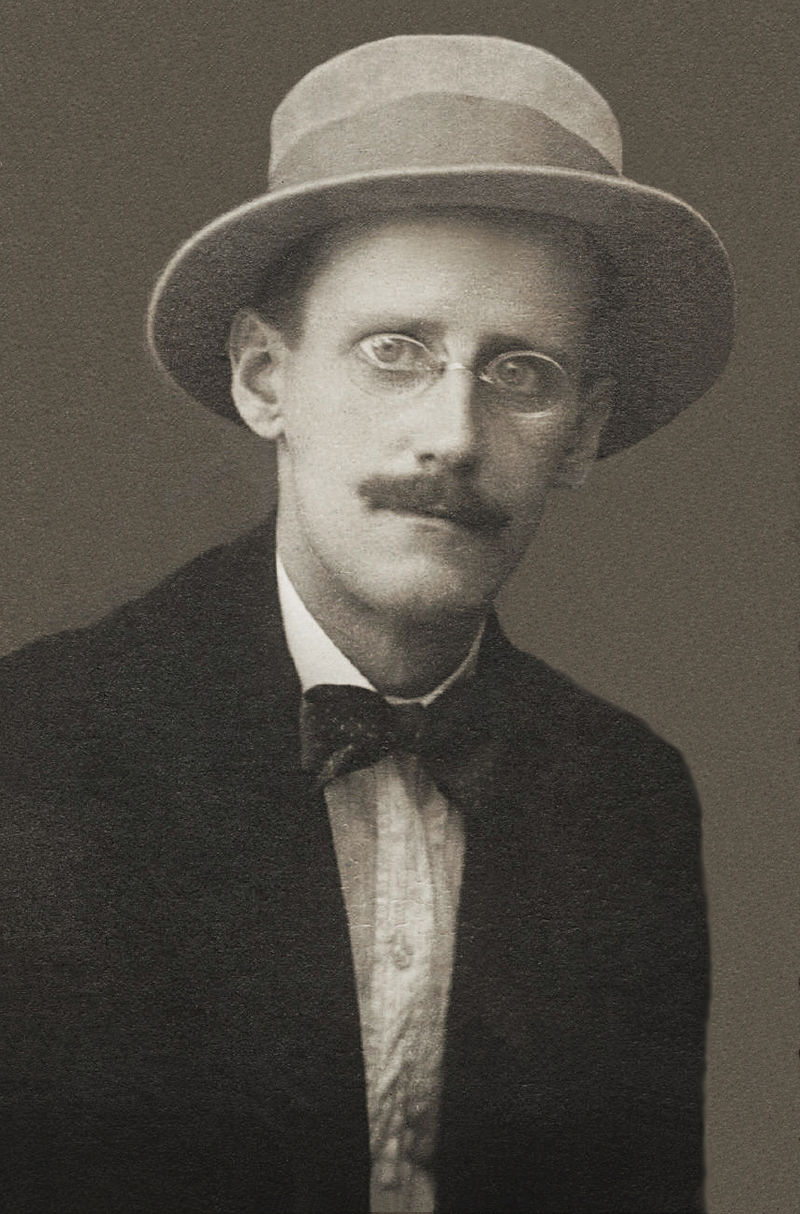
Introduction: The Literary Giant of the 20th Century
James Joyce, born James Augustine Aloysius Joyce on February 2, 1882, in Rathgar, Dublin, is a towering figure in the world of literature. Renowned for his groundbreaking contributions to modernist literature, Joyce’s works continue to be studied, analyzed, and celebrated for their innovation, complexity, and depth. His unique narrative techniques, particularly his pioneering use of stream-of-consciousness, have left an indelible mark on literature, making him one of the most influential authors of the 20th century.
Early Life: A Journey Through Struggles and Education
Joyce was born into a family that was once part of Dublin’s respectable middle class but was gradually slipping into financial ruin. His father, John Stanislaus Joyce, was a talented but imprudent man whose poor financial decisions led the family into poverty. Despite these challenges, Joyce’s early life was steeped in education and culture, thanks in large part to his mother, Mary Jane Murray, who was devoted to the Catholic faith and her children’s education.
Joyce’s early education took place at the prestigious Clongowes Wood College, a Jesuit boarding school. However, due to his family’s financial difficulties, he was forced to leave and later attended the Belvedere College, another Jesuit institution. This Jesuit education left a lasting impression on Joyce, influencing much of his later work, even as he rebelled against the religious dogmas instilled in him during these formative years.
University Years and the Birth of an Iconoclast
Joyce’s academic journey continued at University College Dublin, where he studied modern languages, focusing on English, French, and Italian. It was during his university years that Joyce began to develop the anti-conformist and rebellious spirit that would characterize much of his life and work. He was heavily influenced by the works of Henrik Ibsen, whom he admired for his challenge to societal norms. Joyce even wrote a paper defending Ibsen’s plays, which were considered controversial at the time.
During these years, Joyce began his foray into writing, publishing essays and articles that reflected his growing disillusionment with the Irish society and its provincialism. His dissatisfaction with the narrow-mindedness he perceived in Irish culture would later become a central theme in his work.
Early Works: The Formation of a Literary Genius
In 1904, Joyce began work on an autobiographical essay titled “A Portrait of the Artist,” which would eventually evolve into his first major novel, “A Portrait of the Artist as a Young Man.” This novel, published in 1916, is a coming-of-age story that explores the development of the protagonist, Stephen Dedalus, as he grapples with his identity, religion, and his place in the world. The novel is considered one of Joyce’s most accessible works and serves as an excellent introduction to his narrative style and themes.
During this period, Joyce also began work on “Dubliners,” a collection of short stories that provide a vivid portrait of life in Dublin at the turn of the century. Published in 1914, “Dubliners” is notable for its realism and its unflinching depiction of the paralysis and despair that Joyce saw as endemic to the city’s inhabitants. The collection includes the story “The Dead,” widely regarded as one of the finest short stories in the English language.
Exile: A Life of Wandering
In 1904, Joyce met Nora Barnacle, a young woman from Galway who would become his lifelong partner. That same year, the couple left Ireland, beginning a life of self-imposed exile that would take them to various cities across Europe, including Zurich, Trieste, and Paris. Despite his physical distance from Ireland, Joyce’s homeland remained a central theme in his work, particularly in “Ulysses,” his most famous and controversial novel.
During his years in Trieste, Joyce worked as an English teacher and continued to write. It was also in Trieste that he met Italo Svevo, an Italian writer whose work Joyce greatly admired. The two became close friends, and Joyce’s encouragement played a crucial role in Svevo’s literary career.
“Ulysses”: A Revolution in Literature
“Ulysses,” published in 1922, is Joyce’s magnum opus and one of the most important works of modernist literature. The novel follows the lives of three central characters—Leopold Bloom, his wife Molly, and Stephen Dedalus—over the course of a single day, June 16, 1904, in Dublin. The structure of the novel is modeled on Homer’s “Odyssey,” with each chapter corresponding to an episode from the ancient Greek epic.
What sets “Ulysses” apart is Joyce’s innovative use of stream-of-consciousness, a narrative technique that attempts to capture the flow of thoughts and sensations experienced by the characters in real-time. The novel’s dense allusions, complex structure, and experimental prose make it a challenging but rewarding read. “Ulysses” is often hailed as a masterpiece for its ambitious scope and its profound exploration of the human condition.
However, the novel’s explicit content led to legal challenges and censorship. “Ulysses” was banned in several countries, including the United States and the United Kingdom, due to its perceived obscenity. Despite these challenges, or perhaps because of them, the novel’s reputation grew, and it is now considered a landmark in literary history.
Later Years: “Finnegans Wake” and Declining Health
After the publication of “Ulysses,” Joyce began work on his final novel, “Finnegans Wake,” a book that would take him nearly 17 years to complete. Published in 1939, “Finnegans Wake” is perhaps Joyce’s most experimental and enigmatic work. The novel is written in a complex, multilayered language that blends English with various other languages, creating a dense, almost impenetrable text.
“Finnegans Wake” is a dream-like narrative that defies conventional plot structures and linear storytelling. Instead, it presents a cyclical view of history, inspired in part by the work of the Italian philosopher Giambattista Vico. The novel’s unconventional style has made it a subject of intense scholarly debate, with interpretations of its meaning varying widely.
During the years spent working on “Finnegans Wake,” Joyce’s personal life was marked by hardship. His eyesight, which had been deteriorating for years, worsened, leading to multiple surgeries. Additionally, his daughter Lucia’s mental health began to decline, which was a source of great distress for Joyce.
Legacy: A Literary Pioneer
James Joyce passed away on January 13, 1941, in Zurich, Switzerland, after undergoing surgery for a perforated ulcer. Despite the challenges and controversies he faced during his lifetime, Joyce’s influence on literature is immeasurable. His innovative narrative techniques, his exploration of the human psyche, and his unflinching portrayal of life in all its complexity have made him a central figure in the canon of Western literature.
Joyce’s work continues to inspire writers, scholars, and readers around the world. His novels are studied in universities, and his life is the subject of countless biographies and academic papers. Bloomsday, celebrated annually on June 16th, honors the events of “Ulysses” and serves as a testament to the enduring power of Joyce’s writing.
Final Thoughts: The Enduring Appeal of James Joyce
James Joyce’s life and work embody the spirit of modernism—a break from tradition, an embrace of experimentation, and a deep exploration of the human condition. His ability to merge the personal with the universal, to find the epic in the mundane, and to push the boundaries of what literature can achieve, have ensured his place as one of the greatest writers of all time.
In an age where literature was undergoing radical changes, Joyce stood at the forefront, challenging readers to think differently about the stories we tell and how we tell them. His works may be difficult, even intimidating, but they are also rewarding, offering insights into the complexities of life and the possibilities of language.
As we continue to study and celebrate his contributions, Joyce’s legacy as a literary pioneer remains secure. His works are not just relics of a bygone era but continue to speak to readers today, reminding us of the power of literature to capture the essence of the human experience.


