
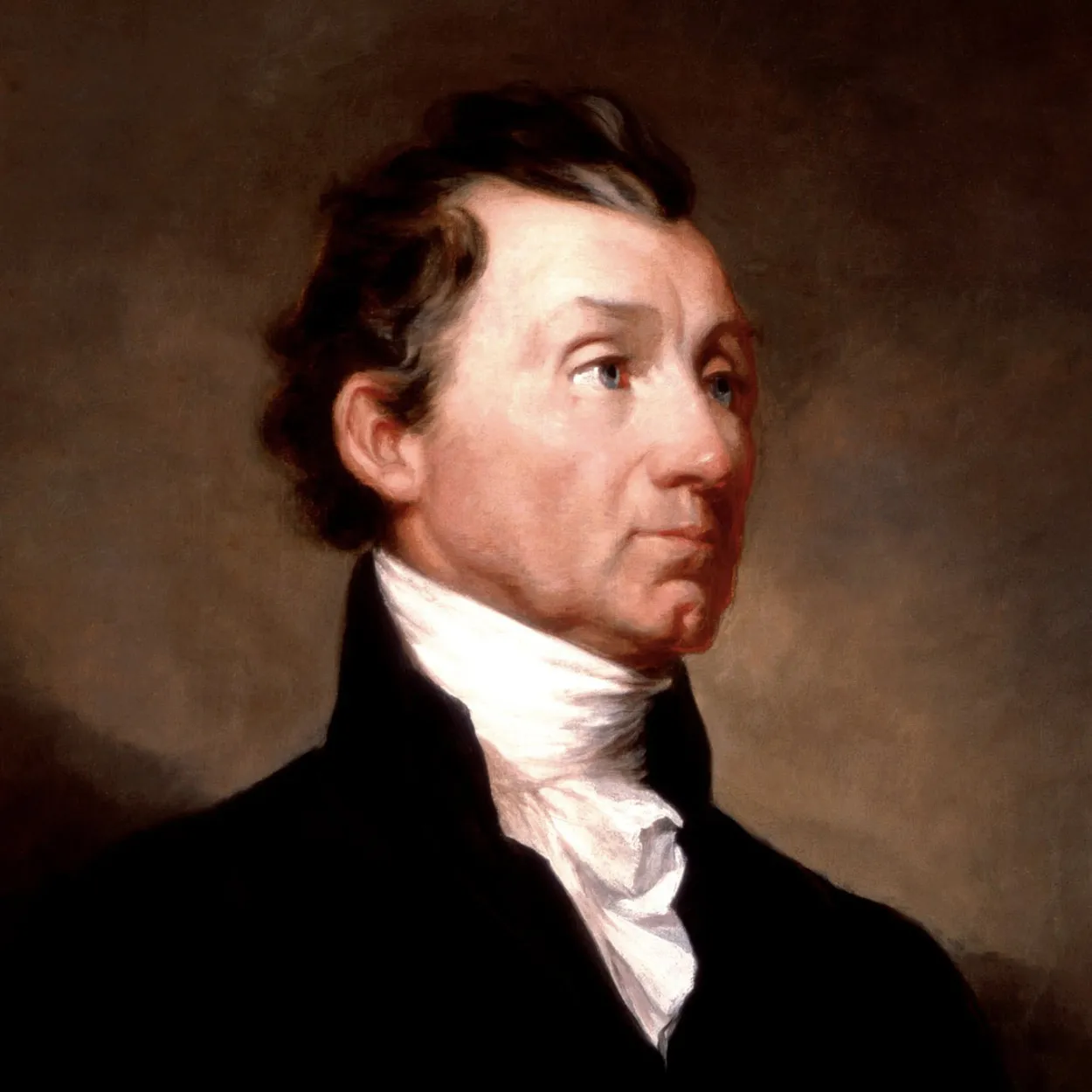
James Monroe, the fifth President of the United States, holds a significant place in American history. Born on April 28, 1758, in Westmoreland County, Virginia, Monroe was destined to play a pivotal role in shaping the nation’s early political landscape. His life, marked by military service, diplomatic achievements, and political leadership, reflects the complexities and challenges of a young republic finding its footing in a turbulent world.
Early Life and Education
James Monroe was born into a prosperous family of planters. His father, Spence Monroe, and his mother, Elizabeth Jones, provided him with a comfortable upbringing. Monroe’s early education was at the Campbelltown Academy, followed by studies at the College of William and Mary. His academic pursuits were abruptly interrupted in 1776 when he left school to join the Continental Army during the American Revolution.
Monroe’s decision to fight for independence at a young age demonstrated his deep commitment to the nascent nation. He served with distinction, participating in numerous battles and rising to the rank of officer. His military experience not only solidified his dedication to the American cause but also shaped his views on leadership and governance.
Early Political Career and Influences
After the war, Monroe studied law under the tutelage of Thomas Jefferson, who was then the Governor of Virginia. Jefferson, a key figure in the American Revolution and the third President of the United States, became Monroe’s mentor. This relationship profoundly influenced Monroe’s political philosophy, aligning him with the Democratic-Republican Party, which advocated for states’ rights and a limited federal government.
Monroe began his political career in 1782 when he was elected to the Virginia House of Delegates. Shortly thereafter, he served in the Continental Congress, where he contributed to shaping the nation’s early legislative framework. Despite his growing influence, Monroe was notably absent from the Constitutional Convention of 1787, as he believed the proposed Constitution infringed upon the rights of individual states.
Diplomatic Endeavors
Monroe’s diplomatic career was as illustrious as his domestic political work. In 1794, President George Washington appointed Monroe as the U.S. Minister to France. His mission was to strengthen relations with the French Republic, which was then in the throes of revolutionary change. Monroe’s pro-French stance, however, led to his recall in 1796 due to concerns that he was overly sympathetic to the French revolutionary cause.
Monroe returned to Virginia, where he was elected governor in 1799. His tenure as governor was marked by efforts to strengthen the state’s defenses and manage its finances. However, Monroe’s diplomatic skills were once again called upon during the presidency of Thomas Jefferson. In 1803, Monroe was sent to France as a special envoy, where he successfully negotiated the Louisiana Purchase, a monumental land acquisition that doubled the size of the United States.
Following this success, Monroe served as the U.S. Minister to the United Kingdom from 1803 to 1807. His time in London was challenging, as tensions between the United States and Britain were high, leading eventually to the War of 1812. Despite the difficulties, Monroe’s diplomatic efforts laid the groundwork for future negotiations and helped to maintain a precarious peace.
The Presidency and Monroe Doctrine
James Monroe’s presidency, spanning from 1817 to 1825, is often remembered for the “Era of Good Feelings,” a period of national unity following the War of 1812. However, his administration was far from a mere footnote in American history. Monroe’s leadership was characterized by significant events and policies that shaped the nation’s future.
One of Monroe’s most enduring legacies is the Monroe Doctrine, articulated in 1823. This doctrine asserted that the Western Hemisphere was off-limits to European colonization and interference. The Monroe Doctrine was a bold declaration of American influence in the Americas, reflecting the nation’s growing confidence on the international stage. It was a direct response to European powers, particularly Spain and France, who were seeking to reclaim or expand their territories in Latin America.
Monroe’s doctrine was also a response to Russian expansion in the Pacific Northwest. By clearly stating that any further colonization efforts by European nations would be viewed as acts of aggression, Monroe positioned the United States as the protector of newly independent Latin American states. The Monroe Doctrine became a cornerstone of American foreign policy, shaping U.S. relations with its southern neighbors for generations.
Domestic Achievements and Challenges
Domestically, Monroe’s presidency was marked by the Missouri Compromise of 1820, a critical piece of legislation that attempted to balance the interests of free and slave states. The compromise allowed Missouri to enter the Union as a slave state while admitting Maine as a free state, maintaining the balance of power in the Senate. It also established a geographical line across the Louisiana Territory, north of which slavery was prohibited.
The Missouri Compromise was a temporary solution to the growing sectional tensions between the North and the South. While it preserved the Union for a time, it also highlighted the deep divisions over slavery that would eventually lead to the Civil War.
Monroe’s administration also saw the acquisition of Florida from Spain in 1819. This purchase was part of Monroe’s broader strategy to secure American borders and expand the nation’s territory. The Adams-Onís Treaty, which formalized the acquisition, was a significant diplomatic achievement, solidifying U.S. control over the southeastern region of the continent.
Later Life and Legacy
After serving two terms as president, James Monroe retired from public life in 1825. He spent his remaining years in relative obscurity, although he remained active in advising his successors on foreign policy matters. Monroe faced financial difficulties in his later years, largely due to the expenses incurred during his long public service.
James Monroe passed away on July 4, 1831, at the age of 73. His death, coinciding with the anniversary of the Declaration of Independence, was seen as a fitting tribute to a man who had dedicated his life to the service of his country.
Monroe’s legacy is often overshadowed by other Founding Fathers, but his contributions to the early republic were significant. The Monroe Doctrine, in particular, has had a lasting impact on American foreign policy, influencing the nation’s approach to international relations for centuries.
Historical Context and Influence
Understanding James Monroe’s life and presidency requires placing him within the broader context of early American history. Monroe’s career spanned a period of profound change and growth for the United States. From the Revolutionary War to the early 19th century, the nation transitioned from a collection of colonies to an emerging world power.
Monroe’s contributions to this transformation were substantial. His military service during the Revolution, diplomatic successes in Europe, and steady leadership as president all played a role in shaping the United States during its formative years. His ability to navigate complex international and domestic challenges demonstrated his skill as a statesman and his deep commitment to the principles of the American Revolution.
Moreover, Monroe’s presidency helped to define the role of the United States in the world. The Monroe Doctrine, with its emphasis on limiting European influence in the Western Hemisphere, set the stage for future American interventions in Latin America. It also reflected the growing sense of American exceptionalism, the belief that the United States had a unique role to play in the world as a champion of freedom and democracy.
Conclusion
James Monroe’s life is a testament to the complexities of leadership in a young republic. His contributions to American history, from his service in the Revolutionary War to his formulation of the Monroe Doctrine, reflect a deep commitment to the nation’s ideals and a keen understanding of the challenges it faced. While often overshadowed by his more famous contemporaries, Monroe’s legacy endures in the policies he shaped and the nation he helped to build.


