
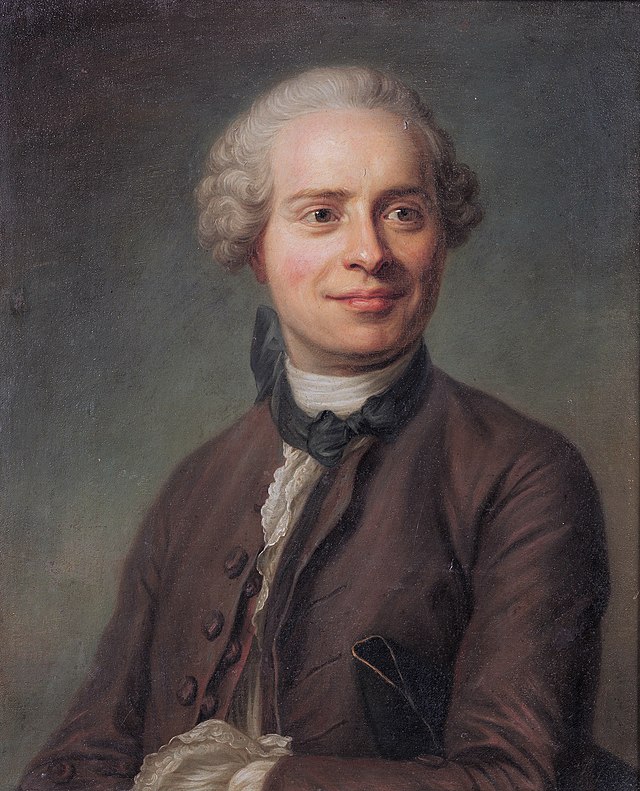
Jean Baptiste Le Rond d’Alembert is one of the most fascinating figures of the 18th century, known for his contributions to mathematics, physics, philosophy, and the arts. His life and work left an indelible mark on the Enlightenment era, and his legacy continues to influence modern thought. This article delves into the life of d’Alembert, exploring his origins, major achievements, and the historical context that shaped his remarkable career.
Early Life and Background
Jean Baptiste Le Rond d’Alembert was born on November 16, 1717, in Paris, under circumstances that were both mysterious and tragic. His birth was the result of a clandestine relationship between the Marquise De Tencin and the French general Louis-Camus Destouches. Due to the social stigma surrounding illegitimate children, his mother abandoned him on the steps of the Church of Saint-Jean-Le Rond in Paris, from which he derived his name.
Despite this inauspicious beginning, d’Alembert was fortunate to be taken in by a glassmaker and his wife, who provided him with a stable and loving environment. His biological father, although absent, secretly supported his education financially. This support enabled d’Alembert to attend the prestigious Collège des Quatre Nations, where he received a comprehensive education in the arts, philosophy, theology, and, most notably, mathematics.
Academic Achievements and Scientific Contributions
D’Alembert’s intellectual prowess was evident from a young age. At just eighteen, he graduated from the Faculté des Arts in 1735. His early work focused on mathematics, and in 1739, he made his first significant mark by identifying errors in a classic mathematical text, L’analyse démontrée. This critique caught the attention of the Académie des Sciences, setting the stage for his future success.
In 1741, at the age of twenty-four, d’Alembert was elected to the Académie des Sciences, a remarkable achievement that highlighted his growing reputation as a mathematician. His work during this period laid the foundation for what would become known as the D’Alembert’s Principle, a cornerstone in the field of dynamics. His Traité de Dynamique (1743) further established him as a leading figure in the scientific community.
D’Alembert’s contributions were not limited to mathematics. His research extended into fluid mechanics, where his 1744 work, Mémoire sur le refraction des corps solides, introduced the Paradox of d’Alembert, a concept that remains a topic of discussion in modern physics. Additionally, his studies in astronomy led to significant advancements, such as his work on the precession of the equinoxes and the nutation of the Earth’s axis.
The Encyclopédie and Philosophical Endeavors
Beyond his scientific achievements, d’Alembert was a central figure in the Enlightenment, contributing significantly to the Encyclopédie, a monumental project that aimed to compile and disseminate knowledge across various fields. Collaborating with Denis Diderot, d’Alembert served as a co-editor and wrote numerous articles on mathematics and physics. His Discours Préliminaire, an introduction to the Encyclopédie, is considered one of the most important documents of the Enlightenment, outlining the philosophical principles that guided the project.
However, d’Alembert’s relationship with the Encyclopédie was not without its challenges. In 1759, after several disagreements with Diderot and other contributors, he decided to leave the project. Despite this, his influence on the work was profound, and his contributions helped shape the intellectual landscape of the time.
D’Alembert’s philosophical work extended beyond the Encyclopédie. He engaged in debates with other prominent thinkers of the era, including Jean-Jacques Rousseau. Their exchange of letters, particularly regarding the role of the arts in society, provides valuable insights into the intellectual climate of the 18th century.
Later Life and Legacy
As d’Alembert’s fame grew, he was invited to join various prestigious institutions, including the Académie Française and the Berlin Academy. Although he declined an offer to become the President of the Berlin Academy, his international reputation continued to soar. His refusal was partly motivated by his desire to avoid political conflicts and maintain his focus on intellectual pursuits.
D’Alembert’s contributions to literature and philosophy were also significant. His works, such as Mélanges de littérature, de philosophie et d’histoire and Réflexions sur la poésie et sur l’histoire, reflect his deep engagement with the arts and his commitment to exploring the connections between different branches of knowledge. His interest in music led him to write Éléments de la musique, further demonstrating his versatility as a thinker.
In his later years, d’Alembert’s health began to decline, but he remained active in the intellectual community. In 1772, he was appointed the perpetual secretary of the Académie Française, a position that allowed him to influence the direction of French intellectual life. His final years were marked by continued scholarship, including his work on the Dictionnaire‘s fifth edition with Jean-François Marmontel.
Historical Context and Influence
Jean Baptiste Le Rond d’Alembert’s life and work must be understood within the broader context of the Enlightenment, a period characterized by a profound transformation in European thought. The Enlightenment emphasized reason, science, and the power of human intellect to improve society. D’Alembert embodied these ideals, using his talents to advance knowledge in various fields and promote the values of the Enlightenment.
His scientific contributions, particularly in mathematics and physics, laid the groundwork for future developments in these disciplines. The D’Alembert’s Principle and his work in fluid mechanics are still taught and studied today, underscoring his lasting impact on science.
Moreover, d’Alembert’s role in the Encyclopédie highlights his commitment to the dissemination of knowledge. The Encyclopédie was not merely a collection of facts; it was a tool for social change, challenging traditional authorities and promoting intellectual freedom. D’Alembert’s involvement in this project underscores his belief in the power of education to transform society.
His philosophical writings, though less well-known than his scientific work, contribute to our understanding of the Enlightenment’s intellectual landscape. By engaging with contemporaries like Rousseau, d’Alembert participated in the vibrant debates that defined the era. His writings on literature, history, and music demonstrate his belief in the interconnectedness of all forms of knowledge.
Conclusion
Jean Baptiste Le Rond d’Alembert was a polymath whose contributions spanned mathematics, physics, philosophy, and the arts. His life story is one of resilience, intellectual curiosity, and a relentless pursuit of knowledge. From his humble beginnings as an abandoned child to his rise as a leading figure of the Enlightenment, d’Alembert’s journey is a testament to the power of education and the human spirit.
His legacy endures in the many fields he touched, and his ideas continue to inspire scholars and thinkers today. Whether through his scientific principles, his contributions to the Encyclopédie, or his philosophical reflections, d’Alembert remains a towering figure in the history of ideas.
In the 21st century, as we continue to grapple with the challenges of knowledge dissemination and the role of science in society, d’Alembert’s life and work offer valuable lessons. His commitment to reason, education, and intellectual freedom serves as a reminder of the enduring importance of these values in our own time.


