
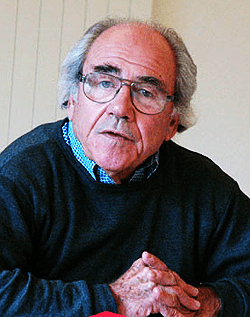
Jean Baudrillard, born on July 27, 1929, in Reims, France, is one of the most influential thinkers of the 20th century. Known for his deep philosophical insights and controversial ideas, Baudrillard’s work spans across sociology, philosophy, and cultural theory. This article delves into Baudrillard’s age, his rise to fame, and the significant highlights of his life, providing detailed insights and explanations while considering the nuances and historical context that shaped his thought.
Early Life and Education
Jean Baudrillard was born into a modest family with peasant roots. Both of his parents were civil servants, and Baudrillard was the first in his family to pursue higher education. This academic journey created a rift between him and his family, as he distanced himself from his cultural background.
In 1956, Baudrillard began his career as a high school teacher and later worked at the French publishing house Seuil in the early 1960s. Initially, his academic focus was on German language and culture. He published essays on literature in the magazine “Les Temps Modernes” between 1962 and 1963 and translated works by Peter Weiss and Bertolt Brecht into French.
Baudrillard’s early academic influences included Henri Lefebvre and Roland Barthes, whose ideas significantly impacted his work. During this period, Baudrillard was also involved with the Centre National de la Recherche Scientifique and later taught at the European Graduate School in Switzerland.
Academic Career and Philosophical Development
In 1966, Baudrillard became an assistant to Lefebvre and began teaching at the University of Paris-Nanterre. He studied various disciplines, including languages, philosophy, sociology, and more. That same year, he presented his “Thèse de Troisième Cycle” in sociology at Nanterre, with a dissertation titled “The System of Objects.” His academic career flourished, leading to lectures and conferences at prestigious universities across Europe and the United States.
Despite his academic achievements, it wasn’t until 1987 that his “thèse d’état” was accepted and presented by Georges Balandier at the Sorbonne. This delayed recognition did not diminish his motivation but rather encouraged him to move away from academia and focus on his writing and analysis. He also directed the magazine “Traverse.”
Political Involvement and Postmodernism
In the 1960s, Baudrillard aligned himself with the French left, opposing the Franco-American interventions in Algeria and Vietnam. The “March 22 Movement,” associated with Daniel Cohn-Bendit and other radicals, emerged from Nanterre’s sociology department, a strategic center for radical politics.
Although often associated with Jean-François Lyotard, Baudrillard’s contributions to postmodernism are arguably more significant. During the 1968 student revolts, Baudrillard actively participated in the protests, which nearly led to the ousting of Charles de Gaulle. His experiences during this period deeply influenced his subsequent work.
Baudrillard’s writings from the late 1960s and early 1970s, such as “The System of Objects” (1968), “The Consumer Society” (1970), and “For a Critique of the Political Economy of the Sign” (1972), gained him international recognition. These works combined Lefebvre’s studies of everyday life with social semiology, analyzing the life of signs in the context of critical sociology.
Theoretical Innovations and Major Works
Baudrillard’s early works explored how objects are coded within systems of signs and meanings, forming the basis of contemporary media and consumer societies. He integrated semiological studies, Marxian political economy, and the sociology of consumer society to examine how daily life is structured by systems of objects and signs.
His initial focus was on the meanings attached to everyday objects and the structural system organizing these objects in a modern society. Baudrillard argued that traditional Marxian critiques of political economy needed to be supplemented with semiological theories of the sign, examining the various meanings expressed by signifiers organized into a system of signification.
In his later works, Baudrillard expanded these ideas, exploring how fashion, sports, media, and other modes of meaning production create specific systems of signification. He proposed that goods are no longer characterized merely by their use-value and exchange-value (as in Marx’s theory) but increasingly by their sign-value, which becomes a critical aspect of the product and its consumption in a consumer society.
Baudrillard’s notion of “sign-value” suggested that consumers purchase and display products as much for their sign-value as for their use-value. This phenomenon is central to understanding consumer behavior and societal dynamics in contemporary times.
Break from Marxism and Further Theoretical Developments
In the 1970s, Baudrillard distanced himself from revolutionary Marxism, instead suggesting the possibility of rebellion against consumer society in unpredictable but certain forms. He joined a group of intellectuals centered around the journal “Utopie,” focusing on alternative societies, architecture, and everyday life.
Baudrillard’s relationship with classical Marxism was ambivalent. He continued to critique the capitalist production of goods, but his analysis extended beyond traditional Marxist frameworks. He incorporated elements of semiology, influenced by thinkers like Barthes, to describe how goods, media, and technologies create an illusionary universe where individuals are seduced by consumer values, media ideologies, and technological seductions.
In works like “Simulacra and Simulation” (1981), Baudrillard argued that reality itself is replaced by simulations—representations that precede and shape reality. This idea became a cornerstone of his later work, illustrating how contemporary society is dominated by hyperreality, where simulations are more real than reality itself.
Later Life and Legacy
In the 1990s and 2000s, Baudrillard’s work continued to provoke and challenge traditional thinking. His books, such as “The Gulf War Did Not Take Place” (1991) and “The Spirit of Terrorism” (2002), offered radical critiques of contemporary events, arguing that media representations shape and even create these events.
Baudrillard’s philosophical stance was often described as scandalous, questioning the foundations of reality, truth, and representation. He highlighted how contemporary sociological trends, such as mass commemorations and charitable donations, serve as means of extending a totalitarian form of “Good,” aimed at achieving social cohesion through scandalous means.
Baudrillard passed away on March 6, 2007, in Paris at the age of 78. His extensive body of work, comprising around fifty books, left an indelible mark on contemporary intellectual thought. His critique of consumer society, media, and hyperreality continues to influence various fields, including sociology, philosophy, cultural studies, and media theory.
Principal Works of Jean Baudrillard
Baudrillard’s prolific writing includes numerous influential works. Some of his key publications available in Italian include:
- 2006: “Patafisica e arte del vedere”
- 2006: “Il patto di lucidità o l’intelligenza del male”
- 2006: “Il sistema degli oggetti”
- 2006: “Lo scambio simbolico e la morte”
- 2005: “Violenza del virtuale e realtà integrale”
- 2004: “La violenza del mondo. La situazione dopo l’11 settembre” (with Edgar Morin)
- 2003: “È l’oggetto che vi pensa, Pagine d’arte”
- 2003: “Architettura e nulla. Oggetti singolari”
- 2003: “Power inferno. Requiem per le Twin towers. Ipotesi sul terrorismo. La violenza globale”
- 2002: “La guerra dei mondi. Scenari d’Occidente dopo le Twin towers”
- 2002: “Parole chiave”
- 2002: “Lo spirito del terrorismo”
- 2000: “America”
- 2000: “Lo scambio impossibile”
- 1999: “Cyberfilosofie. Fantascienza, antropologia e nuove tecnologie”
- 1999: “Illusione, disillusione estetiche. Il complotto dell’arte”
- 1997: “Della seduzione”
- 1996: “Il delitto perfetto. La televisione ha ucciso la realtà?”
- 1995: “Il sogno della merce”
- 1991: “Cool memories. Diari 1980-1990”
- 1991: “Guerra virtuale e guerra reale. Riflessioni sul conflitto del Golfo”
- 1991: “La trasparenza del male. Saggio sui fenomeni estremi”
- 1988: “La sparizione dell’arte”
- 1984: “Le strategie fatali”
Conclusion
Jean Baudrillard’s life and work represent a profound and often controversial exploration of contemporary society. From his early academic pursuits to his groundbreaking theories on hyperreality and simulacra, Baudrillard challenged traditional notions of reality, truth, and representation. His contributions to sociology, philosophy, and cultural theory continue to resonate, offering critical insights into the complexities of the modern world.
Baudrillard’s legacy is marked by his relentless questioning of societal norms and his ability to provoke thought and debate. His ideas remain relevant, influencing ongoing discussions about media, technology, consumerism, and the nature of reality itself.


