
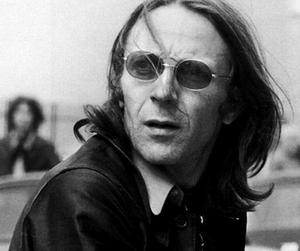
Jean Eustache, a name that resonates deeply within the circles of cinephiles and film historians, is a figure whose work continues to influence and inspire. Born on November 30, 1938, in the small town of Pessac near Bordeaux, France, Eustache’s life and career were marked by a passionate commitment to cinema, a medium through which he explored the complexities of human experience. In this comprehensive article, we will delve into the life, fame, and lasting impact of Jean Eustache, examining the nuances of his work, his historical context, and the legacy he left behind.
Early Life and Influences
Jean Eustache’s early years were spent in Pessac, where he was raised primarily by his maternal grandmother, Odette Robert, while his mother relocated to Narbonne. This early period of his life, about which he maintained a notable reticence, was marked by a sense of displacement and detachment. These formative experiences would later resurface in his films, particularly in their autobiographical elements.
In the early 1950s, Eustache moved to Narbonne to live with his mother. His education was cut short, and in 1956, he found work as an electrician in a local firm. This phase of his life was characterized by a growing dissatisfaction with the mundane nature of his existence. Eustache yearned for something more, something that would allow him to escape the confines of his working-class reality.
The Move to Paris
In 1957, Eustache moved to Paris, a city that would become central to his life and work. Initially employed as a laborer in the national railways, he was eventually called up for military service. However, Eustache refused to serve in the Algerian War, resorting to self-harm to obtain a discharge. This act of defiance not only exemplified his anti-establishment tendencies but also highlighted the deep sense of conflict and turmoil that characterized much of his life.
In Paris, Eustache immersed himself in the vibrant intellectual and cultural scene of the time. He frequented the Cinémathèque Française and the Studio Parnasse, two institutions that were central to the burgeoning French New Wave. It was here that Eustache first encountered figures like Jean-André Fieschi, Jean Douchet, Jacques Rivette, Jean-Luc Godard, Éric Rohmer, Paul Vecchiali, and Jean-Louis Comolli—key personalities who would play significant roles in shaping his cinematic vision.
The Birth of a Filmmaker
Eustache’s passion for cinema was evident from the outset. In the early 1960s, he began frequenting the editorial offices of Cahiers du Cinéma, the influential film journal that was at the heart of the New Wave movement. His exposure to the ideas and debates within this community of filmmakers and critics ignited his desire to create films that would challenge conventional narratives and explore the deeper truths of human existence.
In 1963, Eustache made his directorial debut with the short film La Soirée, which, despite never being synchronized or released, marked the beginning of his journey as a filmmaker. His first significant work, however, was the 42-minute medium-length film Du côté de Robinson, also known as Les mauvaises fréquentations. This film set the tone for much of Eustache’s later work, characterized by its raw, unflinching portrayal of reality and its deep autobiographical elements.
The Breakthrough: La Maman et la Putain
The early 1970s marked a turning point in Eustache’s career. In 1973, he released La Maman et la Putain (The Mother and the Whore), a film that would cement his reputation as one of the most important and controversial filmmakers of his generation. The film, which starred Jean-Pierre Léaud, Françoise Lebrun, and Bernadette Lafont, is a sprawling, three-and-a-half-hour exploration of love, relationships, and existential despair.
La Maman et la Putain was a deeply personal film for Eustache, drawing on his tumultuous relationships with women, particularly his former lover Françoise Lebrun, who also starred in the film. The narrative revolves around the character of Alexandre, played by Léaud, a man caught between his love for two women and his profound sense of disillusionment with life. The film’s frank and often explicit dialogue, combined with its unvarnished portrayal of human emotion, sparked controversy upon its release.
Despite—or perhaps because of—its provocative nature, La Maman et la Putain was a critical success. It won the Special Jury Prize at the Cannes Film Festival in 1973 and quickly became a touchstone for filmmakers and critics alike. The film’s exploration of the complexities of love, identity, and modernity resonated deeply with audiences, and it remains one of the most significant works of French cinema.
A Reflection of the Times
The success of La Maman et la Putain was not just a reflection of Eustache’s talents as a filmmaker; it also captured the zeitgeist of post-1968 France. The film’s themes of sexual liberation, existential angst, and social upheaval mirrored the broader cultural and political changes taking place in French society at the time. The late 1960s and early 1970s were a period of intense social and political activism in France, marked by widespread protests, strikes, and a questioning of traditional values.
Eustache’s film, with its focus on the personal and the intimate, offered a stark contrast to the grand narratives of political revolution that dominated the era. Instead of depicting the collective struggle for social change, Eustache turned his lens on the individual, exploring the inner lives of his characters with a level of honesty and vulnerability that was rare in cinema at the time.
Later Works and Legacy
Following the success of La Maman et la Putain, Eustache’s career took a more complex turn. His next film, Mes petites amoureuses (1974), a semi-autobiographical exploration of adolescence, was met with critical acclaim but failed to achieve the same level of commercial success. The film’s portrayal of the protagonist’s sexual awakening and his struggles with identity and belonging echoed many of the themes that had defined Eustache’s earlier work.
The lack of commercial success for Mes petites amoureuses marked the beginning of a difficult period for Eustache. He experienced a creative and personal crisis, marked by three years of inactivity. During this time, he struggled with depression and alcoholism, issues that had plagued him throughout his life.
In 1977, Eustache returned to filmmaking with Une sale histoire, a short film that explored themes of voyeurism and desire. The film was followed by several other works, including a second version of La Rosière de Pessac (1979), in which Eustache revisited the same small-town ceremony he had filmed eleven years earlier. His final works included three short films for television: Le jardin des délices de Jérôme Bosch, Offre d’emploi, and Les photos d’Alix, all completed in 1980.
The Tragic End
Despite his continued creative output, Eustache’s later years were marked by increasing isolation and despair. In August 1980, during a trip to Greece, he suffered a severe injury after falling from a terrace, resulting in a permanent disability. This incident, combined with his ongoing struggles with mental health, led to a profound sense of hopelessness.
On the night of November 4, 1981, Jean Eustache took his own life, shooting himself in the heart in his Paris apartment. His death was a tragic end to a life marked by both artistic brilliance and deep personal turmoil.
The Legacy of Jean Eustache
Jean Eustache’s legacy as a filmmaker is profound. His work continues to be celebrated for its unflinching honesty, its deep autobiographical elements, and its exploration of the human condition. Eustache’s films, particularly La Maman et la Putain, have influenced generations of filmmakers and remain central to discussions of French cinema.
Eustache’s contribution to the art of cinema lies not just in his technical skills as a director, but in his ability to capture the complexities of human emotion and experience. His films are a testament to the power of cinema as a medium for personal expression and exploration.
In many ways, Eustache’s work anticipated the trends that would come to define independent and auteur-driven cinema in the decades that followed. His focus on character-driven narratives, his willingness to explore controversial and taboo subjects, and his commitment to authenticity have all become hallmarks of modern independent filmmaking.
Cultural and Historical Context
Eustache’s films also provide a valuable window into the cultural and social history of France in the 1960s and 1970s. Through his work, we gain insight into the lives of ordinary people, their struggles, desires, and disappointments. His films document the changing attitudes towards love, sex, and relationships during a time of significant social upheaval.
Moreover, Eustache’s films reflect the broader philosophical and existential concerns of his time. The themes of alienation, identity, and the search for meaning that run through his work are deeply connected to the intellectual currents of the post-war period, including existentialism and the debates surrounding the role of art and culture in society.
Conclusion: The Enduring Influence of Jean Eustache
Jean Eustache’s life and career were marked by a profound commitment to exploring the human condition through cinema. His films, with their raw honesty and deep personal resonance, continue to captivate audiences and inspire filmmakers. Eustache’s work stands as a testament to the power of cinema to explore the complexities of life, love, and identity.
Though his life was cut tragically short, Jean Eustache’s influence endures. His films remain essential viewing for anyone interested in the history of cinema, and his legacy continues to shape the way we think about film as an art form. In celebrating the life and work of Jean Eustache, we are reminded of the enduring power of cinema to illuminate the human experience in all its complexity and beauty.


