
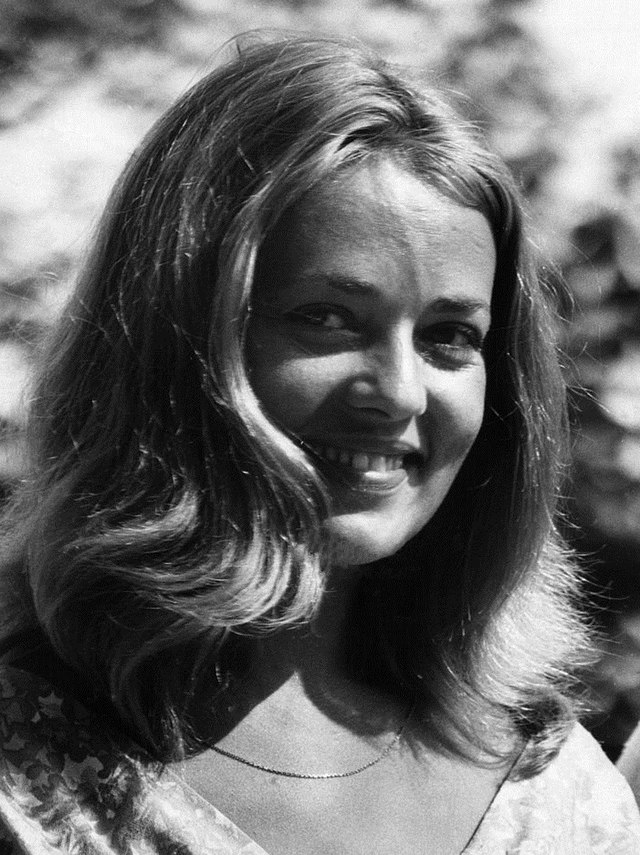
Jeanne Moreau, born on January 23, 1928, in Paris, France, was a celebrated actress and singer whose influence and legacy in the world of cinema are unparalleled. Her life and career spanned over seven decades, during which she became one of the most iconic figures of French cinema. With a career marked by groundbreaking performances, international acclaim, and a series of personal triumphs and tribulations, Moreau remains an enduring symbol of artistic intelligence and beauty.
Early Life and Beginnings
Jeanne Moreau was born into a culturally rich family, with her father being a restaurateur in Montmartre and her mother, an English dancer who performed at the Folies Bergères. This eclectic background perhaps seeded the artistic temperament that would later define her career. Growing up in Paris, Moreau showed an early interest in the arts, which led her to enroll in the Conservatoire de Paris after completing her secondary education.
Her early theatrical debut in 1947 at the Festival d’Avignon marked the beginning of a storied career. Soon after, she joined the prestigious Comédie-Française, becoming the youngest member of the troupe at the time. However, her quest for more experimental and challenging roles led her to leave in 1951 to join Jean Vilar’s Théâtre National Populaire. This move signaled her desire to break away from traditional roles and embrace more avant-garde and intellectually stimulating performances.
Breakthrough in Cinema: The Birth of a Legend
Jeanne Moreau’s foray into cinema began around the same time as her theater work, although her initial film roles were in less notable productions. It wasn’t until her collaboration with director Louis Malle in the late 1950s that her film career truly took off. Their partnership resulted in two landmark films: “Ascenseur pour l’échafaud” (1957) and “Les Amants” (1958), both of which catapulted her to international stardom.
“Les Amants” is particularly significant, as it became one of the pioneering films of the French New Wave (Nouvelle Vague), a movement that revolutionized cinema with its bold storytelling and innovative techniques. The film was notorious for its candid depiction of sexuality, which at the time was considered scandalous. This controversy only amplified Moreau’s fame, as she became a symbol of the new, liberated woman in cinema—intelligent, sensual, and unafraid to challenge societal norms.
Iconic Roles and International Acclaim
The 1960s were a period of great artistic achievement for Moreau. She starred in a series of films that have since become classics, cementing her status as one of the greatest actresses of her time. Among these were “Moderato Cantabile” (1960), “La Notte” (1961), “Jules et Jim” (1962), and “The Trial” (1962).
“Jules et Jim,” directed by François Truffaut, is perhaps the most iconic of these films. The movie explores a complex love triangle set against the backdrop of World War I, with Moreau’s character, Catherine, embodying the free-spirited and enigmatic woman who captivates both male protagonists. Her performance was widely praised and has since become one of the defining roles of her career.
Moreau’s collaborations with other legendary directors, such as Michelangelo Antonioni in “La Notte” and Orson Welles in “The Trial,” further solidified her reputation as an actress of extraordinary range and depth. She was equally at home in dramatic roles as she was in more nuanced, introspective performances, bringing a unique intensity and intellectual rigor to every character she portrayed.
Later Career and Continued Influence
As she grew older, Jeanne Moreau continued to work in both film and theater, albeit with less frequency. However, her influence on the cinematic world remained undiminished. She appeared in significant films such as “Nikita” (1990) by Luc Besson, “Until the End of the World” (1991) by Wim Wenders, and “Beyond the Clouds” (1995) co-directed by Michelangelo Antonioni and Wim Wenders.
Moreau’s talent was not confined to acting alone. She was also an accomplished singer, with her voice featuring prominently in films like “Jules et Jim” and “Querelle” (1982), directed by Rainer Werner Fassbinder. Her musical contributions further highlighted her versatility and deep connection to the arts.
Her achievements did not go unrecognized. In 1998, Jeanne Moreau received an honorary Oscar, acknowledging her immense contribution to cinema. She was also honored with the Golden Bear for lifetime achievement at the Berlin Film Festival in 2000. These accolades reflect not only her talent but also her enduring impact on the global film industry.
Personal Life and Relationships
Jeanne Moreau’s personal life was as complex and fascinating as the characters she portrayed on screen. She was married three times, with her most notable relationship being with the French director Louis Malle, with whom she collaborated on several films. From her second marriage to Jean-Louis Richard, she had a son, Jérôme, who later became a successful painter.
Moreau was known for her intellectual circle of friends, which included luminaries such as Jean Cocteau, Henry Miller, Anaïs Nin, and Marguerite Duras. Her friendship with Duras was particularly significant, both personally and professionally. She starred in Duras’s film “Nathalie Granger” (1972) and narrated “The Lover” (1991), further showcasing her deep connections within the literary and artistic communities.
Legacy and Death
Jeanne Moreau passed away on July 31, 2017, at the age of 89 in Paris. Her death marked the end of an era for French cinema, but her legacy continues to inspire actors, directors, and cinephiles around the world. Moreau’s life and career were characterized by a relentless pursuit of artistic excellence, a willingness to push boundaries, and an unwavering dedication to her craft.
Her impact on cinema is immeasurable. Jeanne Moreau was not just an actress; she was a cultural icon whose work transcended the screen, influencing generations of filmmakers and actors. Her life story is a testament to the power of art to challenge, provoke, and inspire.
In remembering Jeanne Moreau, we celebrate a woman who embodied the very essence of cinema—a medium that, much like her performances, is at once ephemeral and eternal. Her contribution to the arts remains a beacon for those who seek to explore the deeper truths of the human experience through the lens of film.


