
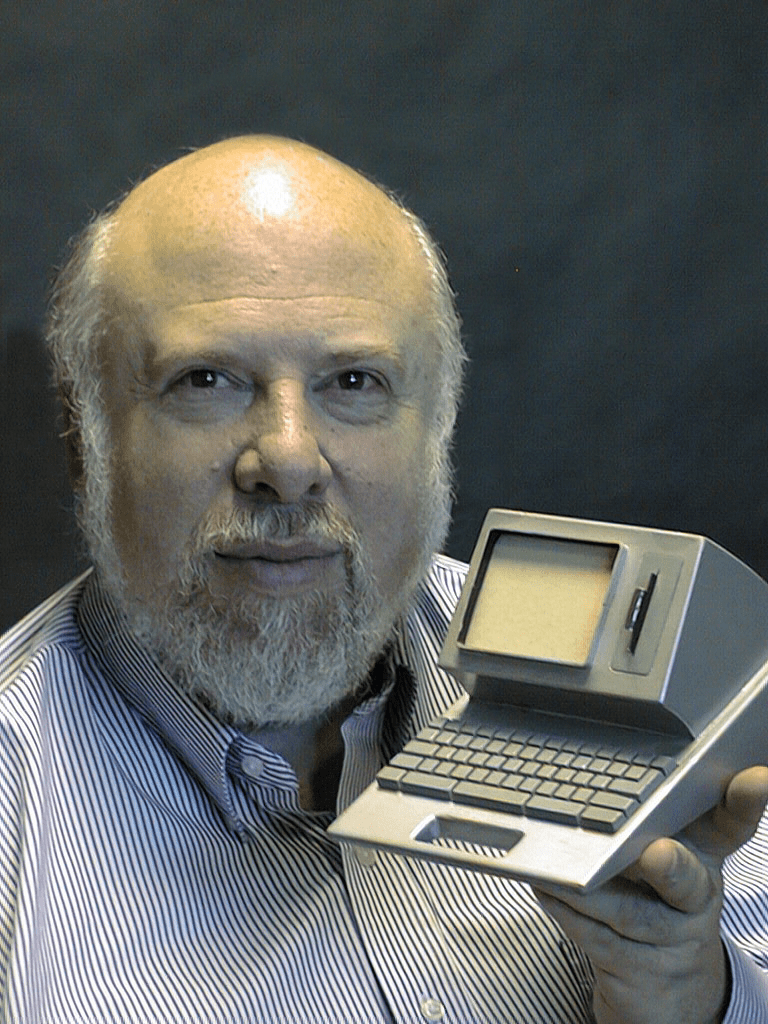
Jef Raskin is a name that resonates deeply within the history of computing and human-computer interaction. Born on March 9, 1943, in New York City, Raskin was a man of many talents—ranging from engineering to music—and is perhaps best known for his pioneering work at Apple Computer, where he played a crucial role in the development of the Macintosh computer. His vision for user-friendly computing helped shape the future of technology, making him a seminal figure in the industry.
Early Life and Education
Jef Raskin’s life was marked by a constant pursuit of knowledge and innovation. His early interests were diverse, spanning aeronautics, music, and computing. Before he even graduated from high school, Raskin earned recognition from the American Rocket Society, where he contributed to the field of aeronautics. This early achievement foreshadowed a career that would be characterized by intellectual curiosity and a drive to push the boundaries of what was possible.
Raskin pursued higher education with vigor, earning a Bachelor of Arts and a Bachelor of Science, degrees that would serve as the foundation for his later work in computing. While studying at the State University of New York, Raskin designed an analog computer for the biology department, showcasing his ability to merge theoretical knowledge with practical application. His academic journey continued at the Pennsylvania State University, where he became one of the top ten graduates among 72,000 engineering students. He later earned a Master of Science in Computer Science and deepened his expertise in computer music during his post-graduate studies at the University of California, San Diego.
A Multidisciplinary Career
Raskin’s professional life was as varied as his academic pursuits. In the 1960s, he explored his passion for music, traveling as a percussionist with the San Diego Symphony Orchestra. He performed at prestigious venues like the Museum of Modern Art in New York and the Brooklyn Museum, further solidifying his reputation as a talented musician. Raskin also served as the director of the Old Southaven Chamber Ensemble in New York, balancing his musical interests with his burgeoning career in computing.
During this time, Raskin’s work extended beyond music and into the realm of visual arts. He was involved in the development of an electronic music studio and a graphic design tool known as the Quick Draw Graphics System (QDGD), which he created in 1967. His innovative spirit led him to experiment with different mediums, including film. In 1973, Raskin wrote and directed a film titled Smog Pattern, which was broadcast on American public television.
The Apple Years: Birth of the Macintosh
Raskin’s most significant contributions to technology came during his time at Apple Computer, where he was hired in 1978 as employee number 31. At Apple, Raskin was driven by a singular vision: to make computers accessible to the average person. He believed that for computers to achieve widespread adoption, they needed to be designed with the user in mind—a radical idea at a time when most computer companies focused solely on hardware innovation without considering the user experience.
This philosophy led Raskin to conceive the Macintosh project in 1979, envisioning a computer that would be affordable, easy to use, and intuitive. The name “Macintosh” was inspired by his favorite variety of apple, and the project would eventually give birth to one of the most iconic products in computing history. Working closely with Steve Jobs and Steve Wozniak, Raskin helped develop the Macintosh’s revolutionary graphical user interface (GUI), which introduced the world to the concept of windows, icons, and a point-and-click interface.
Raskin’s vision for the Macintosh was rooted in the belief that computers should serve the needs of the user, rather than the other way around. He famously said, “I conceived the Macintosh and invented the name in response to my conviction that to achieve broad diffusion, future computers should be designed from the user’s point of view.” This user-centric approach to design was a departure from the prevailing mindset of the time, and it set the stage for the personal computing revolution that would follow.
Innovations and Patents
Throughout his career, Jef Raskin was not just a visionary but also a prolific inventor. His work at Apple and beyond resulted in numerous patents and technological advancements. Among his many inventions were technologies for airplane wing construction, a digital electronic tuner, and a single-button mouse—a device that would become synonymous with the Macintosh. Raskin’s commitment to improving human-computer interaction led him to innovate in ways that continue to influence modern computing.
One of Raskin’s most enduring contributions was his work on the concept of the Zooming User Interface (ZUI), a graphical interface that allows users to navigate through information by zooming in and out. This idea was part of a broader project called THE (The Humane Environment), which Raskin developed later in his career within the open-source community. THE aimed to create a more intuitive and efficient way for people to interact with computers, reflecting Raskin’s lifelong dedication to improving the user experience.
Later Years and Legacy
In the years following his departure from Apple, Raskin continued to work as an independent consultant and designer, offering his expertise to companies around the world, including Motorola and Bayer. He also became a respected writer and journalist, contributing to publications like Wired, Forbes, and Model Airplane News. Over his career, Raskin authored more than 300 articles and a seminal book titled The Humane Interface, in which he outlined his principles for user-centered design.
Raskin’s later years were marked by a return to his roots in interface design, as he sought to refine and expand upon the ideas he had developed earlier in his career. His work on THE and the ZUI was a continuation of his belief that technology should be accessible and intuitive for everyone. Sadly, Raskin’s life was cut short when he passed away on February 26, 2005, at the age of 61, due to pancreatic cancer. He left behind a wife, Linda S. Blum, and three children, including a son who worked alongside him as a webmaster.
The Impact of Jef Raskin’s Work
Jef Raskin’s contributions to computing are profound and far-reaching. His work on the Macintosh project at Apple laid the foundation for modern personal computing, introducing concepts and technologies that have become integral to how we interact with computers today. The graphical user interface, once a novel idea, is now a standard feature of virtually every computing device, from desktops to smartphones.
Raskin’s emphasis on user-centered design has had a lasting impact on the field of human-computer interaction (HCI). His belief that technology should be designed to meet the needs of the user, rather than forcing the user to adapt to the technology, has influenced generations of designers and engineers. This philosophy is now a cornerstone of modern software development, where user experience (UX) is a critical consideration in the design process.
Beyond his technical achievements, Raskin’s legacy includes his contributions to the open-source community through projects like THE. His work on the Zooming User Interface continues to inspire new approaches to interface design, particularly in areas where traditional GUIs are less effective. Raskin’s innovative spirit and commitment to improving the human experience through technology are what make him a pivotal figure in the history of computing.
Conclusion
Jef Raskin was a polymath whose diverse talents and relentless curiosity drove him to explore the intersection of art, music, and technology. His work at Apple, particularly on the Macintosh project, revolutionized personal computing and set new standards for how we interact with machines. Raskin’s vision for a user-friendly computer has had a lasting impact on the industry, and his ideas continue to shape the way we think about design and usability.
As we look back on Raskin’s life and achievements, it’s clear that his contributions extend far beyond any single invention or project. He was a pioneer in the truest sense of the word, always pushing the boundaries of what was possible and challenging the status quo. Jef Raskin’s legacy is one of innovation, creativity, and a deep commitment to making technology work for people, a legacy that will continue to influence the world for years to come.


