
Introduction
Joey Ramone, born Jeffrey Ross Hyman on May 19, 1951, in New York City, is an iconic figure in the world of punk rock. His journey from a young boy in Queens to the lead vocalist of the pioneering punk band, the Ramones, is a story of overcoming personal struggles and making an indelible mark on music history. This article delves into the life of Joey Ramone, exploring his early years, rise to fame, and the enduring legacy he left behind.
Early Life and Musical Beginnings
Jeffrey Hyman grew up in the Forest Hills neighborhood of Queens, New York, with his younger brother, Mickey Leigh. Raised by his mother, Charlotte, after her divorce from his father, Joey found solace in music at a young age. Influenced by the sounds of the Beatles, the Stooges, and the Who, with Pete Townshend being a particular idol, Joey started playing the drums at thirteen. His love for music was a refuge from the challenges he faced, including being diagnosed with obsessive-compulsive disorder (OCD) at the age of eighteen.
Despite these challenges, Joey’s passion for music continued to grow. In 1972, he joined his first band, Sniper, adopting the stage name Jeff Starship. Although his time with Sniper was brief, it marked the beginning of his career in the music industry, performing at venues like the Mercer Arts Center and Max’s Kansas City.
The Birth of the Ramones
The formation of the Ramones in 1974 was a pivotal moment in Joey’s life. Alongside friends and former schoolmates Douglas Colvin and John Cummings, Joey founded the band that would go on to revolutionize punk rock. Inspired by a story that Paul McCartney once used the pseudonym Paul Ramon during the early days of the Beatles, the trio adopted the surname “Ramone.” Thus, Jeffrey Hyman became Joey Ramone, while Douglas became Dee Dee Ramone, and John became Johnny Ramone.
Initially, Joey played drums for the band, with Dee Dee handling vocals. However, due to Dee Dee’s strained vocal cords from the intense demands of live performances, the group’s manager, Thomas Erdelyi, suggested that Joey take over as lead singer. This decision proved to be a turning point, as Joey’s unique voice and stage presence became central to the Ramones’ identity. The search for a new drummer ended when Erdelyi himself took on the role, adopting the name Tommy Ramone.
The Ramones and the Punk Rock Revolution
The Ramones quickly became synonymous with the burgeoning punk rock movement in the United States. Despite their limited commercial success in terms of album sales, the band’s influence on the genre was profound. Their self-titled debut album, “Ramones,” released in 1976, is now considered a cornerstone of punk rock, featuring iconic tracks like “Blitzkrieg Bop” and “Judy is a Punk.”
The Ramones’ follow-up albums, including “Leave Home” and “Rocket to Russia,” further solidified their reputation, even as mainstream recognition eluded them. Joey’s vocal style, characterized by its raw, unpolished edge, was a departure from traditional rock singing, embodying the rebellious spirit of punk.
Throughout the late 1970s and 1980s, the Ramones continued to release albums and tour extensively, building a loyal fanbase. Their music, often fast-paced and stripped down to its essentials, resonated with audiences who were disillusioned with the excesses of mainstream rock. Songs like “Sheena is a Punk Rocker,” “I Wanna Be Sedated,” and “Rock ‘n’ Roll High School” became anthems for a generation.
The 1980s and Beyond: Expanding Influence
As the 1980s progressed, the Ramones remained prolific, releasing albums such as “Pleasant Dreams,” “Subterranean Jungle,” and “Too Tough to Die.” While mainstream success continued to elude them, the band’s reputation grew, with their music gaining recognition for its influence on subsequent generations of musicians.
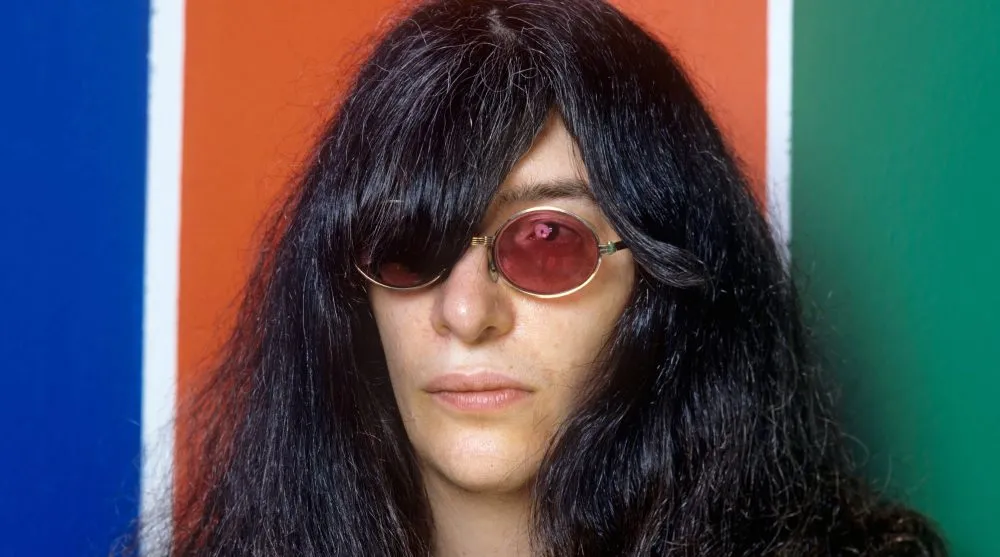
Joey Ramone, in particular, became a symbol of punk’s enduring appeal. His lanky frame, long hair, and ever-present sunglasses made him an instantly recognizable figure. Despite not having formal vocal training, Joey’s voice became one of the most distinctive in rock music. His performances were raw and full of energy, capturing the spirit of the punk movement.
During this time, Joey also became involved in other projects. In 1985, he joined the Artists United Against Apartheid, a group of musicians protesting against South Africa’s apartheid regime. Alongside artists like Bruce Springsteen, Lou Reed, and Keith Richards, Joey contributed to the recording of the anti-apartheid anthem “Sun City.”
The Final Years and Legacy
The 1990s saw the release of several more Ramones albums, including “Mondo Bizarro” and “Adios Amigos!” Despite the band’s continued creative output, the relentless touring schedule and lack of mainstream success began to take its toll. In 1996, after more than two decades of making music, the Ramones played their final show and officially disbanded.
Joey Ramone, however, did not fade into obscurity. He continued to work on solo projects and collaborations, producing albums for other artists and even participating in alternative rock festivals. In 1999, he produced the album “She Talks to Rainbows” for Ronnie Spector, which received critical acclaim.
Tragically, Joey’s life was cut short by cancer. After a seven-year battle with lymphoma, he passed away on April 15, 2001, just a month shy of his 50th birthday. His death marked the end of an era, but his influence on music and culture remained undiminished. In recognition of his impact, the U2 song “The Miracle (of Joey Ramone)” was dedicated to him in 2014, highlighting his enduring legacy.
The Enduring Influence of Joey Ramone
Joey Ramone’s influence extends far beyond the music he created with the Ramones. As one of the pioneering figures of punk rock, he helped shape a genre that would go on to inspire countless bands and musicians. The Ramones’ simple yet powerful approach to music, characterized by short, fast songs with catchy hooks, became a blueprint for punk bands around the world.
The band’s impact is evident in the success of subsequent punk and alternative bands, from the Sex Pistols and the Clash to Nirvana and Green Day. Joey’s persona—awkward, lanky, and unapologetically himself—resonated with fans who saw in him a reflection of their own struggles and aspirations. His legacy is not just in the music he made, but in the way he embodied the punk ethos of defiance, individuality, and authenticity.
Conclusion
Joey Ramone’s life and career are a testament to the power of music to transcend personal struggles and connect with people on a deep, emotional level. From his early days in Queens to his status as a punk rock icon, Joey’s journey was marked by resilience, creativity, and a relentless pursuit of his passion. Though he may no longer be with us, the music and spirit of Joey Ramone continue to inspire new generations of musicians and fans alike. His legacy as the frontman of the Ramones, a band that changed the course of rock music, ensures that Joey Ramone will forever be remembered as one of the most influential figures in the history of punk rock.


