
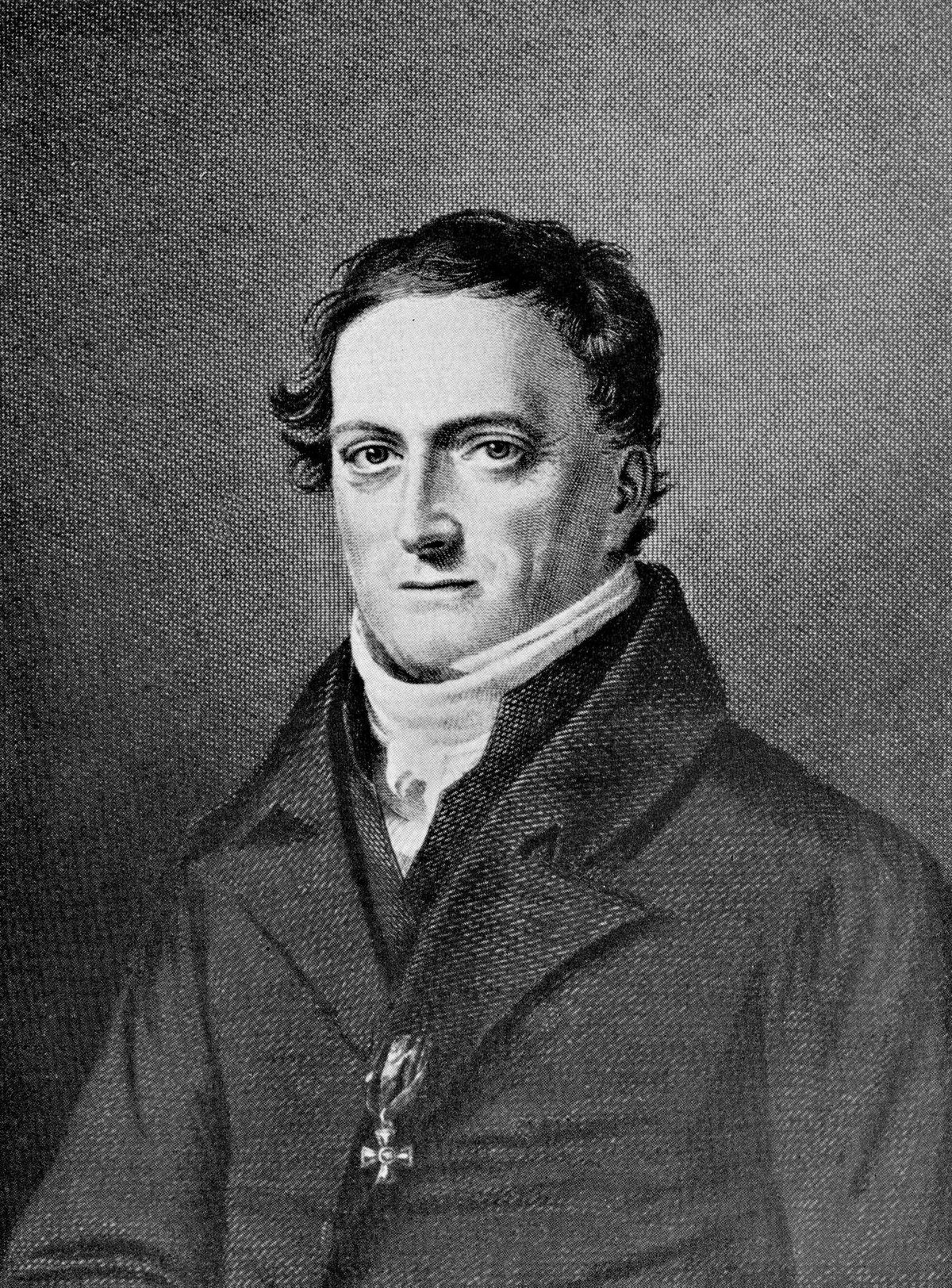
Johann Friedrich Herbart, a German philosopher, psychologist, and founder of modern pedagogy, is a figure whose contributions to educational theory have left an indelible mark on the world. Born on May 4, 1776, in Oldenburg, Germany, Herbart’s intellectual journey and the development of his pedagogical ideas have influenced educational practices globally. This article delves into the life of Johann Friedrich Herbart, exploring his age, rise to fame, and the significant highlights that have made him a pivotal figure in educational history.
Early Life and Education: Foundations of a Philosopher
Johann Friedrich Herbart was born into a world on the brink of great intellectual change. The Enlightenment was in full swing, and ideas about human reason, science, and education were being revolutionized. Herbart’s early education took place in a nurturing environment, as his father was a state councilor who provided him with access to a wealth of knowledge. This environment undoubtedly contributed to Herbart’s later intellectual pursuits.
At the age of 18, Herbart enrolled at the University of Jena, one of the leading centers of German idealism. It was here that he studied philosophy under the tutelage of Johann Gottlieb Fichte, a prominent figure in the German idealist movement. Fichte’s influence on Herbart was profound, but Herbart eventually diverged from Fichte’s idealism, developing his own philosophical ideas that would later form the foundation of his educational theories.
Philosophical Divergence: Herbart’s Break from Idealism
While studying at Jena, Herbart began to distance himself from the idealist philosophy of his mentor, Johann Gottlieb Fichte. Idealism, particularly the forms espoused by Fichte, Hegel, and Schelling, posited that reality is constructed by the mind and that the world is a manifestation of the self or the absolute. Herbart, however, found this perspective lacking, especially when it came to explaining the complexities of human experience and education.
Herbart’s philosophy took a different path, emphasizing the importance of concrete experiences and the realities of the external world. He believed that philosophy should be grounded in empirical evidence and that concepts should be derived from experience rather than abstract thought. This philosophical stance led him to a more realist approach, where he argued that the world consists of a series of real, individual entities that interact with one another. These ideas would later influence his educational theories, particularly his emphasis on the importance of experience in learning.
Pedagogical Innovations: Herbart’s Contribution to Education
Herbart’s divergence from idealism was not merely an academic exercise; it had profound implications for his approach to education. He is often credited with founding modern pedagogy, thanks to his pioneering ideas that connected philosophy, psychology, and education in innovative ways.
One of Herbart’s most significant contributions to education was his distinction between education (educatio) and instruction (instructio). He argued that education was a process aimed at developing the character of an individual, focusing on moral and ethical growth. Instruction, on the other hand, was the method by which knowledge and skills were imparted. Herbart believed that education and instruction were deeply interconnected, with the ultimate goal of education being the moral development of the individual.
To implement his ideas, Herbart developed a structured approach to teaching, which he referred to as the “formal steps of instruction.” These steps included:
- Preparation – Engaging the learner by connecting new material to what they already know.
- Presentation – Introducing new information in a clear and structured way.
- Association – Encouraging the learner to connect new ideas with existing knowledge.
- Generalization – Helping the learner to understand broader concepts by applying what they have learned to new situations.
- Application – Allowing the learner to use their new knowledge in practical ways.
These steps laid the groundwork for modern instructional methods and emphasized the importance of a systematic approach to teaching. Herbart’s methods were particularly influential in shaping the curriculum in Prussian schools, where his ideas were adopted as part of a broader educational reform movement.
Academic Career: From Switzerland to Prussia
Herbart’s academic career began in Switzerland, where he worked as a private tutor in Bern from 1797 to 1800. It was here that he first encountered the educational ideas of Johann Heinrich Pestalozzi, a Swiss pedagogue whose emphasis on experiential learning resonated with Herbart’s own beliefs. Herbart’s time in Switzerland allowed him to experiment with his educational ideas, applying them in a practical setting and refining his theories.
In 1802, Herbart received his first official academic appointment at the University of Göttingen. His tenure at Göttingen was a period of intense intellectual development, during which he began to formalize his pedagogical ideas. However, it was his appointment to the University of Königsberg in 1809 that truly marked the beginning of Herbart’s influence on education.
Königsberg, the city where Immanuel Kant had taught, was a prestigious academic center, and Herbart was chosen to succeed Kant as a professor of philosophy. The university authorities were particularly interested in Herbart because of his expertise in both philosophy and pedagogy. His appointment was even approved by the Prussian king, Frederick William III, reflecting the importance of Herbart’s work in the context of Prussian educational reforms.
At Königsberg, Herbart established a pedagogical institute, where he could experiment with his educational ideas and train future teachers. His work at the institute was groundbreaking, as he sought to integrate his philosophical ideas with practical teaching methods. Herbart’s emphasis on the moral development of students and his systematic approach to instruction were well-received, and his institute became a model for teacher training in Prussia.
Herbart’s Educational Experiments and Legacy
One of Herbart’s most notable contributions to education was his experimental approach to pedagogy. He believed that education should be based on empirical research and that teaching methods should be tested and refined through practical experience. This belief led him to conduct a series of educational experiments, both in Switzerland and at his pedagogical institute in Königsberg.
Herbart’s experiments often focused on the moral development of his students, a theme that was central to his educational philosophy. He believed that education should not only impart knowledge but also shape the character of the individual. In one of his early experiments, Herbart attempted to improve the moral disposition of a young student named Ludwig, using a combination of literary and scientific instruction. This experiment reflected Herbart’s belief in the power of education to transform individuals and improve society as a whole.
Despite the success of his experiments, Herbart’s ideas were not immediately embraced by the broader educational community. His emphasis on moral education and his structured approach to teaching were seen by some as too rigid or idealistic. However, Herbart remained committed to his ideas, continuing to develop and refine his educational theories throughout his career.
After Herbart’s death in 1841, his ideas gained greater recognition, leading to the development of the “Herbartian” movement. This movement, which emerged in the mid-19th century, sought to promote and apply Herbart’s educational theories across Europe and beyond. The Herbartians, as they were known, played a crucial role in shaping the curriculum and teaching methods in schools throughout Germany, Austria, and other parts of Europe.
Herbart’s influence also extended to the United States, where his ideas were introduced by American educators who had studied in Germany. The translation of his works into English, French, and other languages further broadened his impact, making Herbart one of the most influential educational theorists of the 19th century.
Key Writings and Philosophical Contributions
Herbart was a prolific writer, and his works on philosophy, psychology, and education have had a lasting impact on these fields. Some of his most important writings include:
-
“Pedagogics as a System” (1806): In this work, Herbart outlined his educational philosophy, emphasizing the importance of moral education and the role of the teacher in shaping the character of students. He argued that education should be systematic and based on empirical research, a view that would later influence the development of educational psychology.
-
“General Practical Philosophy” (1808): This work focused on the application of philosophical principles to practical problems, including those in education. Herbart’s emphasis on the connection between philosophy and practical life reflected his belief in the importance of philosophy as a guide to action.
-
“Psychology as a Science” (1824): In this groundbreaking work, Herbart sought to establish psychology as a scientific discipline, separate from philosophy. He argued that psychology should be based on empirical observation and experimentation, laying the groundwork for the development of modern psychology.
-
“Outlines of Educational Doctrine” (1835): This work provided a comprehensive overview of Herbart’s educational theories, including his views on the nature of education, the role of the teacher, and the importance of moral development. It became one of the foundational texts of the Herbartian movement.
Herbart’s writings were not only influential in their time but have continued to be studied and discussed by educators and philosophers. His emphasis on the systematic approach to education, the importance of moral development, and the connection between philosophy and practice remain relevant to contemporary discussions about education.
Conclusion: Johann Friedrich Herbart’s Enduring Influence
Johann Friedrich Herbart’s life and work represent a critical turning point in the history of education. His innovative ideas about the relationship between education and instruction, his systematic approach to teaching, and his emphasis on moral development have had a lasting impact on educational theory and practice.
Herbart’s influence extends far beyond his own time, with his ideas continuing to shape the field of education in the 21st century. The Herbartian movement, which emerged after his death, helped to spread his ideas across Europe and the United States, ensuring that his legacy would endure.
Today, Herbart is recognized as one of the founders of modern pedagogy, and his contributions to educational theory continue to be studied and applied by educators around the world. His life’s work reminds us of the power of education to shape not only the minds but also the characters of individuals, and of the importance of a systematic, research-based approach to teaching.


