
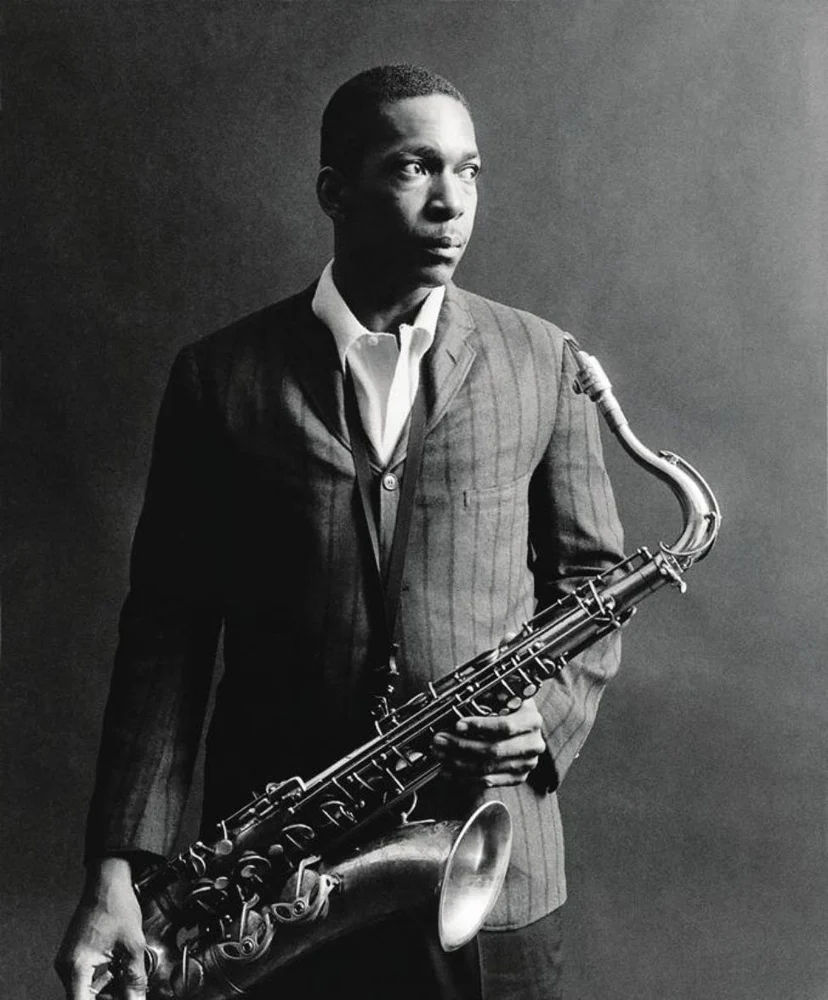
John Coltrane, born John William Coltrane on September 23, 1926, in Hamlet, North Carolina, is widely regarded as one of the most influential saxophonists and composers in the history of jazz. His innovative techniques, deep spirituality, and relentless pursuit of musical exploration have left an indelible mark on the world of music. This article delves into Coltrane’s life, his rise to fame, his artistic contributions, and his lasting legacy.
Early Life and Musical Beginnings
John Coltrane was born into a family with a modest background in the small town of Hamlet, North Carolina. His father, John R. Coltrane, was a tailor and a part-time musician who played the violin. His mother, Alice Gertrude Blair, had a profound influence on him, instilling in him a sense of discipline and a love for music. The family moved to High Point, North Carolina, where Coltrane spent most of his childhood.
Coltrane’s early exposure to music came through his family and church, where he was introduced to gospel music. He began his formal music education in high school, playing the clarinet and alto saxophone. However, his musical journey was not without challenges. His father passed away when Coltrane was only 12 years old, which left the family in a difficult financial situation. Despite these hardships, Coltrane remained committed to his passion for music.
In 1943, Coltrane moved to Philadelphia, a city with a vibrant jazz scene, to further his music education at the Ornstein School of Music and the Granoff Studios. It was during this time that he became deeply influenced by the works of Lester Young and Johnny Hodges, two prominent saxophonists of the era. Coltrane’s exposure to these musicians solidified his decision to pursue a career in music, specifically as a saxophonist.
Early Career and Military Service
Coltrane’s professional career began in 1945 when he was drafted into the U.S. Navy. During his time in the military, he joined the Navy band and played clarinet and saxophone, further honing his skills. Upon his discharge from the Navy in 1946, Coltrane returned to Philadelphia, where he immersed himself in the city’s jazz scene. He played with various small groups and big bands, gaining valuable experience and exposure.
The late 1940s were a formative period for Coltrane. He played in several R&B bands, which provided him with a steady income and allowed him to develop his sound. During this time, he also encountered the growing bebop movement, which was revolutionizing jazz. Coltrane’s exposure to bebop, particularly the works of Charlie Parker, had a profound impact on his playing style and musical direction.
Coltrane’s big break came in 1949 when he joined Dizzy Gillespie’s big band. Gillespie, one of the pioneers of bebop, recognized Coltrane’s talent and provided him with the opportunity to perform with some of the leading musicians of the time. This experience was invaluable for Coltrane, as it allowed him to refine his technique and explore new musical ideas.
The Miles Davis Quintet and Breakthrough
The 1950s marked a significant turning point in Coltrane’s career. In 1955, he was recruited by Miles Davis to join his quintet, one of the most influential jazz groups of the era. Davis, known for his innovative approach to jazz, was a major figure in the development of modal jazz, a style that emphasized melody and mood over chord changes. Coltrane’s time with Davis was a period of intense growth and experimentation.
However, Coltrane’s journey with Davis was not without its challenges. He struggled with substance abuse during this period, which affected his performances and led to his dismissal from the quintet in 1956. Despite this setback, Coltrane’s brief separation from Davis allowed him to collaborate with another jazz legend, Thelonious Monk.
Monk, a pioneering pianist and composer, was known for his unconventional approach to music. Coltrane joined Monk’s quartet, where he was given the freedom to experiment and develop his own voice. The experience with Monk was transformative for Coltrane. It was during this time that he began to develop his signature “sheets of sound” technique, characterized by rapid, dense improvisations that created a cascading effect of notes.
Coltrane’s work with Monk was a period of intense study and practice. He would spend hours working with Monk, absorbing his intricate compositions and unique sense of rhythm. This period also marked Coltrane’s decision to overcome his addiction, allowing him to focus fully on his music.
In 1957, Coltrane rejoined Miles Davis, now a more mature and confident musician. This second tenure with Davis proved to be even more fruitful than the first. Coltrane’s playing had evolved significantly, and his contributions were crucial to the success of Davis’s seminal album Kind of Blue (1959), which is considered one of the greatest jazz albums of all time. Coltrane’s solo on the track “So What” is particularly iconic, showcasing his mastery of the modal style that Davis had pioneered.
Solo Career and Artistic Evolution
By 1960, Coltrane had emerged as a leading figure in the jazz world. He left the Miles Davis Quintet to pursue a solo career, which allowed him to explore his musical ideas more freely. His first major album as a bandleader, Giant Steps (1960), was a landmark in jazz history. The album featured complex chord progressions and intricate melodies that pushed the boundaries of jazz improvisation. The title track, “Giant Steps,” became a defining piece of Coltrane’s career, showcasing his technical prowess and innovative approach to harmony.
Following the success of Giant Steps, Coltrane continued to explore new musical territories. In 1961, he recorded My Favorite Things, an album that marked a significant shift in his style. The title track, a reimagining of the Rodgers and Hammerstein song from The Sound of Music, featured Coltrane playing the soprano saxophone, an instrument that had fallen out of favor in jazz. His rendition of “My Favorite Things” became a major hit and introduced a wider audience to his work.
Coltrane’s exploration of modal jazz deepened with the formation of his classic quartet, featuring McCoy Tyner on piano, Elvin Jones on drums, and Jimmy Garrison on bass. This group became one of the most influential ensembles in jazz history, known for their intense, spiritual performances. Together, they recorded some of Coltrane’s most celebrated albums, including Impressions (1963), Crescent (1964), and A Love Supreme (1965).
A Love Supreme is perhaps Coltrane’s most famous and enduring work. The album is a four-part suite that reflects Coltrane’s deep spiritual awakening and his quest for a higher purpose through music. It is a powerful expression of his belief in the divine and his dedication to using music as a form of worship. A Love Supreme was a commercial and critical success, and it remains one of the most revered albums in jazz history.
Later Years and Experimental Phase
The mid-1960s marked a period of intense experimentation for Coltrane. After the release of A Love Supreme, he began to explore the avant-garde and free jazz movements, which were characterized by their emphasis on improvisation and the abandonment of traditional structures. Coltrane’s interest in Eastern philosophy and spirituality also influenced his music during this period, leading him to incorporate elements of Indian ragas and African rhythms into his compositions.
In 1965, Coltrane released Ascension, a bold and controversial album that featured a large ensemble of musicians improvising freely over a loose framework. The album was a departure from the more structured approach of his earlier work and divided critics and fans alike. However, it signaled Coltrane’s commitment to pushing the boundaries of jazz and exploring new sonic possibilities.
Coltrane’s final years were marked by a relentless drive to innovate. He continued to record prolifically, producing albums such as Meditations (1966) and Interstellar Space (1967), which showcased his increasingly abstract and experimental style. During this time, he also mentored younger musicians, including Pharoah Sanders, who would go on to become a leading figure in the free jazz movement.
Despite his growing influence and popularity, Coltrane’s health began to deteriorate in the mid-1960s. He was diagnosed with liver cancer in 1967, but he continued to perform and record until his illness forced him to stop. On July 17, 1967, John Coltrane passed away at the age of 40 in Huntington, Long Island.
Legacy and Impact
John Coltrane’s impact on music extends far beyond jazz. He was a pioneer who continually pushed the boundaries of what was possible in music, inspiring countless musicians across genres. His innovations in harmony, rhythm, and improvisation have become foundational elements of modern jazz, and his influence can be heard in everything from rock to classical music.
Coltrane’s legacy is also deeply tied to his spiritual journey. His music was a reflection of his search for meaning and his desire to connect with something greater than himself. A Love Supreme remains a testament to the power of music as a spiritual and transformative force.
In the years since his death, Coltrane has been celebrated as a cultural icon. He was posthumously awarded a Pulitzer Prize Special Citation in 2007 for his contributions to music, and he was inducted into the Down Beat Jazz Hall of Fame in 1965. His life and work have been the subject of numerous books, documentaries, and academic studies, cementing his place as one of the most important and influential musicians of the 20th century.
Coltrane’s influence continues to be felt today, as new generations of musicians and listeners discover his work. His relentless pursuit of artistic and spiritual growth serves as an enduring inspiration, reminding us of the power of music to transcend boundaries and connect us to the deepest parts of ourselves.


