
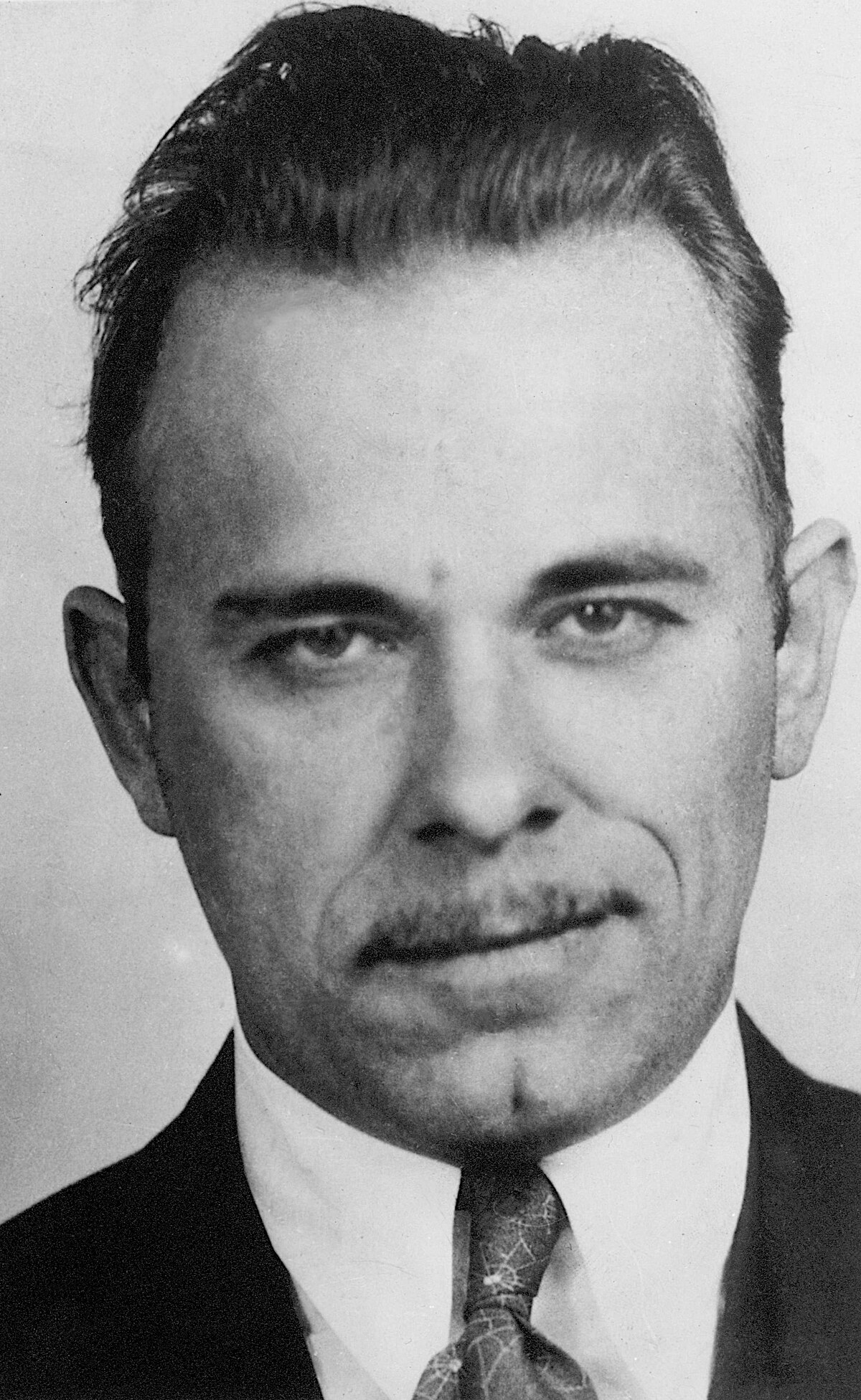
John Herbert Dillinger, born on June 22, 1903, in Indianapolis, Indiana, is one of the most infamous figures in American criminal history. Known for his audacious bank robberies, daring escapes, and a reputation that blurred the lines between villainy and folk heroism, Dillinger became the embodiment of the American outlaw during the Great Depression. His life, marked by a meteoric rise in the criminal underworld and a dramatic end at the hands of the FBI, continues to captivate the public imagination. This article delves into the life of John Dillinger, exploring the events that led to his notoriety, his impact on American culture, and the legacy he left behind.
Early Life and Background
John Dillinger was born into a working-class family in Indianapolis. His father, John Wilson Dillinger, was a grocer who had a strict and often harsh approach to parenting, while his mother, Mary Ellen Lancaster, passed away when he was only three years old. This loss left a void in Dillinger’s life, and his relationship with his father became strained over the years. His father remarried, and Dillinger struggled with the discipline and expectations imposed on him by his stepmother.
Dillinger’s early life was marked by petty delinquency. He was known as a troublemaker in his neighborhood, often getting into fights and engaging in minor thefts. Despite attempts to steer him onto a better path, including enrolling him in the military, Dillinger’s rebellious nature prevailed. His first significant run-in with the law came at the age of 20 when he was arrested for robbing a grocery store in Mooresville, Indiana. Although his stepmother intervened to secure his release, this event marked the beginning of his criminal career.
The Descent into Crime
Following his initial brush with the law, Dillinger found it difficult to maintain a steady job or a lawful lifestyle. He soon fell in with a group of petty criminals and began planning more serious heists. In 1924, he was involved in a botched robbery in Dayton, Ohio, which led to his arrest and subsequent incarceration at the Indiana State Prison in Michigan City. It was during his time in prison that Dillinger honed his criminal skills, learning from seasoned inmates who had extensive experience in bank robbery.
While in prison, Dillinger’s charisma and intelligence made him a natural leader. He forged alliances with other inmates, many of whom would later become members of his notorious gang. Dillinger’s time in prison also solidified his determination to become a professional criminal. He meticulously planned his future heists, studied security measures, and even plotted his escape.
In 1933, after serving nearly nine years, Dillinger was paroled. Upon his release, he wasted no time in reassembling his gang and embarking on a spree of bank robberies across the Midwest. His first major robbery took place at the New Carlisle National Bank in Ohio, where he and his gang made off with over $10,000. This heist marked the beginning of a series of robberies that would terrorize banks and law enforcement agencies across several states.
The Rise to Infamy
John Dillinger’s criminal exploits quickly earned him a reputation as one of America’s most wanted men. His ability to evade capture, coupled with his daring robberies, captivated the public and the media. Dillinger’s gang was known for its precision and efficiency, often carrying out robberies in broad daylight with military-like coordination. The gang’s success was partly due to Dillinger’s meticulous planning and his willingness to take risks.
One of the most notable aspects of Dillinger’s criminal career was his sense of style. He was often seen wearing tailored suits, fedoras, and overcoats, which added to his image as a suave and sophisticated outlaw. This style, combined with his charm and good looks, made Dillinger a media sensation. Newspapers and magazines followed his every move, and he became a symbol of rebellion against the establishment during the hardships of the Great Depression.
Dillinger’s fame was further fueled by his ability to escape from jail. In September 1933, he was captured in Dayton, Ohio, and sent to the Lima jail. However, he managed to escape with the help of his gang, who posed as law enforcement officers to break him out. This escape, along with others that followed, only added to his legend as a master of evasion.
Public Enemy No. 1
Dillinger’s criminal activities eventually caught the attention of J. Edgar Hoover, the director of the newly formed Federal Bureau of Investigation (FBI). Hoover, eager to demonstrate the FBI’s effectiveness in combating crime, made Dillinger the bureau’s top priority. In June 1934, Dillinger was officially designated as Public Enemy No. 1, a title that underscored the seriousness with which the federal government viewed his criminal activities.
Despite the increased pressure from law enforcement, Dillinger continued his crime spree. He and his gang carried out a series of high-profile bank robberies, often targeting small towns where law enforcement was less equipped to handle such sophisticated criminals. Dillinger’s notoriety grew, and he became a symbol of both fear and fascination for the American public.
One of Dillinger’s most infamous robberies took place at the First National Bank in East Chicago, Indiana, where a shootout with police resulted in the death of a police officer. This incident marked a turning point in Dillinger’s criminal career, as it escalated the level of violence associated with his gang’s activities and increased the urgency with which law enforcement pursued him.
The Final Days and Capture
As Dillinger’s notoriety grew, so did the efforts to capture him. The FBI employed a range of new tactics, including wiretapping, surveillance, and the use of informants, to track down the elusive criminal. In March 1934, Dillinger was arrested in Tucson, Arizona, after a series of coincidences led the police to his hideout. However, his capture was short-lived. Just days later, Dillinger executed a daring escape from the Crown Point jail in Indiana, where he famously used a wooden gun to intimidate guards and make his getaway.
Following his escape from Crown Point, Dillinger went into hiding, but the net was closing in on him. The FBI, now more determined than ever, intensified their efforts to capture him. In July 1934, Dillinger was tracked to Chicago, where he was living under an alias. On the evening of July 22, 1934, Dillinger attended a screening of the film “Manhattan Melodrama” at the Biograph Theater with two women, Polly Hamilton and Ana Cumpanas (also known as Anna Sage).
Unbeknownst to Dillinger, Cumpanas had tipped off the FBI about his whereabouts in exchange for leniency on her pending deportation to Romania. As Dillinger exited the theater, he was ambushed by FBI agents led by Melvin Purvis. The agents opened fire, and Dillinger was struck multiple times, fatally wounding him. He died on the sidewalk outside the theater, bringing an end to the life of one of America’s most notorious criminals at the age of 31.
The Aftermath and Legacy
John Dillinger’s death marked the end of an era of outlaw criminals who had come to prominence during the Great Depression. His death was widely covered by the media, and thousands of people gathered to view his body at the Cook County morgue. Dillinger’s funeral was attended by hundreds, and his gravesite in Crown Hill Cemetery in Indianapolis became a site of pilgrimage for those fascinated by his life and legend.
Dillinger’s legacy is complex. To some, he remains a symbol of resistance against a corrupt and oppressive system, a modern-day Robin Hood who robbed from the rich during a time of widespread poverty. His actions, while criminal, were seen by many as a defiant response to the economic hardships of the era. However, others view Dillinger as a dangerous criminal whose actions caused untold harm and suffering.
The story of John Dillinger has been immortalized in numerous books, films, and documentaries. His life has been the subject of extensive study and analysis, with historians and criminologists debating the motivations behind his criminal activities and the impact he had on American society. The 2009 film “Public Enemies,” directed by Michael Mann and starring Johnny Depp as Dillinger, brought his story to a new generation, highlighting the enduring fascination with this enigmatic figure.
The Enduring Myth of John Dillinger
John Dillinger’s life and death have taken on a mythic quality in American culture. He is often depicted as a tragic anti-hero, a man who rose from humble beginnings to become a legend in his own time. His story is a reflection of the social and economic turmoil of the 1930s, a period when many Americans felt betrayed by the institutions that were supposed to protect them.
Dillinger’s image as a stylish and charismatic outlaw continues to resonate in popular culture. He represents a certain type of American individualism, one that values freedom, defiance, and the pursuit of personal destiny, even in the face of overwhelming odds. This image has been romanticized over the years, but it also serves as a cautionary tale about the dangers of idolizing criminal behavior.
In the decades since his death, Dillinger’s story has been reinterpreted and reimagined countless times, each telling adding new layers to his legacy. Whether viewed as a criminal mastermind, a folk hero, or a tragic figure, John Dillinger remains an indelible part of American history—a symbol of the tension between law and order, and the rebellious spirit that has always been a part of the American identity.


