
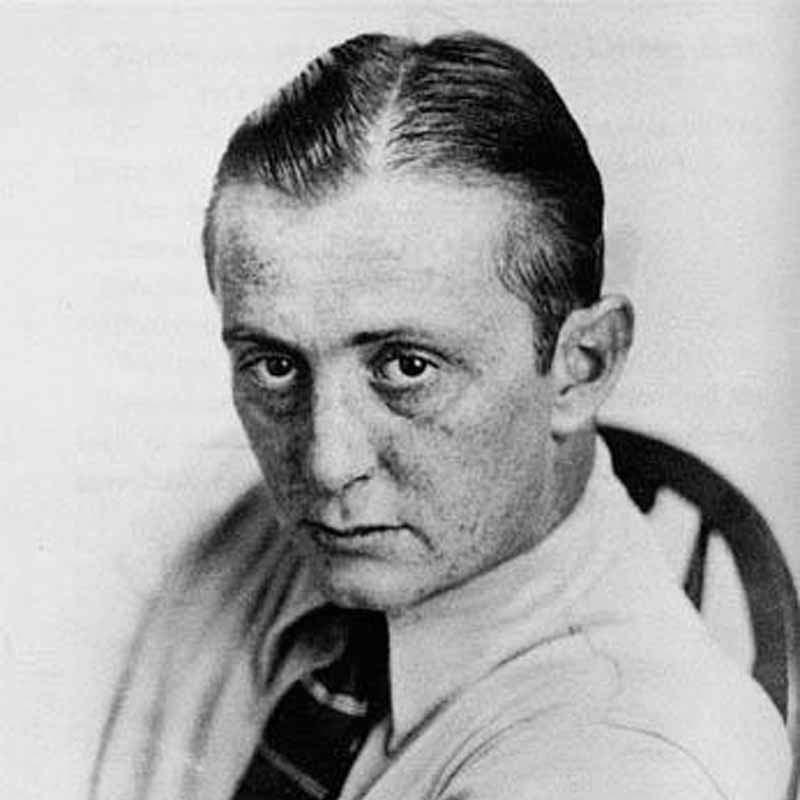
John Fante, born on April 8, 1909, in Denver, Colorado, is a celebrated American novelist, short story writer, and screenwriter, whose work has left a lasting legacy in American literature. Known for his semi-autobiographical novels and his raw, emotional writing style, Fante’s influence extends across generations of writers, particularly in the realm of gritty, urban fiction. Despite facing numerous challenges throughout his life, including health issues and the struggle for recognition, Fante’s work has gained critical acclaim, particularly posthumously, earning him a revered place in American literary history.
Early Life and Background
John Fante was born into a family of Italian immigrants. His father, Nicola Fante, hailed from the Abruzzo region of Italy, while his mother, Mary Capoluongo, was of Lucanian descent. The Fante family lived in relative poverty, a fact that deeply influenced John Fante’s worldview and writing. Growing up in a devout Catholic household, Fante was educated in various Catholic schools in Boulder, Colorado, where he developed a deep sense of guilt and religious fervor, themes that would later permeate much of his literary work.
Fante attended the University of Colorado but left in 1929, before completing his degree, to pursue a career in writing. He moved to California, where he worked a series of odd jobs while trying to establish himself as a writer. During this period, Fante began to write about the people and places he encountered in California, particularly the working-class neighborhoods and immigrant communities of Los Angeles. His early experiences in Los Angeles would become the foundation for much of his later work.
The Road to Literary Fame: The Saga of Arturo Bandini
Fante’s first taste of literary success came in the 1930s when he began publishing short stories in various literary magazines. One of his early breakthroughs was the acceptance of his story “Altar Boy” by The American Mercury, a prominent literary magazine of the time. The acceptance came with a note from the editor, H. L. Mencken, urging Fante to type his manuscripts, a suggestion that marked the beginning of his professional writing career.
Fante’s most enduring literary achievement is the creation of Arturo Bandini, a character who serves as his alter ego in a series of four novels. The “Bandini Quartet,” as it is often called, includes Wait Until Spring, Bandini (1938), The Road to Los Angeles (written before Wait Until Spring, Bandini but published posthumously in 1985), Ask the Dust (1939), and Dreams from Bunker Hill (1982).
Ask the Dust is arguably Fante’s most famous work, often regarded as a classic of American literature. The novel is a semi-autobiographical account of a young writer, Arturo Bandini, struggling to make a name for himself in Los Angeles during the Great Depression. The novel’s raw depiction of poverty, ambition, love, and despair resonated with readers and critics alike, earning Fante a dedicated following. However, despite its initial acclaim, Ask the Dust did not achieve widespread commercial success during Fante’s lifetime.
The character of Arturo Bandini became a literary icon, embodying the angst and aspirations of young, struggling writers. Fante’s portrayal of Bandini as a flawed, yet deeply human character, struggling with his identity, his desires, and his failures, struck a chord with readers, particularly those who identified with the challenges of immigrant life in America.
Hollywood and Screenwriting
In addition to his work as a novelist, John Fante had a prolific career as a screenwriter in Hollywood. During the 1940s and 1950s, Fante wrote scripts for several major films, often adapting his own stories or collaborating on projects based on the works of other writers. His screenwriting career provided him with a steady income, allowing him to support his growing family and continue writing fiction.
One of Fante’s notable screenwriting credits is the 1957 film Full of Life, based on his own novel of the same name. The film, starring Richard Conte and Judy Holliday, was a critical and commercial success, earning Fante a nomination for the Writers Guild of America Award for Best Written American Comedy. The success of Full of Life brought Fante some recognition in Hollywood, but his true passion remained in writing novels and short stories.
Fante also worked on the screenplay for Walk on the Wild Side (1962), a film adaptation of Nelson Algren’s novel, starring Jane Fonda. Throughout his career, Fante collaborated on various other projects, including Jeanne Eagels (1957) and Maya (1966). However, despite his success in Hollywood, Fante often felt frustrated by the commercial nature of the film industry and the compromises it demanded of writers.
Struggles and Later Life
Despite his early literary achievements, Fante faced numerous struggles throughout his life. By the 1950s, he was battling diabetes, a condition that would eventually lead to the loss of his eyesight and the amputation of his legs. These health challenges, combined with the demands of supporting a family, took a toll on Fante’s productivity as a writer. For much of the 1960s and 1970s, Fante focused on his screenwriting work, as it provided a more reliable source of income than his novels.
During this period, Fante’s literary work fell into obscurity, and many of his books went out of print. However, his fortunes changed in the late 1970s when the writer Charles Bukowski, who had long admired Fante’s work, began to champion his writing. Bukowski, often regarded as a literary rebel, credited Fante as a major influence on his own work, calling him “my god” and “the best writer I ever read.” Bukowski’s praise helped to revive interest in Fante’s novels, leading to the re-publication of several of his works.
In 1977, Fante published The Brotherhood of the Grape, a novel that explored themes of family, aging, and reconciliation. The novel was well-received, and it marked a resurgence in Fante’s literary career. By this time, however, Fante’s health had deteriorated significantly, and he was no longer able to write on his own. His final novel, Dreams from Bunker Hill, was dictated to his wife, Joyce, as he was by then blind and bedridden.
Legacy and Posthumous Recognition
John Fante passed away on May 8, 1983, in Woodland Hills, California, at the age of 74. At the time of his death, Fante’s work was still largely underappreciated by the broader literary community. However, the renewed interest in his writing, sparked by Bukowski and others, ensured that his legacy would endure.
In the years following his death, Fante’s work experienced a renaissance. His novels, particularly Ask the Dust, were reprinted and gained a new generation of readers. The gritty, realistic portrayal of life in Los Angeles, combined with the deeply personal and emotional narrative style, resonated with readers who appreciated Fante’s unflinching honesty and his exploration of the human condition.
Fante’s influence can be seen in the works of numerous writers who followed him, particularly those who write about urban life, the immigrant experience, and the struggles of the working class. His portrayal of Los Angeles as a city of broken dreams and fleeting hopes has become a defining image in American literature.
In 2006, Fante’s Ask the Dust was adapted into a film directed by Robert Towne, starring Colin Farrell and Salma Hayek. Although the film received mixed reviews, it brought further attention to Fante’s work and introduced his writing to a wider audience.
Today, John Fante is regarded as a seminal figure in American literature, particularly in the genre of “dirty realism,” which focuses on the everyday struggles of ordinary people. His work continues to be studied in universities and appreciated by readers around the world.
Conclusion
John Fante’s life and work are a testament to the power of persistence and the enduring impact of literature. Despite facing numerous challenges, both personal and professional, Fante remained committed to his craft, producing a body of work that continues to resonate with readers. His exploration of themes such as identity, ambition, and the immigrant experience has left a lasting mark on American literature.
Fante’s ability to capture the complexities of the human experience, combined with his raw, emotional writing style, ensures that his work remains relevant and influential. As new generations of readers discover his novels, John Fante’s legacy as a pioneering and authentic voice in American literature continues to grow.


