
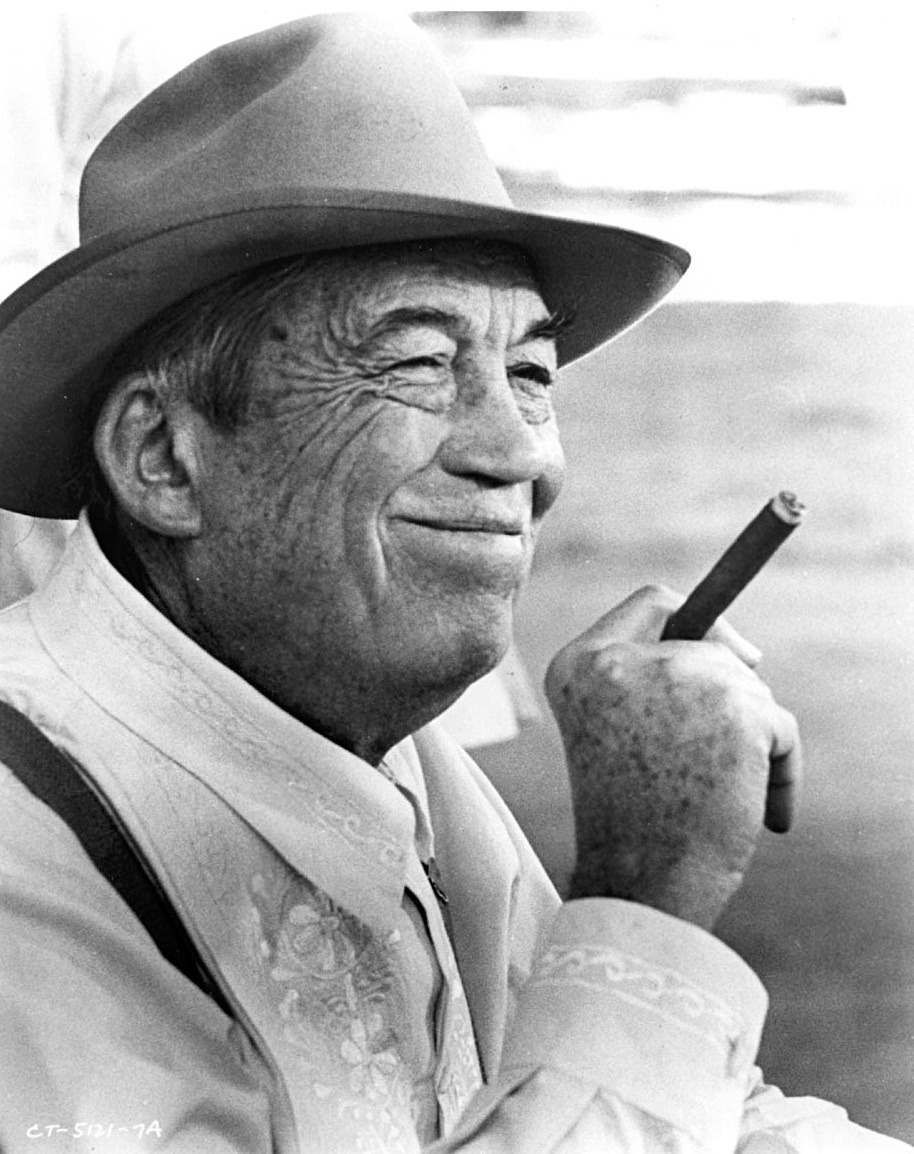
John Huston, a name synonymous with Hollywood’s Golden Age, was an iconic film director, screenwriter, and actor who left an indelible mark on the film industry. Born on August 5, 1906, in Nevada, Missouri, Huston’s life and career spanned several decades, producing some of the most enduring classics in American cinema. His work not only defined an era but also influenced generations of filmmakers who followed in his footsteps. This article explores the life, career, and legacy of John Huston, offering detailed insights into his contributions to the world of film.
Early Life and Background
John Marcellus Huston was born into a family deeply rooted in the arts. His father, Walter Huston, was a prominent stage and screen actor, and his mother, Rhea Gore, was a journalist. The Huston family’s Irish and Scottish heritage played a significant role in shaping John’s worldview, particularly his fascination with adventure, storytelling, and the human condition.
As a young man, John Huston was a restless spirit, much like the characters he would later bring to life on the silver screen. His early years were marked by a series of diverse experiences that included boxing, military service, journalism, and acting. These experiences enriched his understanding of human nature and provided him with a wealth of material to draw upon in his later career as a filmmaker.
Before he ventured into filmmaking, Huston dabbled in various forms of artistic expression. In the 1930s, he worked in theater and wrote short stories and screenplays. His talent for writing soon caught the attention of Hollywood, and he began working as a screenwriter for Warner Bros. His early screenwriting credits include notable films like Jezebel (1938) and Dr. Ehrlich’s Magic Bullet (1940), both of which showcased his ability to craft compelling narratives.
Breakthrough as a Director
John Huston’s directorial debut came in 1941 with The Maltese Falcon, a film noir classic that would go on to be regarded as one of the greatest films of all time. Starring Humphrey Bogart as the hard-boiled detective Sam Spade, The Maltese Falcon was a critical and commercial success. Huston’s direction was lauded for its tight pacing, atmospheric cinematography, and sharp dialogue, establishing him as a major force in Hollywood.
Following the success of The Maltese Falcon, Huston directed In This Our Life (1942), starring Bette Davis and Olivia de Havilland. While not as successful as his debut, the film further demonstrated Huston’s versatility and ability to handle complex characters and themes. However, it was his work during the 1940s and 1950s that solidified his reputation as one of Hollywood’s leading directors.
One of Huston’s most celebrated films from this period is The Treasure of the Sierra Madre (1948), for which he won the Academy Awards for Best Director and Best Adapted Screenplay. The film, starring Humphrey Bogart and Walter Huston (John’s father), is a gripping tale of greed, betrayal, and the corrupting influence of wealth. It remains a quintessential example of Huston’s skill in exploring the darker aspects of human nature.
Thematic Exploration and Style
John Huston’s films are characterized by their thematic depth and complexity. His work often delved into the human psyche, exploring themes such as existentialism, morality, and the human struggle against the forces of nature. Huston had a particular affinity for stories about flawed characters who are driven by their obsessions and desires, often leading to their downfall.
Huston’s directorial style was marked by its realism and attention to detail. He preferred shooting on location rather than on studio sets, believing that real environments added authenticity to the story. This approach is evident in films like The African Queen (1951), which was shot on location in Uganda and the Congo. The film, which starred Humphrey Bogart and Katharine Hepburn, is a perfect blend of adventure, romance, and drama, and earned Bogart his only Academy Award for Best Actor.
Another hallmark of Huston’s work is his ability to draw out powerful performances from his actors. He had a keen understanding of character development and often collaborated closely with his actors to bring out the best in them. This is evident in films like Moulin Rouge (1952), where José Ferrer’s portrayal of the artist Toulouse-Lautrec earned him critical acclaim, and The Misfits (1961), which featured what many consider to be the best performances of both Marilyn Monroe and Clark Gable.
Impact of McCarthyism and Later Career
The 1950s was a tumultuous time in Hollywood, with the rise of McCarthyism and the Red Scare casting a shadow over the film industry. John Huston was an outspoken critic of McCarthyism and the House Un-American Activities Committee (HUAC), which led to tensions with the Hollywood establishment. Despite these challenges, Huston continued to make films that were bold, innovative, and unafraid to tackle controversial subjects.
In 1956, Huston directed Moby Dick, an ambitious adaptation of Herman Melville’s classic novel. The film starred Gregory Peck as Captain Ahab and featured Orson Welles in a memorable supporting role. While the film received mixed reviews upon its release, it has since been re-evaluated and is now considered a significant achievement in Huston’s career.
The 1960s and 1970s saw Huston continue to push the boundaries of cinema. He directed The Misfits (1961), written by Arthur Miller, and The Night of the Iguana (1964), based on the play by Tennessee Williams. Both films dealt with themes of loneliness, alienation, and the search for meaning, and featured some of the finest performances of their respective casts.
Huston’s later years were marked by a return to his roots as a storyteller. He directed The Man Who Would Be King (1975), based on the novella by Rudyard Kipling, which starred Sean Connery and Michael Caine. The film is an epic adventure that explores themes of empire, ambition, and the cost of power. It is widely regarded as one of Huston’s greatest films and a testament to his enduring talent as a filmmaker.
Personal Life and Legacy
John Huston’s personal life was as colorful and eventful as his films. He was married five times and had numerous relationships throughout his life. Despite his often tumultuous personal life, Huston maintained close relationships with his family, particularly his father Walter and his children, including his daughter Anjelica Huston, who would go on to become an acclaimed actress and director in her own right.
Huston was also known for his love of adventure and travel. He spent much of his life living abroad, particularly in Ireland and Mexico, and often incorporated his experiences into his films. His love of adventure is perhaps best captured in his 1984 film Under the Volcano, based on the novel by Malcolm Lowry, which tells the story of an alcoholic British consul in Mexico.
John Huston’s legacy as a filmmaker is immense. Over the course of his career, he directed more than 40 films, many of which are considered classics of American cinema. His influence can be seen in the work of countless filmmakers who followed in his footsteps, from Martin Scorsese to the Coen Brothers.
Huston’s work continues to be studied and admired for its thematic richness, its bold exploration of the human condition, and its mastery of the cinematic form. He was a director who was unafraid to take risks, to challenge his audience, and to push the boundaries of what cinema could achieve.
Final Years and Death
In the final years of his life, John Huston continued to work, even as his health began to decline. He directed Prizzi’s Honor (1985), a dark comedy starring Jack Nicholson and Kathleen Turner, which earned him his final Academy Award nomination. His last film, The Dead (1987), based on the short story by James Joyce, is widely regarded as a masterpiece and a fitting end to his illustrious career.
John Huston passed away on August 28, 1987, just days after The Dead premiered at the Venice Film Festival. He was 81 years old. Huston’s death marked the end of an era, but his legacy lives on through his films, which continue to inspire and entertain audiences around the world.
John Huston was more than just a filmmaker; he was a storyteller, an adventurer, and a pioneer. His life and work are a testament to the power of cinema to explore the deepest corners of the human soul and to bring stories to life in ways that resonate across time and space.


