
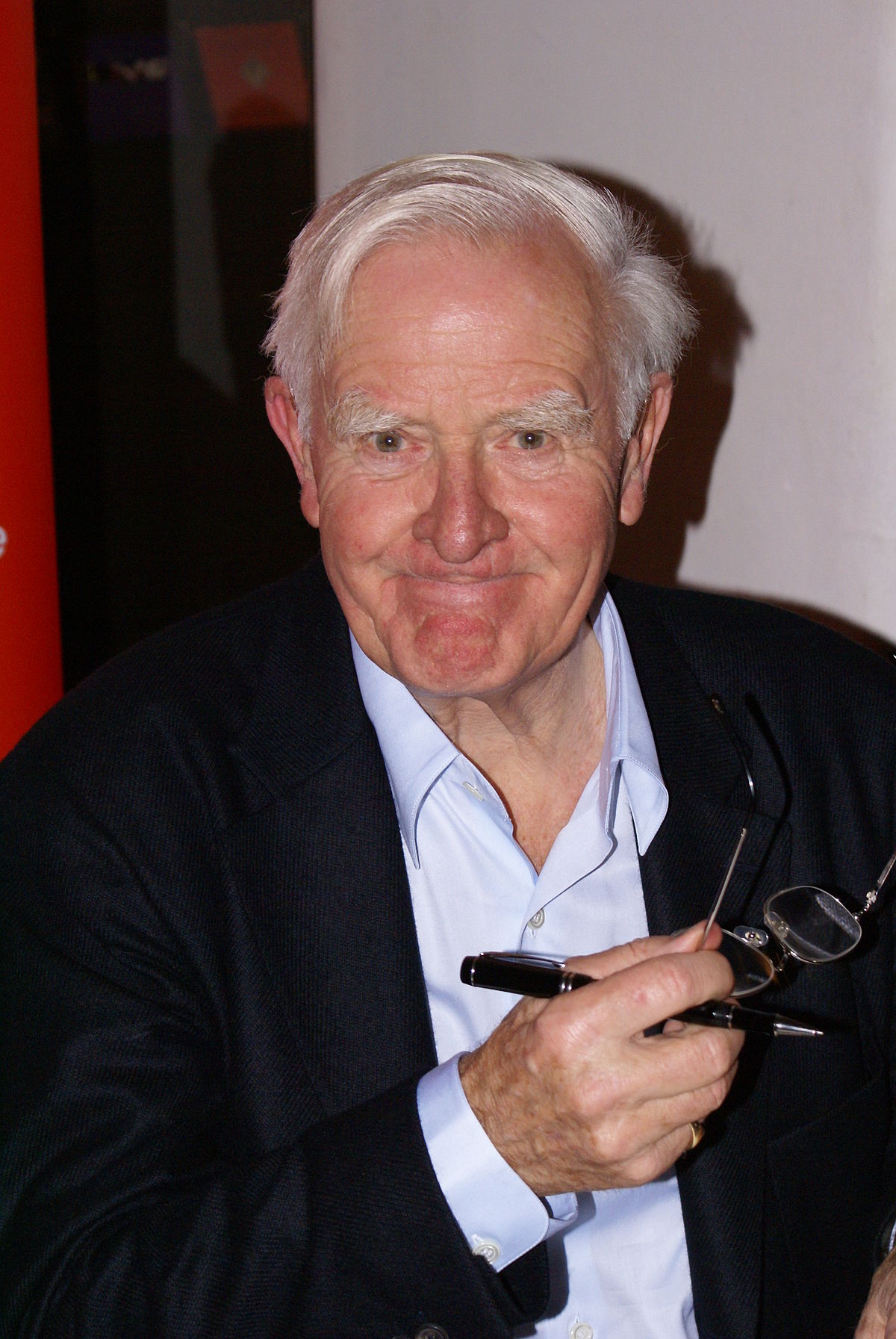
John le Carré, born David John Moore Cornwell on October 19, 1931, in Poole, Dorsetshire, England, was a literary giant whose works have left an indelible mark on the world of spy fiction. He passed away on December 12, 2020, at the age of 89, leaving behind a legacy that not only shaped the genre of espionage literature but also provided a deep and often critical examination of the moral and ethical complexities of the Cold War and its aftermath.
Early Life and Education
Le Carré’s early life was far from ordinary. His father, Ronnie Cornwell, was a flamboyant con artist, whose dubious activities often left the family in financial and social turmoil. This unstable environment likely influenced Le Carré’s later fascination with duplicity and deception, themes that would permeate his writing.
At the age of 16, Le Carré left home to study at the University of Bern in Switzerland, where he focused on languages. His academic journey eventually led him to Oxford University, where he studied German literature. It was during this time that he began to develop his interest in the complexities of human nature, a subject that would become central to his literary work.
Entry into the Intelligence World
Le Carré’s foray into the world of espionage began during his time at Oxford, where he was recruited by MI5, the British domestic intelligence service. His role primarily involved interrogating defectors from the Eastern Bloc, a task that provided him with first-hand insights into the psychological and ideological battles of the Cold War.
In the 1950s, Le Carré transitioned to MI6, the British foreign intelligence service, where he continued to hone his understanding of the clandestine world of espionage. These experiences were invaluable in shaping the authentic and nuanced portrayal of the spy world in his novels.
Literary Beginnings and the Birth of George Smiley
Le Carré’s first novel, Call for the Dead (1961), introduced the world to George Smiley, a character who would become one of the most iconic figures in spy fiction. Smiley, unlike the glamorous spies of Ian Fleming’s James Bond series, was a disillusioned, middle-aged man, grappling with the moral ambiguities of his profession. This stark contrast resonated with readers who were looking for a more realistic portrayal of espionage.
The success of Call for the Dead led to the publication of A Murder of Quality (1962), another novel featuring George Smiley. However, it was his third novel, The Spy Who Came in from the Cold (1963), that catapulted Le Carré to international fame. The novel was a critical and commercial success, praised for its gritty realism and complex characters. It was also adapted into a successful film starring Richard Burton, further cementing Le Carré’s reputation as a master of the genre.
The Impact of the Cold War on Le Carré’s Writing
The Cold War was the backdrop for many of Le Carré’s most famous works. The ideological battle between the West and the Soviet Union provided him with a rich tapestry of themes to explore, from the moral compromises required in the world of espionage to the personal costs of living a life built on deception.
The Spy Who Came in from the Cold is perhaps the most famous example of Le Carré’s exploration of these themes. The novel tells the story of Alec Leamas, a British agent who becomes disillusioned with the world of espionage. Leamas’s journey is one of moral degradation, as he navigates a world where loyalty and betrayal are two sides of the same coin.
This novel, along with others like Tinker Tailor Soldier Spy (1974) and Smiley’s People (1979), showcases Le Carré’s ability to depict the intricate and often sordid reality of intelligence work. His characters are not heroes in the traditional sense; they are flawed, conflicted individuals who often find themselves trapped in a web of lies and deceit.
Post-Cold War Era and Evolution of Le Carré’s Themes
With the end of the Cold War in the early 1990s, many critics wondered if Le Carré’s work would lose its relevance. However, he successfully adapted to the changing political landscape by shifting his focus to new global issues. Novels like The Night Manager (1993), which deals with arms smuggling, and The Constant Gardener (2001), which exposes the unethical practices of pharmaceutical companies in Africa, demonstrated his ability to tackle contemporary issues with the same depth and insight that characterized his earlier work.
The Constant Gardener in particular marked a departure from the traditional spy story, blending elements of social criticism with the thriller genre. The novel was widely acclaimed for its exploration of corporate greed and its impact on the developing world. The success of The Constant Gardener was further amplified by its adaptation into an award-winning film in 2005.
Later Life and Continued Literary Success
Despite advancing age, Le Carré continued to write prolifically into the 21st century. His later works, such as A Most Wanted Man (2008) and Agent Running in the Field (2019), reflect his ongoing concerns with the state of the world, particularly the erosion of civil liberties and the rise of authoritarianism.
In A Most Wanted Man, Le Carré delves into the post-9/11 world, exploring the consequences of the War on Terror and the moral compromises made in the name of security. The novel’s protagonist, a Chechen Muslim seeking asylum in Germany, becomes a pawn in the complex game of international intelligence, highlighting Le Carré’s continuing interest in the human cost of global politics.
Agent Running in the Field, his final novel, was published just a year before his death. It is a scathing critique of contemporary political developments, particularly Brexit and the rise of populism in the West. The novel’s protagonist, Nat, is a veteran British spy disillusioned with the direction his country is taking. Through Nat’s eyes, Le Carré offers a poignant reflection on the state of the world and the moral complexities of serving a nation that seems to have lost its way.
Legacy and Influence
John le Carré’s influence on the world of literature, particularly within the genre of espionage fiction, cannot be overstated. His works have been translated into numerous languages and have sold millions of copies worldwide. His ability to blend intricate plots with deep character studies and social commentary set a new standard for the spy novel, elevating it to a form of literary art.
Le Carré’s legacy extends beyond his novels. His work has been adapted into several successful films and television series, including The Spy Who Came in from the Cold, Tinker Tailor Soldier Spy, and The Night Manager. These adaptations have introduced his work to new generations of readers and viewers, ensuring that his influence will continue for years to come.
Moreover, Le Carré’s portrayal of espionage has had a lasting impact on the genre. His rejection of the glamorous, action-packed spy story in favor of a more realistic and morally complex depiction of intelligence work has inspired countless writers and filmmakers. The character of George Smiley, in particular, remains one of the most iconic figures in spy fiction, embodying the quiet, unassuming intelligence officer who outwits his adversaries not through brute force, but through intellect and perseverance.
Conclusion
John le Carré was more than just a writer of spy novels; he was a keen observer of the human condition, using the world of espionage as a lens through which to explore the complexities of loyalty, betrayal, and morality. His works resonate not only because of their gripping plots but because of the profound questions they raise about the nature of power, the consequences of deception, and the price of living a life in the shadows.
As we reflect on his life and career, it is clear that John le Carré was a literary figure of immense talent and insight. His works will continue to be read and studied for their masterful storytelling and their unflinching exploration of the darker aspects of human nature. In a world that is increasingly uncertain and divided, the moral questions posed by Le Carré’s novels are more relevant than ever, reminding us of the complexities of the world we live in and the difficult choices that must sometimes be made in the pursuit of a greater good.


